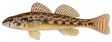
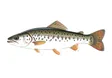
Common names

Types of darter

210 species carry darter in an English common name. They sit in 1 family, so the group is a name, not a scientific rank.

About darter

Etheostomatinae is a species-rich subfamily of freshwater ray-finned fish, the members of which are commonly known as the darters. The subfamily is part of the family Percidae which also includes the perches, ruffes and pikeperches. The family is endemic to North America. It consists of three to five different genera and well over 200 species. A common name for these fish in southern Indiana is pollywog.

Characteristics

Species within the Etheostomatinae are all small fish, mostly less than 11 centimetres (4.3 in) in length, and their bodies are slightly compressed or fusiform in shape. They have two pterygiophores between the first and second dorsal fins which do not have spines and a reduced swimbladder which may be completely lacking. The common name "darter" owes to the behavior of the fish, which dart around their benthic habitat. They are sexually dimorphic; most species have males with bright colors and patterning, particularly when breeding. These colors and patterns are used to attract females and allow for recognition of species, as the colors and patterns are particular to each species. Many species use typical sites for spawning and they care for their eggs and fry. They have evolved a variety of methods of depositing eggs and these include burying them, which may be the basal habit as it is found in all genera, as well as attaching eggs to a substrate and egg clustering.

Distribution

Etheostomatine darters are endemic to North America where they are found in the Mississippi River basin and the drainages of the Great Lakes, Hudson Bay, the seaboards of the Atlantic and the Gulf of Mexico and the Pacific coast of Mexico.

Taxonomy

Eschmeyer's Catalog of Fishes recognises six genera as follows:

However, Fishbase places Crystallaria within the subfamily Percinae while the 5th Edition of Fishes of the World regard it as a subgenus of Ammocrypta and Nothonotus as a subgenus of Etheostoma.

Phylogeny and diversity

Etheostomatinae, as a species rich and diverse sub-family within the family Percidae of freshwater ray-finned fishes, is composed of multiple genera including Ammocrypta, Crystalluria, Etheostoma, Nothonotus, and Percina, all of which have been observed as monophyletic groupings through molecular phylogenies.

Speciation events can occur to a culmination of factors as both sympatric and allopatric speciation is observed across darter evolutionary history. Factors related to spatiotemporal habitat stability and life history strategies can play into speciation and genetic differentiation of darters, such as dispersal ability and gene flow in headwater reproductive habitats impacting lineage divergence. It was seen that habitat preference and isolation is a major factor contributing to speciation in darters. Speciation events are common across species of this subfamily, one example includes Barcheek darters, an ancient monophyletic grouping residing in the eastern highlands which under time-calibrated molecular phylogenetic analysis of the mitochondrial genome has presented five novel cryptic species previously thought to be associated with Etheostoma basilare.

Hybridization has been accounted for multiple times across Etheostomatinae. It is more common between species with similar egg-laying behavioral mechanisms and within the same phylogenetic clade, with sperm viability being the limiting factor of hybridization. Sperm viability has also been witnessed to decrease as temperatures increase as an extraneous factor. Other factors impacting the viability of hybridization include life history of sympatry as opposed to allopatry, habitat preference, similar spawning periods, and duration of sperm viability. Species known to bury their eggs have been viewed to reproduce under sympatric conditions while egg-guarding species typically reproduce under allopatric conditions. Hybridization is predominantly found within species of large geographic ranges, larger populations, and egg-burying reproductive mechanisms.

Morphological features

Darters are composed of fusiform shaped bodies that are typically less than 11 centimeters in length, and characteristically host a reduced or lack an air bladder, allowing them to reside in benthic regions of lakes, streams, and rivers. A prominent feature across many species of darters is their diverse coloration. Color preferences have been found in common darter predators such as the largemouth bass, imposing selective pressures on certain species of darters limiting nuptial coloration. Chromatic species of darters are more prominent in fast flowing habitats with coarse substrate present within the water column and low flow accumulation, more light penetration, and fewer predators present. Species with blue fins are present in habitats supporting coarse substrate along with low flow accumulation, while blue body and red fins are commonly present in rifle ecosystems, and species with red coloration on the body are present in small streams.

The size of darters can be linked to increased fitness as larger darters tend to grow faster, produce more offspring, mature earlier at a larger size, and have longer lifespans along with reproductive lifespans. Diversity of life species traits across darters have been linked to influences such as reproductive behavior, geographic range, and population size of a species.

Coloration has been viewed to be heightened through ingestion of carotenoids, which could explain how coloration is phenotypically correlated to fitness across chromatic species of Etheostomatinae.

Another prominent feature held by females across darter lineage is the presence of gential papillae, fleshy protuberances between the anus and anal fin and are associated with egg laying abilities. Phylogenetic analyses expressed that the common ancestor of Etheostomatinae buried eggs with the help of tube-like appendage with a genital pore, a pore that releases the females eggs, held at the dorsal-posterior end known as tube papillae, leading researchers to believe this is the ancestral state of darters. Tube papillae are present in majority egg laying species across Etheostomatinae, with the exception of the genus Nothonotus, which instead have a mound-tube papillae allowing females to completely bury themselves as they lay eggs under the substrate. Egg clustering species tend to express complexes of pleated rosette papillae with ventral genital pores allowing the females to attach their eggs to the underhangs of rocks and other objects.

Egg laying and reproductive behavior

Selective traits may vary across species and genera, female darters have been observed to lay 500 to 1000 eggs sequentially, alluding to a promiscuous mating system with limited female mate preference and no parental care. Observations have been made that the majority of species across the diverse genus Etheostoma and that they attach eggs to their surroundings for protection. These egg attaching species mate when a female selects a location above the substrate such as a plant or rock where she will deposit her eggs, the male then mounts the female and as they vibrate the females attach eggs to her location of choosing while the male deposits sperm fertilizing the eggs. Other egg-laying behavioral characteristics include egg-guarding in which a female are courted by a male guarding a cavity, typically under flat stones, the couple then invert as the female lays eggs and the cavity ceiling as the male fertilizes them. When burying eggs, the male initiates with a courtship dance, in response the female wiggles until she is partially buried in the substrate. The male then mounts the female and similar to other species of darter, they vibrate as the females release eggs into her desired location while the male deposits sperm atop the eggs. Typically no parental care is associated with egg-burying species across the genus.

While parental care is not common within the darter subfamily, it has developed across the evolutionary history of Etheostomatinae multiple times, once in the clade Goneaperca, and a more novel evolutionarily derived clade Nothonotus. Male parental care across these clades have expressed evolutionary reversals back to the lack of care for their offspring multiple times. There are at least 250 species of darters across Etheostomatinae for which reproductive methodologies are known, with roughly 40 species experiencing paternal care and the rest showing no parental care at all.

Sexual selection

Males, while predominantly giving no parental care, do invest in courtship along with egg guarding among certain species. Intra-sexual and intersexual interactions affect speciation via sexual selection, predominantly via behavioral isolation through male aggression more so than female biases, likely due to the idea that males expending more energy into courtship reproduction than females. Male darters have been found to hold female preferences and mate choice and aggression correlated to their coloration differences expressing biases regarding intra and intersexual selection. Coloration has been viewed to be correlated more with male aggression as opposed to previously suggested female selective biases expressing that the color divergence is due to intra-sexual mechanisms in certain species lacking parental care, and that male coloration and aggressiveness may have coevolved. It has been viewed across species exhibiting parental care that achromatic coloration can be a trade off between paternal care and energy allocation for reproduction. Nuptial color preference has been observed across females of the darter species E. barrenses supporting the idea that female choice can drive the evolution of male coloration; while this may not apply to all species of darters, it does help support the general idea behind coloration and how it develops under the realm of sexual selection.
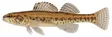
Darter species in focus

These species profiles show how members of the group differ. Their biology describes each named species, rather than every fish in the group.

Swamp Darter

The swamp darter (Etheostoma fusiforme) is a species of freshwater ray-finned fish, a darter from the subfamily Etheostomatinae, part of the family Percidae, which also contains the perches, ruffes and pikeperches. It is endemic to the Eastern United States.

Description

This species can reach a length of 5.9 cm (2.3 in), though most are only about 4 cm (1.6 in). It has a narrow, laterally compressed body with a rounded head and a blunt, conical snout which does not extend past the upper lips. The lateral line curves slightly upwards towards the tail. In color they are green to tan dorsally with small dark saddles and dark green and brown mottling. There are 10–12 square-shaped markings on the flanks. The underparts are white to yellow with numerous black and brown speckles. There is a narrow suborbital bar and 3 dusky black spots on the caudal fin. The rays in the fins are marked with small spots and the spiny part of the male's dorsal fin normally has a dark band at its base and another dark submarginal band. When breeding, the males become darker and tubercles develop on the soft rays of the pelvic and anal fins, the spine in the pelvic fin and frequently grow on the second spine of the anal fin.

Distribution

The swamp darter has a wide distribution in the lowlands of the eastern United States, it is generally found below the fall line on the Atlantic and Gulf coastal plains from southern Maine to the Sabine River, Louisiana and the Red River of the South in southeastern Oklahoma. It is also found in the tributaries of the Mississippi River as far north as Kentucky and southeastern Missouri. An introduced swamp darter population is established in the French Broad River system in North Carolina. In New York State the swamp darter only occurs in the Peconic River and in a small number of ponds in the vicinity of that river in eastern Long Island, the swamp darter also extends up the Red River of the South drainage as far as North Texas and Southeastern Oklahoma, where it is rare. No other darter is found as far south as E. fusiforme.

Habitat and biology

The swamp darter is found in slow moving and still waters, like ditches and oxbow lakes, which are typical of low-lying coastal plains. It seems to show a preference for clearer water areas where there is more vegetation than the sympatric slough darter (Etheostoma gracile). They can be found in flowing water but prefer still water including backwaters and ponds, including beaver dams. They are normally found in dark acidic waters but can thrive in clearwater if sufficient cover is available.

Swamp darters feed on fly larvae, amphipods, and other small crustaceans and insects. Swamp darters tend to be an important element in the diets of young chain pickerel and young largemouth bass, where the species coexist.

Read the full species guide.

Tessellated Darter

The tessellated darter (Etheostoma olmstedi) is a species of freshwater ray-finned fish, a darter from the subfamily Etheostomatinae, part of the family Percidae, which also contains the perches, ruffes and pikeperches. It is native to Canada and the United States. It was formerly considered a subspecies of the johnny darter, which it greatly resembles in general appearance.

Description

Adults are usually 2 to 3 inches long, occasionally reaching 4 inches. Both the tessellated darter and johnny darter are rather pale with small, X- or W-shaped markings on the back and upper sides. Both have only a single anal fin spine whereas all other darters in their range have two. Tessellated darters have somewhat sharper snouts than johnny darters, more dorsal soft rays, and more pectoral fin rays. The suborbital sensory canal is complete in most tessellated darters, usually broken into two sections in johnny darters. Their nape is usually naked, and their cheeks are partly too completely scaled. The breast is usually naked and the belly partly scaled. The body of the tessellated darter is elongate, but a little compressed. In breeding males, the spines have fleshy knobs although they are not as well developed as in the fantail darter. They are a pale, sandy color shading to whitish along the body ventrally. Some scales of the upper sides have dark margins forming wavy bars of varying lengths and different angles. Their sides have X- and W-shaped marks, of which 9 to 11 are prominent along the midside. Dorsal fins have a dark pigment spot on the first interradial membrane, and the rest of the fin is clear or slightly dusky. the snout has a dark line from each eye to the nostrils. Juveniles and breeding adults develop 12 or 13 rather even vertical bands along their sides while losing the wavy lines and X-shaped markings as the scales of the upper sides become quite dark with pale tips on the pectoral and pelvic fins. The unpigmented areas of the second dorsal, anal, and caudal fins stand out so that the fin has the appearance of having white bands on a dark background, which is a reversal of the appearance in non-breeding adults. In this color phase, they are sometimes mistaken for a species of Percina.

Ecology

Tessellated darters eat crustaceans and small insects when they are small, gradually shifting to larger insects as the fish get bigger. Male tessellated darters guard nests of fertilized eggs until the fry (young) are free-swimming, and have been observed to engage in alloparental (adoptive) care of previous nest inhabitants' eggs. Alloparental care is associated with increased male reproductive success in this species. Males frequently engage in filial cannibalism (consumption of their own offspring).

Taxonomy and etymology

The tessellated darter was first formally described in 1842 by the American ichthyologist David Humphreys Storer with the type locality given as the Connecticut River at Hartford, Connecticut. The specific name honors the collector of the type, Charles H. Olmsted who was president of the Hartford Natural History Society. It is closely related to the Johnny darter E. nigrum and has been considered synonymous with it.

Read the full species guide.

Maryland Darter

The Maryland darter (Etheostoma sellare) is a species of freshwater ray-finned fish, a darter from the subfamily Etheostomatinae, part of the family Percidae, which also contains the perches, ruffes and pikeperches. It is considered one of the rarest freshwater fish species in the world, due in part to its extremely limited geographic range and difficulty of detection. The last sighting of one was in 1988. The Maryland darter is named after the only state in which it is known to occur. The species was long known only by two specimens until being "re-discovered" in 1962. From 1965 into the 1980s, the species was believed to have been confined to a single riffle in Deer Creek. Possible explanations for the decline of the species center around widespread habitat degradation and reduction in water quality resulting from increasing rates of urbanization within the watershed. While the IUCN has declared the species extinct, the United States Fish and Wildlife Service has not, and keeps it on the Endangered Species List.

History

The Maryland darter was originally discovered in 1912 in Swan Creek, a tributary of the larger Susquehanna River drainage basin located near Havre de Grace, Maryland. The two biologists responsible for the discovery, Lewis Radcliffe and William W. Welsh, promptly published a description of the newly discovered species in 1913. Despite initial detection of the species in Swan Creek, it was never found there again. However, in 1962 the Maryland darter was "re-discovered" after an adult female specimen was collected in nearby Gasheys Run, a tributary of Swan Creek. Perhaps the most significant detection of the Maryland darter occurred in 1965, when over 70 individuals were collected from Deer Creek. Additional sightings of the species in Deer Creek occurred irregularly between 1974 and 1988, where between 1 and 10 individuals were detected by seining sampling or snorkeling. However, the last significant sighting of the Maryland darter occurred in 1988. It has not been seen since, and is believed to be extinct. This species is the only member of the subgenus Mooreichthys.

Characteristics

The Maryland darter is a member of the genus Etheostoma and a member of the darter subfamily of fishes. A relative of the yellow perch (Perca flavescens) and walleye (Sander vitreus), the Maryland darter is a bottom-dwelling fish. Ideal habitat consists of highly oxygenated, swiftly flowing portions of streams containing moderate amounts of vegetation and characterized by rubble and gravel-like substrate. Additionally, the species favors sloped rock riffles and crevasses which provide ample shelter from predators. The Maryland darter is a relatively smaller darter species with a maximum size of just under three inches. The species favors small invertebrates, frequently foraging on small snails, caddis fly larvae and mayfly and stonefly nymphs. Spawning presumably occurs in late April as is characteristic of most other darter species, however the Maryland darter has never been observed during reproduction.

Species status

The Maryland darter is listed as endangered by the United States Fish and Wildlife Service. The United States Fish and Wildlife Service has determined that due to difficulty of detection, in spite of infrequent observations since initial discovery in 1912, that there is not sufficient evidence to declare the species extinct. However, other organizations such as the IUCN has listed the Maryland darter as extinct on the IUCN list of threatened species. The state of Maryland has the species listed as SH, indicating that, historically, the species occurred in the state but is believed to be extirpated, having not been observed for a period of over 20 years.

The Maryland Darter is seemingly becoming extinct due to the high quantities of pollution from agricultural and development runoff. We can determine that sediment from erosion and runoff reduced water quality and may have smothered darter eggs. Erratic water levels created sedimentation problems; stranding fish in pools. These pools could become too warm for them to survive, which increases predation by other fish.

Read the full species guide.

Range

Where darter live

How many of the 210 species are recorded in each state.
0
119
How many of the 210 species are recorded in each state.

Species

All 210 darter species

A

B

C

D

E

F

G

H

I

J

K

L

M

N

O

P

R

S

T

V

W

Y