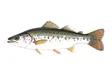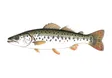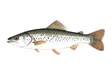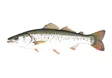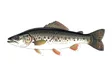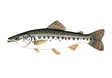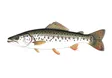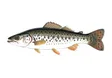
Naked Sand Darter

Ammocrypta beanii

Percidae · freshwater water fish

4 minute read · Species guide

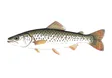
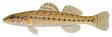
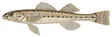
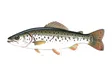
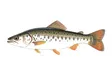
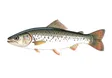
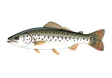
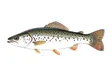
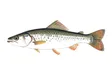
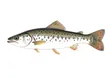
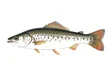
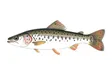
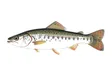
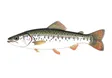
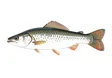
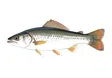
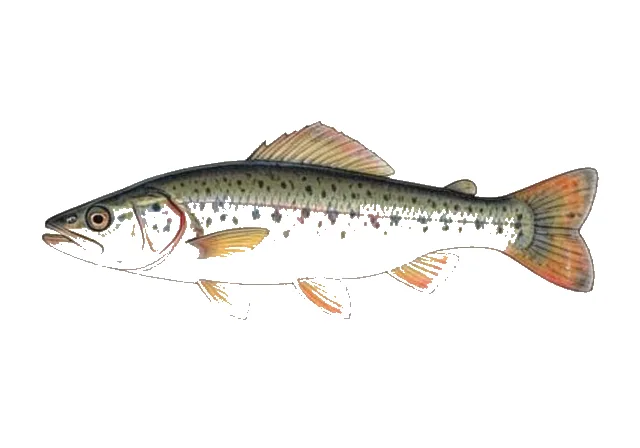
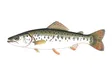
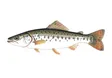
Naked Sand Darter field guide illustration

About Naked Sand Darter

The naked sand darter (Ammocrypta beanii) is a species of freshwater ray-finned fish, a darter from the subfamily Etheostomatinae, part of the family Percidae, which also contains the perches, ruffes and pikeperches. It is found in the south-eastern United States.

Description

The naked sand darter is a small fish ranging in size from 40 to 50 mm (1.6 to 2.0 in) long, the maximum being around 64 mm (2.5 in) standard length. Being a long thin darter, it is devoid of scales with the exception of a few rows above and below the lateral line and sometimes the caudal peduncle. Slightly transparent in life with a yellow color and iridescent operculum, the naked sand darter blends in with its habitat. It has darker bands in the dorsal, anal, and caudal fins with a whitish base and tip. Males of breeding size have a dark spot at the front of the first dorsal fin. Unlike similar darters, it does not have an opercular spine.

Diet

Larvae of small fish are the primary source of food for naked sand darters. They also feed on clam larvae or smaller crustaceans like copepods depending on their size. Naked sand darters feed continuously throughout the day, but stop at night. They also feed less in winter and summer months then pick back up before and after breeding season.

Habitat

Naked sand darters prefer the sandy bottoms of clean, freshwater rivers and streams. They can be found about 1 m deep on the bottom, digging into the sand to wait for prey to swim by.

Distribution

They can be found exclusively along the Gulf of Mexico in the rivers and drainages of eastern Louisiana to as far east as the Mobile Bay drainage in Alabama. Naked sand darters have been found as far north as West Tennessee.

Reproduction and lifecycle

Breeding season is from March or April until September or October when water temperatures are between 17 and 29 °C (63 and 84 °F). Males develop tubercles on their anal and pelvic fins to aid in fighting for females. Females can produce from 12–122 eggs at a time and reach sexual maturity after a year. They only live 24 to 30 months.

Taxonomy and etymology

The naked sand darter was first formally described in 1877 by the American ichthyologist David Starr Jordan (1851–1931) with the type locality given as the Natalbany River, near Tickfaw, Louisiana. It is the type species of the genus Ammocrypta, which Jordan also originally described. The genus name, Ammocrypta, comes from the Greek word ammos meaning sand and the Greek kryptos meaning hidden. The specific name, beanii, comes from the first collector of the species, Tarleton H. Bean (1846–1915).

Article text: Wikipedia contributors, Naked sand darter (source revision). Licensed under CC BY-SA 4.0. Retrieved 2026-10-11.
Diet and feeding

The FishTraits compilation records these diet categories for this species: invertebrates or larval fish. These are broad categories, not a claim that every individual consumes every example in a category.

Reported feeding positions include bottom feeding. The compilation combines published observations; diets can vary with age, locality, and available food.

Habitat preferences

Reported habitat associations include medium to large rivers, streams and small rivers.

The source records associations with sand. An association indicates reported use, rather than an exclusive requirement.

Reproduction and parental care

The compilation reports a representative maturity age of 1 years. Its maturity field summarizes mean, median, or modal estimates, usually for females; male estimates can be used when female data are unavailable. It is not a fixed age at which every fish first breeds.

Batch or serial spawning has been reported somewhere in the species’ range. This does not establish the same spawning pattern for every population.

Recorded spawning months are Mar, Apr, May, Jun, Jul, Aug, Sep for the source’s reporting region (MS). This is a regional calendar, not a range-wide schedule.

The reproductive-guild classification includes spawning on open substrates without guarding the brood.

Size and recorded longevity

FishTraits reports a maximum total length of 7.2 centimetres. Some entries use an estimated asymptotic length; this value should not be treated as a certified record catch.

Recorded longevity in the compilation is 2 years. Wild observations were preferred, but captive records were accepted where wild records were unavailable, and unspecified records were assumed wild. The value is not a guaranteed wild lifespan or an aquarium life expectancy.

Range

Where it lives

Share of 2,026 GBIF observation records with a state location, across 5 states. The orange dots are USGS stream-survey sites where this species was caught.
0%
48.7%
Share of 2,026 GBIF observation records with a state location, across 5 states. The orange dots are USGS stream-survey sites where this species was caught.

A blank area on the dot layer usually means nobody sampled there, not that the fish is absent. Turn on “every survey site” to see where the survey looked.

The USGS stream survey caught it at 40 of its sites, in 3 states. That survey and the GBIF records are two different counts of two different things, so the site keeps them apart.

Habitat

Water and movement

Water
WoRMS records this species in fresh water.
Migration
Undetermined

Classification

Taxonomy

Kingdom
Animalia
Phylum
Chordata
Superclass
Actinopterygii
Class
Teleostei
Order
Perciformes
Family
Percidae
Genus
Ammocrypta
Species
Ammocrypta beanii
ITIS TSN
553376
WoRMS AphiaID
1020166
GBIF key
2381977

Common questions about Naked Sand Darter

What is the scientific name of Naked Sand Darter?
The scientific name is Ammocrypta beanii, in the family Percidae. Classification follows ITIS.
Does Naked Sand Darter live in fresh water or salt water?
WoRMS records this species in fresh water.
Where has Naked Sand Darter been recorded in the United States?
GBIF has observations in 5 states, with the most records in Mississippi, Alabama, Louisiana. The map shows observation records, which do not establish the complete natural range.

Closest relatives

Other Ammocrypta species

Same family

More Percidae

All 229 species in Percidae