Savannah Darter

Etheostoma fricksium

Percidae · freshwater water fish

4 minute read · Species guide

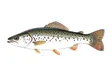
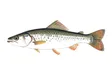
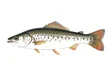
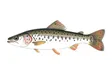
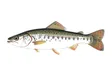
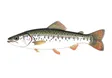
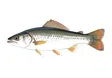
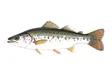
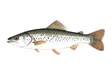
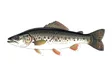
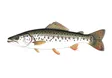
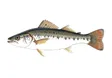
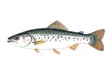
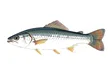
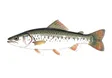
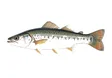
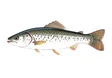
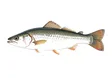
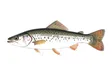
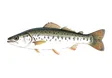
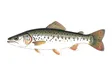
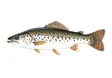
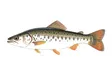
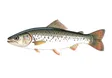
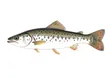
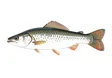
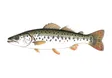
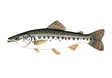
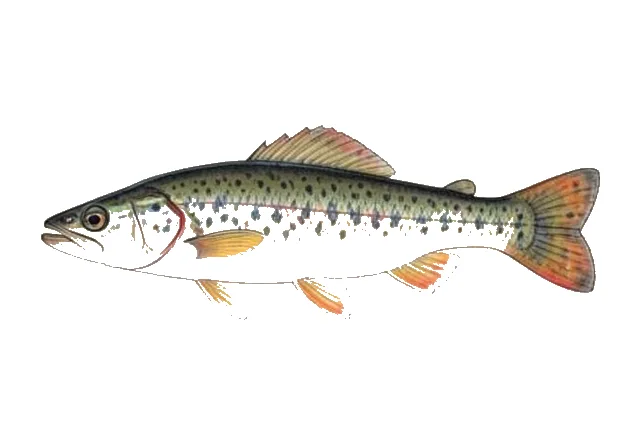
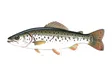
Savannah Darter field guide illustration

About Savannah Darter

The Savannah darter (Etheostoma fricksium) is a species of freshwater ray-finned fish, a darter from the subfamily Etheostomatinae, part of the family Percidae, which also contains the perches, ruffes and pikeperches. It is endemic to the eastern United States, where it occurs in the Edisto, Combahee, Broad and Savannah River drainages in South Carolina and Georgia. It inhabits gravel riffles, gravel and sand runs of creeks and small rivers. This species can reach a length of 7.4 cm (2.9 in).

Description

Darters have fusiform, cylindrical bodies, large paired fins and poorly developed swim bladders; they rest on the substrate, using their pectoral fins to prop themselves up. The Savannah darter has a maximum total length of 7.4 cm (2.9 in) but a more typical length is 3.5 to 6 cm (1.4 to 2.4 in). Males are usually larger than females, but females are more abundant.

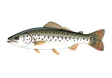
The dorsal fin has 10 or 11 spines and 12 soft rays, the pectoral fin has 13 to 14 rays and the anal fin has 2 spines and 8 to 9 rays. This fish has a small conical head and a broad tan or golden stripe running along the spine, flanked on either side by a dark stripe. This is variable in color and sometimes appears faded, but the pale dorsal stripe is always distinct.

The flanks have eight to twelve dark vertical bars or a series of dark blotches. In breeding males these are separated by reddish streaks while the breeding female's coloring is much more subdued. The front dorsal fin has a narrow dusky green border and a broad red marginal stripe in males and a narrow red stripe in females. The caudal peduncle has a row of three or four, somewhat irregular, dark spots.

Distribution and habitat

The Savannah darter is native to the southeastern United States, where it occurs in South Carolina and Georgia in the Edisto, Combahee, Savannah and Broad River basins, below the fall line. Its typical habitat is in riffles and fast-flowing sections of creeks and small rivers, over sand and gravel substrates, in the vicinity of aquatic vegetation or woody debris, or under overhanging banks.

Ecology

The Savannah darter feeds mainly on aquatic insects, particularly chironomids, but also consumes worms, small molluscs, zooplankton and terrestrial insects. It searches for food among aquatic vegetation and woody debris. Breeding takes place in the spring, when the water temperature is between 11 and 23 °C (52 and 73 °F). The female lays small clutches of sticky eggs which she buries in gravel or sand; the fish become mature before the end of their first year and live for up to three years.

Status

The Savannah darter is a common species and is widespread in the smaller streams of the river basins it inhabits. It is facing no particular threats and the population seems stable. For these reasons, the International Union for Conservation of Nature has assessed its conservation status as being of least concern.

Article text: Wikipedia contributors, Savannah darter (source revision). Licensed under CC BY-SA 4.0. Retrieved 2026-10-11.
Diet and feeding

The FishTraits compilation records these diet categories for this species: invertebrates or larval fish. These are broad categories, not a claim that every individual consumes every example in a category.

Reported feeding positions include bottom feeding and surface or water-column feeding. The compilation combines published observations; diets can vary with age, locality, and available food.

Habitat preferences

Reported habitat associations include streams and small rivers, creeks.

The source records associations with sand, gravel, vegetation. An association indicates reported use, rather than an exclusive requirement.

Reproduction and parental care

The compilation reports a representative maturity age of 1 years. Its maturity field summarizes mean, median, or modal estimates, usually for females; male estimates can be used when female data are unavailable. It is not a fixed age at which every fish first breeds.

Batch or serial spawning has been reported somewhere in the species’ range. This does not establish the same spawning pattern for every population.

Recorded spawning months are Feb, Mar, Apr, May for the source’s reporting region (SC). This is a regional calendar, not a range-wide schedule.

The reproductive-guild classification includes hiding a brood without subsequent guarding.

Size and recorded longevity

FishTraits reports a maximum total length of 7.4 centimetres. Some entries use an estimated asymptotic length; this value should not be treated as a certified record catch.

Recorded longevity in the compilation is 3.5 years. Wild observations were preferred, but captive records were accepted where wild records were unavailable, and unspecified records were assumed wild. The value is not a guaranteed wild lifespan or an aquarium life expectancy.

Range

Where it lives

Share of 154 GBIF observation records with a state location, across 2 states.
0%
84.4%
Share of 154 GBIF observation records with a state location, across 2 states.

Share of records by state

Habitat

Water and movement

Water
WoRMS records this species in fresh water.
Migration
Undetermined

Classification

Taxonomy

Kingdom
Animalia
Phylum
Chordata
Superclass
Actinopterygii
Class
Teleostei
Order
Perciformes
Family
Percidae
Genus
Etheostoma
Species
Etheostoma fricksium
ITIS TSN
168396
WoRMS AphiaID
1016643
GBIF key
2382358

Common questions about Savannah Darter

What is the scientific name of Savannah Darter?
The scientific name is Etheostoma fricksium, in the family Percidae. Classification follows ITIS.
Does Savannah Darter live in fresh water or salt water?
WoRMS records this species in fresh water.
Where has Savannah Darter been recorded in the United States?
GBIF has observations in 2 states, with the most records in South Carolina, Georgia. The map shows observation records, which do not establish the complete natural range.

Closest relatives

Other Etheostoma species

Same family

More Percidae

All 229 species in Percidae