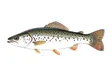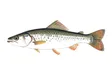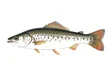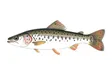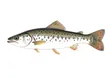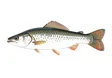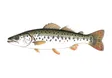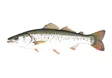
Stripetail Darter

Etheostoma kennicotti

Percidae · freshwater water fish

5 minute read · Species guide

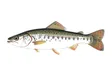
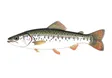
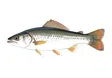
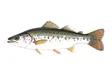
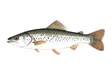
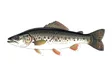
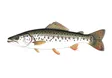
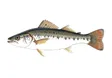
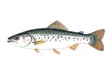
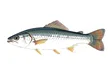
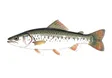
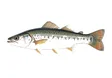
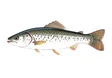
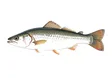
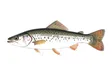
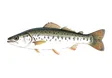
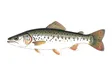
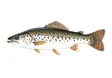
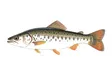
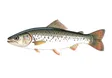
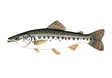
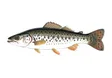
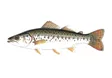
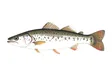
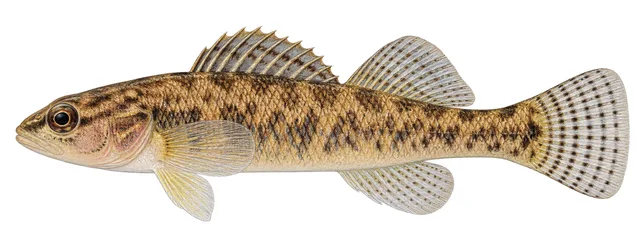
Stripetail Darter field guide illustration

About Stripetail Darter

The stripetail darter (Etheostoma kennicotti) is a species of freshwater ray-finned fish, a darter from the subfamily Etheostomatinae, part of the family Percidae, which also contains the perches, ruffes and pikeperches. It is endemic to the eastern United States. It is found in small rivers and streams in the states of Tennessee, Ohio, Kentucky, Illinois, Alabama, Georgia, and Mississippi. Males are a golden-orange color with black barring on the fins, and grow to a length of about 2.8 in (7 cm). This fish feeds on midge larvae and other small invertebrates. It breeds in the spring; eggs are attached to the substrate, often under slab rocks, where they are guarded by the male. The population trend of this fish seems to be stable and it is a common species with numerous sub-populations over a wide range, and the International Union for Conservation of Nature has assessed its conservation status as being of "least concern".

Description

The stripetail darter males are golden orange and as adults can grow up to 2.8 inches (7.1 cm) long. It also has black bands present on the caudal fins and soft dorsal fins.

Distribution and habitat

The stripetail darter is a small, benthic freshwater fish that inhabits river tributaries. Historic or native geographic range of the stripetail darter is likely similar to its current range. Currently, the stripetail darter inhabits tributaries of the Ohio, Tennessee, Cumberland, and Paint Rock river systems. The Green River drainage in Kentucky also contains a population of stripetail darters. The Paint Rock river system and Ohio River systems hold the largest populations of the species and it is less common throughout the Tennessee River system. The stripetail darter inhabits states including Tennessee, Ohio, Kentucky, Illinois, Alabama, Georgia, and Mississippi. The stripetail darter's distribution is typically spotty throughout its range with multiple subpopulations; however, the species is still abundant overall. Page and Smith discovered that the species also varies slightly depending on where the subpopulation of the species occurs. This isolation of the populations could be due to climate effects such as low temperatures and low water levels. The current estimated population is over 10,000 individuals through the range of this fish. The population is stable.

Ecology

The diet of the stripetail darter includes mayflies, fishflies, midge larvae, isopods, stoneflies, and cladocerans. Stripetail darters are able to live in a wide range of pH levels and water temperatures. Typically these darters also live in slab pools in streams and headwaters, as well as creeks and small slow-flowing rivers with rocky substrate and rubble, in riffles, under stones and under overhanging banks in pools; it often occurs among emergent vegetation.

Life history

The breeding season for the stripetail darter in lower Ohio River tributaries begins in late March to early April and continues until late May. Stripetails breed in water between 57 and 68 °F (14 and 20 °C). Stripetail darter eggs are small, between 0.075 to 0.098 inches (1.9 to 2.5 mm) in diameter, spherical and adhesive. The eggs are usually laid under slabrocks in medium-sized or smaller streams that feed into larger bodies of water. The slabrocks provide shelter and protection for the eggs and allow males to guard them more efficiently. The stripetail also prefers overhanging vegetation to be present near the spawning sites and gravel or sandy bottoms. The stripetail darter lays anywhere from 50 to 400 eggs at a time. Newly hatched stripetail darters are typically around.16 to.19 inches (4.1 to 4.8 mm) in length and have fully developed pectoral fins with 12 incipient rays. Stripetails reach sexual maturity one year after birth. The maximum lifespan of this fish is 3 years.

Conservation

As of 2013, there are no management plans in place specifically aimed at the conservation of the stripetail darter. They are not listed on the endangered species list and their populations are considered stable. It is estimated that over 10,000 are alive in the wild today and this number is high enough for sustainability.

Taxonomy and etymology

The stripetail darter was first formally described as Catonotus kennicotti in 1863 by the American zoologist Frederic Ward Putnam (1839–1914). The specific name honors the collector of the type, Mr R. Kennicott.

Article text: Wikipedia contributors, Stripetail darter (source revision). Licensed under CC BY-SA 4.0. Retrieved 2026-10-11.
Diet and feeding

The FishTraits compilation records these diet categories for this species: invertebrates or larval fish. These are broad categories, not a claim that every individual consumes every example in a category.

Reported feeding positions include bottom feeding. The compilation combines published observations; diets can vary with age, locality, and available food.

Habitat preferences

Reported habitat associations include streams and small rivers, creeks.

The source records associations with bedrock, vegetation. An association indicates reported use, rather than an exclusive requirement.

Reproduction and parental care

The compilation reports a representative maturity age of 1 years. Its maturity field summarizes mean, median, or modal estimates, usually for females; male estimates can be used when female data are unavailable. It is not a fixed age at which every fish first breeds.

Recorded spawning months are Apr, May for the source’s reporting region (MS). This is a regional calendar, not a range-wide schedule.

The reproductive-guild classification includes guarding eggs or young at a spawning substrate or nest.

Size and recorded longevity

FishTraits reports a maximum total length of 8.3 centimetres. Some entries use an estimated asymptotic length; this value should not be treated as a certified record catch.

Recorded longevity in the compilation is 2.5 years. Wild observations were preferred, but captive records were accepted where wild records were unavailable, and unspecified records were assumed wild. The value is not a guaranteed wild lifespan or an aquarium life expectancy.

Range

Where it lives

Share of 1,270 GBIF observation records with a state location, across 6 states. The orange dots are USGS stream-survey sites where this species was caught.
0%
38.1%
Share of 1,270 GBIF observation records with a state location, across 6 states. The orange dots are USGS stream-survey sites where this species was caught.

A blank area on the dot layer usually means nobody sampled there, not that the fish is absent. Turn on “every survey site” to see where the survey looked.

The USGS stream survey caught it at 119 of its sites, in 4 states. That survey and the GBIF records are two different counts of two different things, so the site keeps them apart.

Habitat

Water and movement

Water
WoRMS records this species in fresh water.
Migration
Not migratory

Classification

Taxonomy

Kingdom
Animalia
Phylum
Chordata
Superclass
Actinopterygii
Class
Teleostei
Order
Perciformes
Family
Percidae
Genus
Etheostoma
Species
Etheostoma kennicotti
ITIS TSN
168405
WoRMS AphiaID
1420103
GBIF key
2382408

Common questions about Stripetail Darter

What is the scientific name of Stripetail Darter?
The scientific name is Etheostoma kennicotti, in the family Percidae. Classification follows ITIS.
Does Stripetail Darter live in fresh water or salt water?
WoRMS records this species in fresh water.
Where has Stripetail Darter been recorded in the United States?
GBIF has observations in 6 states, with the most records in Kentucky, Tennessee, Illinois. The map shows observation records, which do not establish the complete natural range.

Closest relatives

Other Etheostoma species

Same family

More Percidae

All 229 species in Percidae