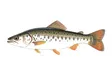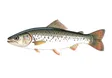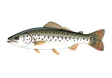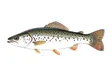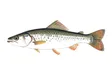
Eastern Sand Darter

Ammocrypta pellucida

Percidae · freshwater water fish

5 minute read · Species guide

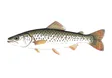
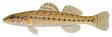
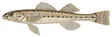
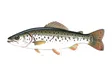
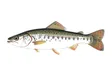
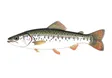
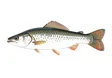
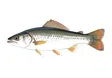
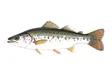
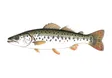
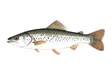
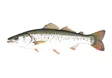
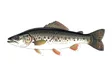
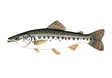
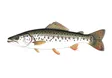
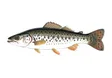
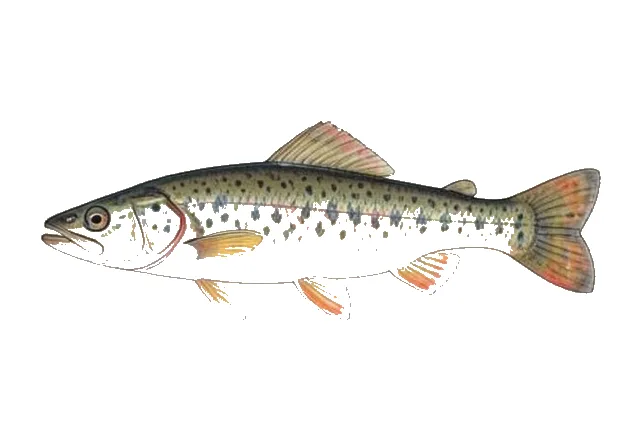
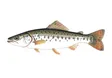
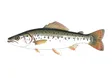
Eastern Sand Darter field guide illustration

About Eastern Sand Darter

The eastern sand darter (Ammocrypta pellucida) is a species of freshwater ray-finned fish, a darter from the subfamily Etheostomatinae, part of the family Percidae, which also contains the perches, ruffes and pikeperches. The eastern sand darter is a relatively small fish, most plentiful in the Mississippi and Ohio Rivers, as well as Lake Champlain and the Great Lakes. It prefers sandy-bottomed streams and sandy shoals in the lakes. The eastern sand darter feeds on larvae of black flies and other small insects in the water. They also feed on zooplankton in small portions since their small mouth size limits their gape ability. Its average body size is around 1.5-2 in long, and it breeds in the spring and summer in sandy-bottomed waters.

Description

The average lifespan for the eastern sand darter is about 2–3 years, but if the siltation and pollution continue to worsen, the lifespan will gradually decrease.

A. pellucida reproduces in the sandy shoals at the bottom of the lakes and rivers it inhabits during the spring and summer when the water is at its warmest temperature. It reaches sexual maturity around age one and the males are able to mate once during the breeding season, while females mate twice, producing about 350 eggs with an average clutch size of 71 eggs. If siltation continues to worsen, many of the eggs will be smothered, resulting in reduced reproduction, further hindering the eastern sand darters' population count.

Distribution and habitat

The eastern sand darter can be found in many areas throughout the United States and into southern Canada. In addition to the Mississippi and Ohio Rivers, it can be found in great concentration in Lakes Champlain, Erie, Huron, Michigan and Ontario. They can also be found in the St. Lawrence River drainage in Canada along with the Lake Champlain drainage in Vermont south into New York, Pennsylvania, West Virginia, Kentucky, Illinois, and Indiana. Currently, the greatest concentration occurs in northern Alabama and eastern Tennessee.

Distribution has slowly decreased over the last few decades, and two key factors could be the cause. The eastern sand darter requires clean sand substrates; hence, siltation is a major factor in their decline. Siltation decreases the quality of habitat for both egg development and adult darters by decreasing the oxygen levels within the sand in which they bury themselves. Furthermore, silted habitats can cause adult darters to not fully burrow or decrease their time burrowed which then causes them to waste energy reserves. Channel or water flow alterations, nutrient enrichment, or any other habitat modification can completely change the amount and quality of the shifting sand bars which can then turn detrimental for the eastern sand darter. The increased construction of dams also has been a major factor contributing to the reduction of their habitats. Dams reduce river levels and flow, decrease oxygen levels in reservoir waters, and alter water temperatures, making it difficult for the eastern sand darter to reproduce at a comfortable temperature. Dam construction adds a whole new dimension to decreasing the reproduction and survival rate for A. pellucida.

Feeding

This fish seeks its prey from the sand along the bottom of the stream or lake. Their prey items usually range in size up to 3/16 inches, but prey selection varies depending on the age of the darter. Juvenile eastern sand darters consume small crustaceans, while adults prefer midge larvae, blackfly larvae, mayflies, and caddisflies. It has several species of fish predators, including rainbow trout, largemouth and smallmouth bass, and rock bass. However, since it spends extensive time buried in the sand and it has a translucent body, the eastern sand darter usually tends to be protected from predators. Minnows are the eastern sand darters' biggest competitor for food, but little conflict arises between the two since the darter occupies the lowest depths of the rivers and lakes while the minnows occupy the upper water column.

Taxonomy

The Eastern sand darter was first formally described as Pleurolepsis pellucidus in 1863 by the American ichthyologist Frederic Ward Putnam (1839–1915) with the type locality given as the Black River at Elyria, Ohio. This species forms a clade with the scaly sand darter (A. vivax) and the Southern sand darter (A. meridiana).

Article text: Wikipedia contributors, Eastern sand darter (source revision). Licensed under CC BY-SA 4.0. Retrieved 2026-10-11.
Diet and feeding

The FishTraits compilation records these diet categories for this species: invertebrates or larval fish. These are broad categories, not a claim that every individual consumes every example in a category.

Reported feeding positions include bottom feeding. The compilation combines published observations; diets can vary with age, locality, and available food.

Habitat preferences

Reported habitat associations include medium to large rivers, streams and small rivers.

The source records associations with sand. An association indicates reported use, rather than an exclusive requirement.

Reproduction and parental care

The compilation reports a representative maturity age of 1 years. Its maturity field summarizes mean, median, or modal estimates, usually for females; male estimates can be used when female data are unavailable. It is not a fixed age at which every fish first breeds.

Batch or serial spawning has been reported somewhere in the species’ range. This does not establish the same spawning pattern for every population.

Recorded spawning months are May, Jun, Jul, Aug for the source’s reporting region (VA). This is a regional calendar, not a range-wide schedule.

The reproductive-guild classification includes spawning on open substrates without guarding the brood.

Size and recorded longevity

FishTraits reports a maximum total length of 8.4 centimetres. Some entries use an estimated asymptotic length; this value should not be treated as a certified record catch.

Recorded longevity in the compilation is 2 years. Wild observations were preferred, but captive records were accepted where wild records were unavailable, and unspecified records were assumed wild. The value is not a guaranteed wild lifespan or an aquarium life expectancy.

Range

Where it lives

Share of 862 GBIF observation records with a state location, across 13 states. The orange dots are USGS stream-survey sites where this species was caught.
0%
46.2%
Share of 862 GBIF observation records with a state location, across 13 states. The orange dots are USGS stream-survey sites where this species was caught.

A blank area on the dot layer usually means nobody sampled there, not that the fish is absent. Turn on “every survey site” to see where the survey looked.

The USGS stream survey caught it at 51 of its sites, in 5 states. That survey and the GBIF records are two different counts of two different things, so the site keeps them apart.

Habitat

Water and movement

Water
WoRMS records this species in fresh water.
Migration
Undetermined
Pattern
Disagreement
2 published references do not agree on the pattern: Non-migratory, Potamodromous. The site shows every assignment rather than picking one.

Classification

Taxonomy

Kingdom
Animalia
Phylum
Chordata
Superclass
Actinopterygii
Class
Teleostei
Order
Perciformes
Family
Percidae
Genus
Ammocrypta
Species
Ammocrypta pellucida
ITIS TSN
168517
WoRMS AphiaID
1049455
GBIF key
2381982
Outside the US
ITIS also files it in Canada.

Common questions about Eastern Sand Darter

What is the scientific name of Eastern Sand Darter?
The scientific name is Ammocrypta pellucida, in the family Percidae. Classification follows ITIS.
Does Eastern Sand Darter live in fresh water or salt water?
WoRMS records this species in fresh water.
Where has Eastern Sand Darter been recorded in the United States?
GBIF has observations in 13 states, with the most records in Ohio, Kentucky, Indiana. The map shows observation records, which do not establish the complete natural range.

Closest relatives

Other Ammocrypta species

Same family

More Percidae

All 229 species in Percidae