Coosa Darter

Etheostoma coosae

Percidae · freshwater water fish

4 minute read · Species guide

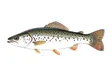
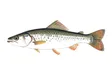
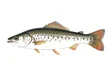
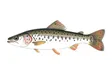
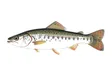
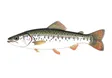
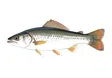
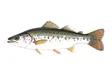
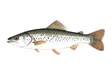
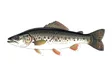
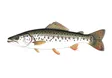
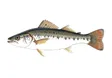
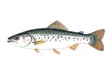
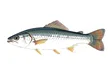
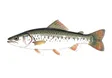
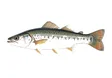
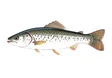
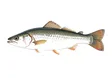
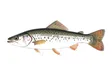
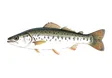
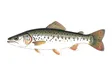
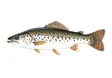
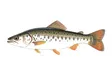
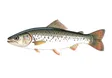
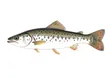
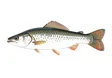
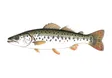
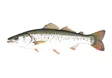
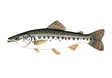
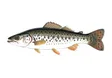
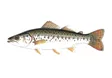
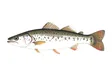
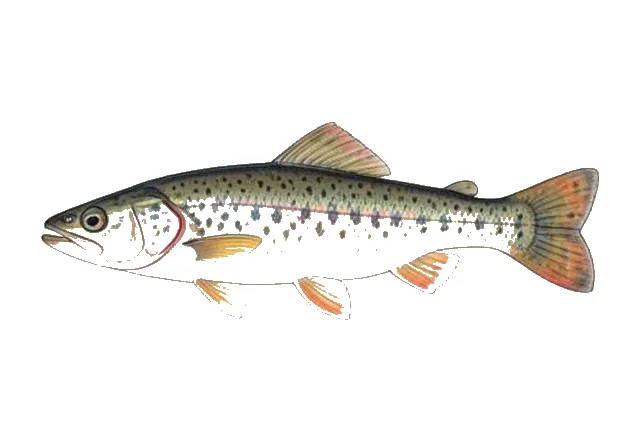
Coosa Darter field guide illustration

About Coosa Darter

The Coosa darter (Etheostoma coosae) is a species of freshwater ray-finned fish, a darter from the subfamily Etheostomatinae, part of the family Percidae, which also contains the perches, ruffes and pikeperches. It is endemic to the eastern United States.

Description

The Coosa darter is a robust species of darter which can be identified by having a blunt snout with a small mouth. The spiny part of its dorsal fin is marked with bands of color and has a central red band along the whole of its length, although it does not possess the anterior ocellus found in many other species in the subgenus Ulocentra. Above and below this central band there are alternating clear and dark bands. In the soft-rayed part of the dorsal fin, the middle part of the membranes between each ray is red. The color of the body is yellow-olive, marked with 8–9 dark blotches located dorsally and on the flanks. The lower snout and the throat are pale green, while the anal fin and upper and lower lobes of the caudal fin are turquoise. The blotches along the flank have a slightly green hue. The maximum recorded total length for this species is 7.2 centimetres (2.8 in), although the standard length of males is more commonly around 4.1 centimetres (1.6 in) and of females 3.9 centimetres (1.5 in).

Distribution

The Coosa darter is only found in the Coosa River system, which drains into Mobile Bay in Georgia, Alabama and Tennessee.

Habitat and biology

The Coosa darter is found in rocky pools and nearby riffles of creeks and small to medium rivers, as well as in streams. It feeds mainly on the larvae of midge and blackfly larvae, with smaller amounts of cladocera, copepods, mayfly nymphs, and caddisfly larvae. Insects, especially flies, are more important in summer and crustaceans become more important in the winter. The Coosa darter is known to spawn from mid-March to mid-May. The female lays a single egg at a time, placing it in small cracks and crevices in wood, rocks, or other hard substrates. The male fertilizes the eggs as soon as they are laid. They may spawn in any position from horizontal to vertical.

Taxonomy

The Coosa darter was first formally described as Poecilichthys coosae in 1945 by the American ichthyologist Henry Weed Fowler (1878–1965) with the type locality given as a small creek in the Coosa River drainage within Cherokee County, Alabama, near the settlement of Chesterfield.

Status

The IUCN has listed this species as being of "Least Concern" because it has an extensive range in the Coosa River system, has a large total population size, and has numerous subpopulations. In general, the population trend seems stable and no major threats have been identified.

Article text: Wikipedia contributors, Coosa darter (source revision). Licensed under CC BY-SA 4.0. Retrieved 2026-10-11.
Diet and feeding

The FishTraits compilation records these diet categories for this species: invertebrates or larval fish. These are broad categories, not a claim that every individual consumes every example in a category.

Reported feeding positions include bottom feeding. The compilation combines published observations; diets can vary with age, locality, and available food.

Habitat preferences

Reported habitat associations include streams and small rivers.

The source records associations with gravel, cobble. An association indicates reported use, rather than an exclusive requirement.

Reproduction and parental care

The compilation reports a representative maturity age of 1 years. Its maturity field summarizes mean, median, or modal estimates, usually for females; male estimates can be used when female data are unavailable. It is not a fixed age at which every fish first breeds.

Recorded spawning months are Mar, Apr, May for the source’s reporting region (TN). This is a regional calendar, not a range-wide schedule.

The reproductive-guild classification includes hiding a brood without subsequent guarding.

Size and recorded longevity

FishTraits reports a maximum total length of 7.2 centimetres. Some entries use an estimated asymptotic length; this value should not be treated as a certified record catch.

Recorded longevity in the compilation is 3 years. Wild observations were preferred, but captive records were accepted where wild records were unavailable, and unspecified records were assumed wild. The value is not a guaranteed wild lifespan or an aquarium life expectancy.

Range

Where it lives

Share of 1,143 GBIF observation records with a state location, across 3 states.
0%
47.2%
Share of 1,143 GBIF observation records with a state location, across 3 states.

Habitat

Water and movement

Water
WoRMS records this species in fresh water.
Migration
Undetermined

Classification

Taxonomy

Kingdom
Animalia
Phylum
Chordata
Superclass
Actinopterygii
Class
Teleostei
Order
Perciformes
Family
Percidae
Genus
Etheostoma
Species
Etheostoma coosae
ITIS TSN
168385
WoRMS AphiaID
1525051
GBIF key
2382329

Common questions about Coosa Darter

What is the scientific name of Coosa Darter?
The scientific name is Etheostoma coosae, in the family Percidae. Classification follows ITIS.
Does Coosa Darter live in fresh water or salt water?
WoRMS records this species in fresh water.
Where has Coosa Darter been recorded in the United States?
GBIF has observations in 3 states, with the most records in Alabama, Georgia, Tennessee. The map shows observation records, which do not establish the complete natural range.

Closest relatives

Other Etheostoma species

Same family

More Percidae

All 229 species in Percidae