Niangua Darter

Etheostoma nianguae

Percidae · freshwater water fish

3 minute read · Species guide

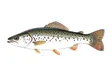
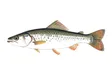
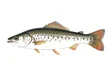
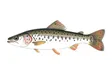
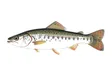
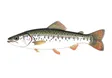
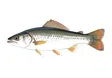
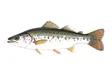
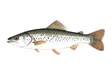
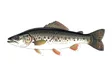
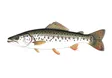
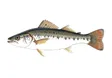
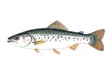
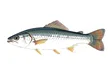
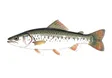
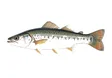
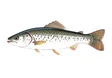
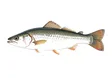
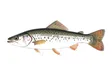
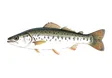
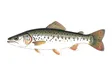
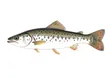
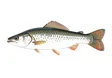
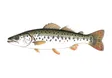
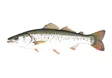
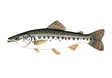
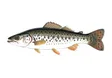
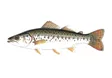
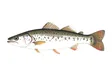
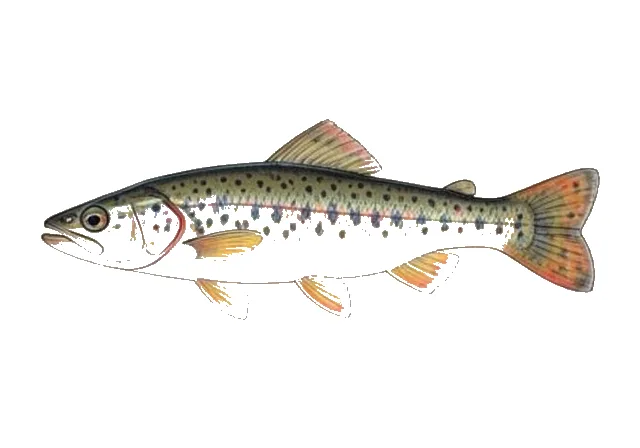
Niangua Darter field guide illustration

About Niangua Darter

The Niangua darter (Etheostoma nianguae) is a species of freshwater ray-finned fish, a darter from the subfamily Etheostomatinae, part of the family Percidae, which also contains the perches, ruffes and pikeperches. It is endemic to Missouri, United States. It is found only in the Osage River Basin of central Missouri where its range historically included the Sac River, Pomme de Terre River, Niangua River, Big Tavern Creek, and Maries River. It is a federally listed threatened species of the United States.

Description

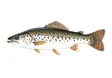
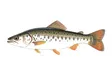
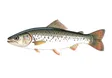
The Niangua darter is a slender, silvery-brown fish with about ten vertical dark bars with brown centers alternating with orange undulating lines. There are two small black spots at the base of the tail fin. The color is accentuated in breeding males which have bright orange and green bars along the flank and orange and green bands on the dorsal and tail fins. The maximum size of this fish is about 13 cm (5 in) but a more common size is 7.3 cm (3 in).

Lifecycle

Adult Niangua darters move from pools and slow runs to gravel riffles prior to spawning. The spawning season runs from mid-March to early June, but most of the breeding occurs in April. After spawning, Niangua darters return to the pools and stream runs. Young darters can reach sexual maturity after one year and can live up to four years, but few survive longer than two years.

Niangua darters eat the nymphs of stoneflies and mayflies, and other aquatic insects.

Distribution and habitat

Niangua darters live in clear upland creeks and small to medium-sized rivers with slight to moderate currents. They require continuously flowing streams with silt-free gravel and rock bottoms. These streams typically drain hilly areas with chert or dolomite bedrock. Niangua darters are found most of the year in shallow pools, margins, and stream runs.

Niangua darters occur only in Missouri in counties in the Osage River basin, including: Osage, Maries, Miller, Camden, Hickory, Dallas, Benton, Greene, Webster, Cedar, Polk, and St. Clair. The Niangua Darter was historically widespread and abundant in these rivers and streams.

Cause of decline

The Niangua darter has declined in numbers during the last 30 years, primarily due to habitat loss from reservoir construction, and stream channelization. Reservoirs isolated populations of Niangua Darter and barred them from dispersing between suitable habitats. Land clearing and increased amounts of sediment and nutrients have also caused declines in Niangua Darter populations. As a consequence of these factors, the IUCN has listed this fish as being "Vulnerable".

Article text: Wikipedia contributors, Niangua darter (source revision). Licensed under CC BY-SA 4.0. Retrieved 2026-10-11.
Diet and feeding

The FishTraits compilation records these diet categories for this species: invertebrates or larval fish. These are broad categories, not a claim that every individual consumes every example in a category.

Reported feeding positions include bottom feeding. The compilation combines published observations; diets can vary with age, locality, and available food.

Habitat preferences

Reported habitat associations include streams and small rivers.

The source records associations with gravel, cobble. An association indicates reported use, rather than an exclusive requirement.

Reproduction and parental care

The compilation reports a representative maturity age of 1.5 years. Its maturity field summarizes mean, median, or modal estimates, usually for females; male estimates can be used when female data are unavailable. It is not a fixed age at which every fish first breeds.

Recorded spawning months are Apr for the source’s reporting region (MO). This is a regional calendar, not a range-wide schedule.

The reproductive-guild classification includes hiding a brood without subsequent guarding.

Size and recorded longevity

FishTraits reports a maximum total length of 13 centimetres. Some entries use an estimated asymptotic length; this value should not be treated as a certified record catch.

Recorded longevity in the compilation is 3 years. Wild observations were preferred, but captive records were accepted where wild records were unavailable, and unspecified records were assumed wild. The value is not a guaranteed wild lifespan or an aquarium life expectancy.

Range

Where it lives

Share of 34 GBIF observation records with a state location, across 1 states.
0%
100%
Share of 34 GBIF observation records with a state location, across 1 states.

Share of records by state

Habitat

Water and movement

Water
WoRMS records this species in fresh water.
Migration
Undetermined

Classification

Taxonomy

Kingdom
Animalia
Phylum
Chordata
Superclass
Actinopterygii
Class
Teleostei
Order
Perciformes
Family
Percidae
Genus
Etheostoma
Species
Etheostoma nianguae
ITIS TSN
168414
WoRMS AphiaID
1019781
GBIF key
2382336

Common questions about Niangua Darter

What is the scientific name of Niangua Darter?
The scientific name is Etheostoma nianguae, in the family Percidae. Classification follows ITIS.
Does Niangua Darter live in fresh water or salt water?
WoRMS records this species in fresh water.
Where has Niangua Darter been recorded in the United States?
GBIF has observations in 1 states, with the most records in Missouri. The map shows observation records, which do not establish the complete natural range.

Closest relatives

Other Etheostoma species

Same family

More Percidae

All 229 species in Percidae