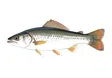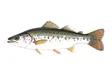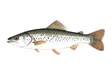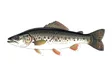
Distribution
The goldstripe darter inhabits the Gulf Coastal Plain, including parts of Alabama, Mississippi, Tennessee, Kentucky, Arkansas, Louisiana, and Oklahoma, and lower Mississippi drainages westward as far as the Colorado River Basin in Texas. Most recently, goldstripe darters have been confirmed in these drainages:
Other than occasional passing mention, little historical records exist of goldstripe darter distribution, making it difficult to determine in what ways, if any, the distribution has changed over time. Populations are currently believed to be stable.
Habitat
The goldstripe darter is typically found in small springs, streams, and creeks with vegetative cover, whether that be aquatic vegetation, algae beds, or detritus. Preferred substrates include sand, small gravel, and rubble. Goldstripe darters do not tend to be found in rivers or streams wider than 15 feet (4.6 m) or those with large gravel or mud substrates.
The goldstripe darter's preferred pH seems to be between 6.1 and 6.5. However, a population has been found that can withstand pH as low as 2.9. It prefers temperate climates, located between 38°N and 31°N in latitude.
Feeding
The goldstripe darter feeds on midge larvae, dipteran pupae, caddisfly larvae, dytiscid beetle larvae, and small crayfish.
Associated species
It is reasonable to believe some of these species, particularly those in the genus Etheostoma, may compete with the goldstripe darter for resources.
Lifecycle
At adulthood, goldstripe darters typically range from 35 to 55 mm (1.4 to 2.2 in) in length. Two of the largest goldstripe darters recorded were a female measuring 61.8 mm (2.43 in) and a male measuring 67 mm (2.6 in).
Reproduction
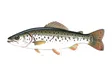
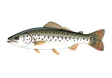
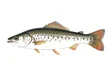
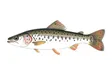
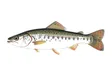
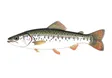
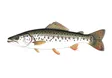
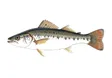
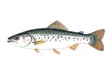
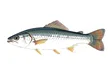
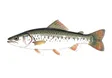
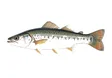
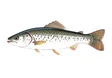
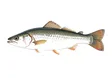
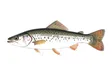
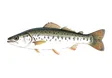
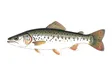
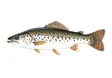
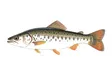
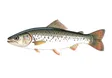
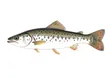
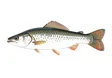
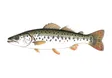
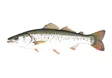
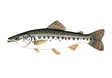
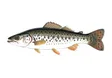
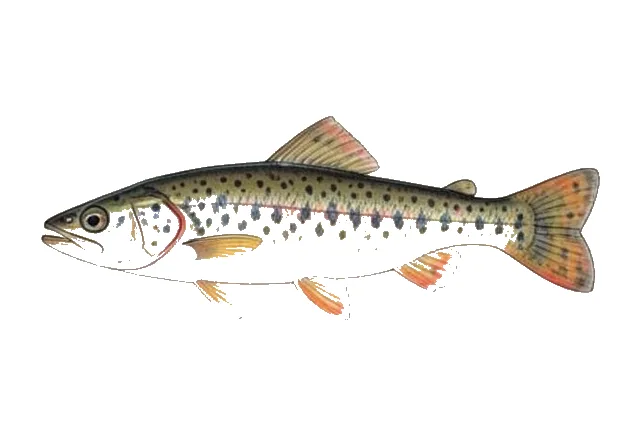
Spawning likely occurs from mid-March through June. During spawning, male body color changes from uniform olive-brown or olive-brown with darker blotches, to brown with black vertical bars. The black teardrop darkens and eye color becomes intensely red. Pelvic and anal fins darken from dusky to uniform black, and dorsal fin becomes intensely black.
Males perform stationary, lateral displays with erect dorsal fins during aggressive encounters with other males, but no elaborate courting displays were observed between males and females. Males pursue females, waiting for them to spawn. Goldstripe darters mate with multiple partners during the breeding season and do not seem to give any parental care. Multiple spawnings occur each year.
Goldstripe darter eggs are strongly adhesive and are attached singly to the spawning substrate. The eggs will be attached to plants, gravel, and occasionally on the sides of rocks. Goldstripe darters do not bury their eggs. Clutch size is estimated at 66, and average egg size is roughly 0.86 mm in diameter.
Management
Presently, the goldstripe darter is not considered endangered. Populations are thought to be stable. Thus, no current management programs are specifically designed for the goldstripe darter, though it does benefit from general riparian protection and buffers.
Recommendations
Few data exist for the historical distribution of the goldstripe darter, so determining whether the goldstripe has lost any of its former range is difficult. To spot any declines in the species in the future, periodic assessments of abundances should be conducted in small streams throughout its range. Goldstripe darters are vulnerable to seining and electroshocking for sampling purposes.
The goldstripe darter is likely to be vulnerable to sedimentation from logging, channelization, or agricultural runoff. Management plans designed to maintain and develop forested riparian zones adjacent to first-order streams would assist with its conservation. Because goldstripe darter populations tend to be isolated from each other, recolonization would be difficult after a disturbance.
Article text: Wikipedia contributors, Goldstripe darter (source revision). Licensed under CC BY-SA 4.0. Retrieved 2026-10-11.