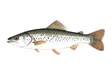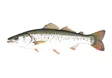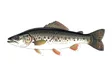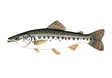
Boulder Darter

Nothonotus wapiti

Percidae · freshwater water fish

2 minute read · Species guide

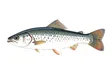
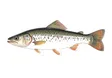
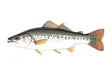
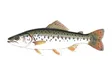
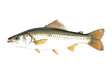
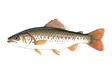
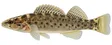
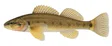
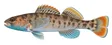
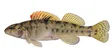
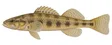
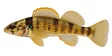
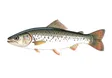
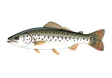
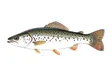
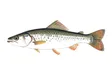
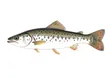
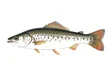
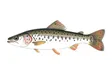
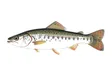
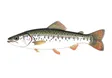
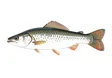
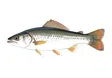
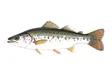
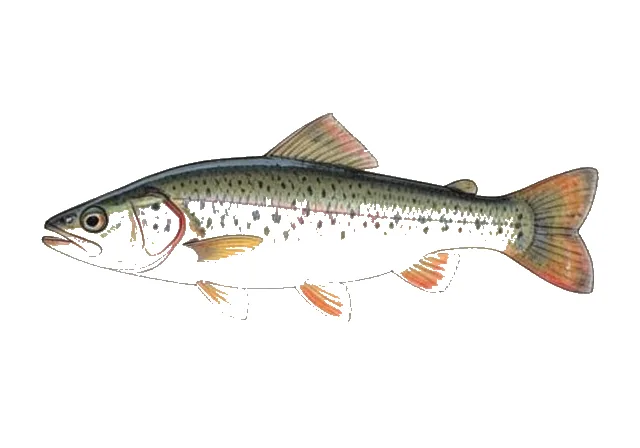
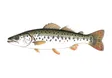
Boulder Darter field guide illustration

About Boulder Darter

The boulder darter (Etheostoma wapiti) is a species of freshwater ray-finned fish, a darter from the subfamily Etheostomatinae, part of the family Percidae, which also contains the perches, ruffes and pikeperches. It is endemic to Alabama and Tennessee in the United States, where it occurs in the Elk River system and Shoal Creek. It is found in small rivers and fast-flowing streams, at least 2 ft (0.6 m) deep, with boulders or a rocky base. It feeds on aquatic insect larvae but little is known of its natural history. The population trend of this fish is unknown but it is affected by a rise in siltation and the impoundment of water within its range by the building of dams. The International Union for Conservation of Nature has assessed its conservation status as being "vulnerable".

Description

The boulder darter grows up to 7.6 cm (3 inches) long and is olive to gray in color. Little is known about its life history. It probably spawns in the spring months of April and May.

Distribution and habitat

The boulder darter occurs only in the Elk River and a few of its larger tributaries. Its range in the Elk River extends from Fayetteville to just above the Wheeler Reservoir and half a mile below the Alabama State Highway 127 bridge. The tributaries in which it is found are the lower parts of Richland Creek, the mouth of Indian Creek, both in south-central Tennessee (Giles and Lincoln counties) and Limestone County, in northern Alabama. Its preferred habitat is fast-flowing streams, at least 2 ft (0.6 m) deep, with a substrate of rock or boulders. It requires good water quality. Its diet is thought to consist primarily of immature aquatic insects.

Status

It was listed as endangered under the U.S. Endangered Species Act effective October 3, 1988. It has been extirpated from most of its natural range as a result of human activities. Releases of cold water from Tims Ford Reservoir likely explain its disappearance from the upper Elk River in Lincoln County, Tennessee. Flooding of lower reaches of Shoal Creek by Wilson Dam and industrial pollution in upper reaches of the stream probably led to the loss of the population formerly present in Shoal Creek. The boulder darter was last observed and collected in Shoal Creek in the 1880s. The IUCN has listed the boulder darter as "Vulnerable" and considers that further habitat and population monitoring programs should be undertaken to protect the fish and its habitat.

Article text: Wikipedia contributors, Boulder darter (source revision). Licensed under CC BY-SA 4.0. Retrieved 2026-10-12.
Range

Where it lives

Share of 22 GBIF observation records with a state location, across 2 states.
0%
72.7%
Share of 22 GBIF observation records with a state location, across 2 states.

Share of records by state

Habitat

Water and movement

Water
WoRMS records this species in fresh water.
Migration
Undetermined

Classification

Taxonomy

Kingdom
Animalia
Phylum
Chordata
Superclass
Actinopterygii
Class
Teleostei
Order
Perciformes
Family
Percidae
Genus
Nothonotus
Species
Nothonotus wapiti
ITIS TSN
1148981
WoRMS AphiaID
1593505
GBIF key
2382213

Common questions about Boulder Darter

What is the scientific name of Boulder Darter?
The scientific name is Nothonotus wapiti, in the family Percidae. Classification follows ITIS.
Does Boulder Darter live in fresh water or salt water?
WoRMS records this species in fresh water.
Where has Boulder Darter been recorded in the United States?
GBIF has observations in 2 states, with the most records in Tennessee, Alabama. The map shows observation records, which do not establish the complete natural range.

Closest relatives

Other Nothonotus species

Same family

More Percidae

All 229 species in Percidae