Article text: Wikipedia contributors, Etheostoma duryi (source revision). Licensed under CC BY-SA 4.0. Retrieved 2026-10-11.
Black Darter
Etheostoma duryi
Percidae · freshwater water fish
2 minute read · Species guide
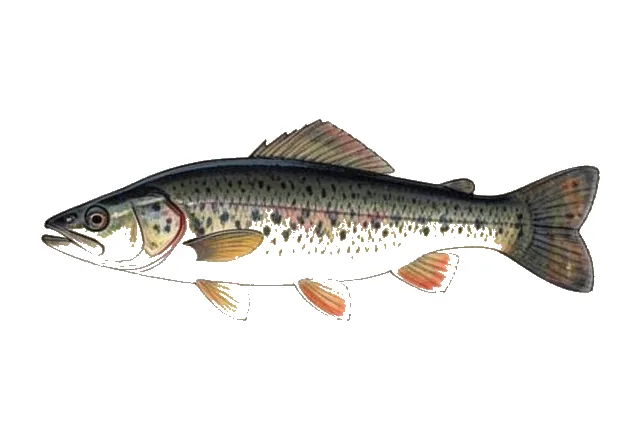
About Black Darter
Etheostoma duryi, the black darter, is a species of darter endemic to the eastern United States, where it occurs in the drainage of the Tennessee River in the states of Tennessee, Georgia, and Alabama. It is an inhabitant of rocky pools in streams and smaller rivers and their adjacent riffles. This species can reach a length of 7.2 cm (2.8 in), though most only reach about 5 cm (2.0 in). The specific epithet honors Charles Dury (1847–1931), who collected the original type specimens.
Diet and feeding
The FishTraits compilation records these diet categories for this species: invertebrates or larval fish. These are broad categories, not a claim that every individual consumes every example in a category.
Reported feeding positions include bottom feeding. The compilation combines published observations; diets can vary with age, locality, and available food.
Habitat preferences
Reported habitat associations include medium to large rivers, streams and small rivers, creeks.
The source records associations with sand, gravel, cobble, boulders. An association indicates reported use, rather than an exclusive requirement.
Reproduction and parental care
The compilation reports a representative maturity age of 1 years. Its maturity field summarizes mean, median, or modal estimates, usually for females; male estimates can be used when female data are unavailable. It is not a fixed age at which every fish first breeds.
Recorded spawning months are Mar, Apr, May for the source’s reporting region (MS). This is a regional calendar, not a range-wide schedule.
The reproductive-guild classification includes guarding eggs or young at a spawning substrate or nest.
Size and recorded longevity
FishTraits reports a maximum total length of 7.2 centimetres. Some entries use an estimated asymptotic length; this value should not be treated as a certified record catch.
Recorded longevity in the compilation is 3 years. Wild observations were preferred, but captive records were accepted where wild records were unavailable, and unspecified records were assumed wild. The value is not a guaranteed wild lifespan or an aquarium life expectancy.
Range
Where it lives
0%
67.3%of mapped records
A blank area on the dot layer usually means nobody sampled there, not that the fish is absent. Turn on “every survey site” to see where the survey looked.
Share of records by state
The USGS stream survey caught it at 90 of its sites, in 2 states. That survey and the GBIF records are two different counts of two different things, so the site keeps them apart.
Habitat
Water and movement
- Water
- WoRMS records this species in fresh water.
- Migration
- Undetermined
Classification
Taxonomy
- Kingdom
- Animalia
- Phylum
- Chordata
- Superclass
- Actinopterygii
- Class
- Teleostei
- Order
- Perciformes
- Family
- Percidae
- Genus
- Etheostoma
- Species
- Etheostoma duryi
- ITIS TSN
- 168389
- WoRMS AphiaID
- 1019685
- GBIF key
- 2382410
Common questions about Black Darter
What is the scientific name of Black Darter?
The scientific name is Etheostoma duryi, in the family Percidae. Classification follows ITIS.
Does Black Darter live in fresh water or salt water?
WoRMS records this species in fresh water.
Where has Black Darter been recorded in the United States?
GBIF has observations in 6 states, with the most records in Alabama, Tennessee, Mississippi. The map shows observation records, which do not establish the complete natural range.
Closest relatives
Other Etheostoma species
Alabama Darter3 states
Etheostoma ramseyiPercidaeNativeFresh
Arkansas Darter5 states
Etheostoma craginiPercidaeNative and introducedFresh
Arkansas Saddled Darter3 states
Etheostoma euzonumPercidaeNativeFresh
Arrow Darter3 states
Etheostoma sagittaPercidaeNativeFresh
Autumn Darter2 states
Etheostoma autumnalePercidaeNativeFresh
Backwater Darter3 states
Etheostoma zoniferPercidaeNativeFresh
Banded Darter24 states
Etheostoma zonalePercidaeNative and introducedFresh
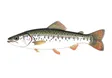
Bandfin Darter4 states
Etheostoma zonistiumPercidaeNativeFresh
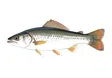
Barcheek Darter2 states
Etheostoma obeyensePercidaeNativeFresh
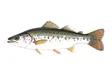
Barrens Darter2 states
Etheostoma forbesiPercidaeNativeFresh
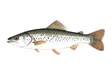
Beaded Darter1 states
Etheostoma clintonPercidaeNativeFresh
Blackfin Darter3 states
Etheostoma nigripinnePercidaeNativeFresh
Blenny Darter3 states
Etheostoma blenniusPercidaeNativeFresh
Blue River Orangebelly Darter7 states
Etheostoma cyanorumPercidaeNative
Blueface Darter1 states
Etheostoma cyanoprosopumPercidaeNativeFresh
Bluegrass Darter2 states
Etheostoma jimmycarterPercidaeNativeFresh
Bluemask Darter1 states
Etheostoma akatuloPercidaeNativeFresh
Blueside Darter9 states
Etheostoma jessiaePercidaeNativeFresh
Bluespar Darter2 states
Etheostoma meadiaePercidaeNativeFresh
Bluntnose Darter
Etheostoma chlorosomaPercidaeNativeFresh
Brighteye Darter6 states
Etheostoma lynceumPercidaeNativeFresh
Brook Darter1 states
Etheostoma burriPercidaeNativeFresh
Brown Darter3 states
Etheostoma edwiniPercidaeNativeFresh
Buck Darter1 states
Etheostoma nebraPercidaeNativeFresh
Same family
More Percidae
Alabama Darter3 states
Etheostoma ramseyiPercidaeNativeFresh
Amber Darter3 states
Percina antesellaPercidaeNativeFresh
Appalachia Darter3 states
Percina gymnocephalaPercidaeNativeFresh
Arkansas Darter5 states
Etheostoma craginiPercidaeNative and introducedFresh
Arkansas Saddled Darter3 states
Etheostoma euzonumPercidaeNativeFresh
Arrow Darter3 states
Etheostoma sagittaPercidaeNativeFresh
Ashy Darter5 states
Allohistium cinereumPercidaeNativeFresh
Autumn Darter2 states
Etheostoma autumnalePercidaeNativeFresh
Backwater Darter3 states
Etheostoma zoniferPercidaeNativeFresh
Banded Darter24 states
Etheostoma zonalePercidaeNative and introducedFresh
Bandfin Darter4 states
Etheostoma zonistiumPercidaeNativeFresh
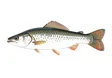
Bankhead Darter1 states
Percina sipsiPercidaeNativeFresh
Barcheek Darter2 states
Etheostoma obeyensePercidaeNativeFresh
Barrens Darter2 states
Etheostoma forbesiPercidaeNativeFresh
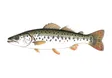
Bayou Darter1 states
Nothonotus rubrusPercidaeNative
Beaded Darter1 states
Etheostoma clintonPercidaeNativeFresh
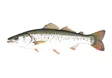
Bigscale Logperch7 states
Percina macrolepidaPercidaeNative and introducedFresh
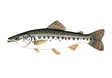
Blackbanded Darter10 states
Percina nigrofasciataPercidaeNativeFresh
Blackfin Darter3 states
Etheostoma nigripinnePercidaeNativeFresh
Blackside Darter28 states
Percina maculataPercidaeNativeFresh
Blenny Darter3 states
Etheostoma blenniusPercidaeNativeFresh
Bloodfin Darter4 states
Nothonotus sanguifluusPercidaeNativeFresh
Blotchside Logperch17 states
Percina burtoniPercidaeNativeFresh
Blue River Orangebelly Darter7 states
Etheostoma cyanorumPercidaeNative