Leopard Darter

Percina pantherina

Percidae · freshwater water fish

4 minute read · Species guide

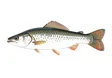
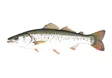
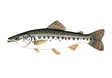
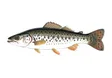
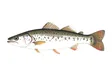
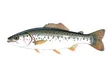
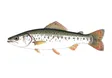
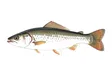
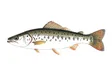
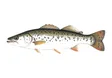
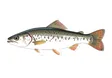
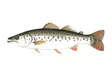
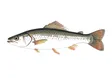
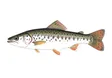
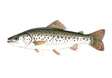
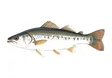
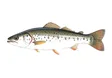
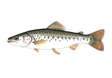
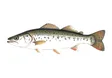
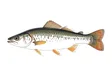
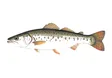
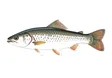
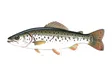
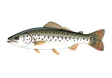
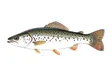
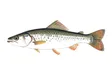
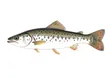
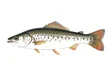
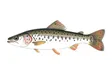
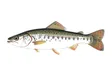
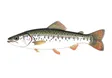
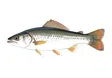
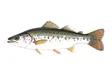
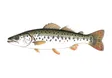
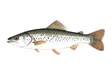
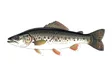
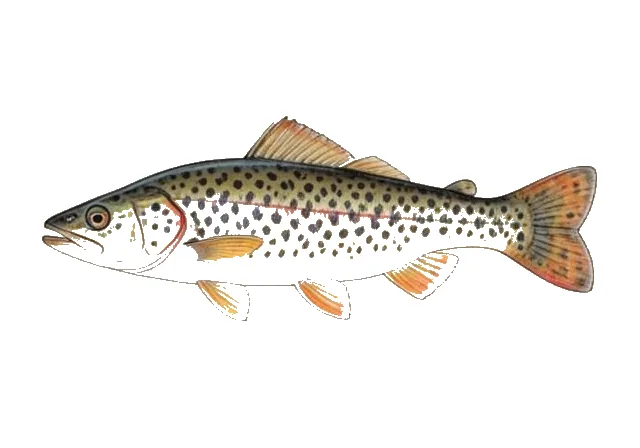
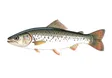
Leopard Darter field guide illustration

About Leopard Darter

The leopard darter (Percina pantherina) is a species of freshwater ray-finned fish, a darter from the subfamily Etheostomatinae, part of the family Percidae, which also contains the perches, ruffes and pikeperches. It is native to the United States, where it can be found only in the Little River drainage in Oklahoma and Arkansas. Its typical habitat is medium to large streams with rubble and boulder substrate. It feeds on small invertebrates on the riverbed and spawns mainly in March and April. It is threatened by impoundment, habitat loss and runoff from agricultural activities. It has never been a common species and has been listed as a threatened species in the United States since 1978, and the International Union for Conservation of Nature lists it as a "vulnerable species".

Description

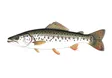
Leopard darters rarely exceed three inches (8 cm) in length. They have 11–14 large, dark spots on their sides. These spots contrast against a light background that ranges from pale olive on the back to yellowish-olive on the underside. The back of the fish has numerous saddles and bars.

Ecology

Leopard darters typically live less than two years, but individuals older than three years have been found. Spawning occurs in March and April, but may occur as early as February, on gravel-bottomed riffles. The fertilised eggs are buried in gravel. The average clutch size is about 65 eggs. Young leopard darters begin to appear in May of each year. Food items include aquatic insects and microcrustaceans. Leopard darters are found in medium to large streams. Typically, they are not found in smaller, headwater streams. From May to February, leopard darters prefer small, noisy pools with a rubble and boulder substrate. Spawning occurs on gravel substrates; however, the dominant riffle substrate may be gravel, rubble, boulder, and bedrock.

Distribution

Historically, the leopard darter was limited to upland, large stream habitats of the Little River drainage in Oklahoma and Arkansas. Currently, scattered populations are found within its historic range. In Oklahoma, it occurs within the Little River drainage (Mountain Fork, Glover, and Little Rivers) in LeFlore, McCurtain, and Pushmataha Counties. In Arkansas, the leopard darter occurs in the Cossatot, Robinson Fork, and Mountain Fork Rivers in Howard, Polk, and Sevier Counties.

Status

Leopard darters have likely never been common. The greatest threat to the survival of the species is the loss of habitat due to the construction of reservoirs. These impoundments also isolate populations, which further endangers the species. Logging activity, agricultural and industrial runoff, and gravel removal all pose threats as well.

Article text: Wikipedia contributors, Leopard darter (source revision). Licensed under CC BY-SA 4.0. Retrieved 2026-10-11.
Diet and feeding

The FishTraits compilation records these diet categories for this species: invertebrates or larval fish. These are broad categories, not a claim that every individual consumes every example in a category.
Reported feeding positions include bottom feeding. The compilation combines published observations; diets can vary with age, locality, and available food.

Habitat preferences

Reported habitat associations include medium to large rivers, streams and small rivers.

The source records associations with cobble, boulders, vegetation. An association indicates reported use, rather than an exclusive requirement.

Reproduction and parental care

The compilation reports a representative maturity age of 1 years. Its maturity field summarizes mean, median, or modal estimates, usually for females; male estimates can be used when female data are unavailable. It is not a fixed age at which every fish first breeds.

Batch or serial spawning has been reported somewhere in the species’ range. This does not establish the same spawning pattern for every population.

Recorded spawning months are Mar, Apr, May for the source’s reporting region (OK). This is a regional calendar, not a range-wide schedule.

The reproductive-guild classification includes hiding a brood without subsequent guarding.

Size and recorded longevity

FishTraits reports a maximum total length of 8 centimetres. Some entries use an estimated asymptotic length; this value should not be treated as a certified record catch.

Recorded longevity in the compilation is 2 years. Wild observations were preferred, but captive records were accepted where wild records were unavailable, and unspecified records were assumed wild. The value is not a guaranteed wild lifespan or an aquarium life expectancy.

Range

Where it lives

Share of 99 GBIF observation records with a state location, across 2 states.
0%
79.8%
Share of 99 GBIF observation records with a state location, across 2 states.

Share of records by state

Habitat

Water and movement

Water
WoRMS records this species in fresh water.
Migration
Undetermined

Classification

Taxonomy

Kingdom
Animalia
Phylum
Chordata
Superclass
Actinopterygii
Class
Teleostei
Order
Perciformes
Family
Percidae
Genus
Percina
Species
Percina pantherina
ITIS TSN
168493
WoRMS AphiaID
1524938
GBIF key
2382071

Common questions about Leopard Darter

What is the scientific name of Leopard Darter?
The scientific name is Percina pantherina, in the family Percidae. Classification follows ITIS.
Does Leopard Darter live in fresh water or salt water?
WoRMS records this species in fresh water.
Where has Leopard Darter been recorded in the United States?
GBIF has observations in 2 states, with the most records in Oklahoma, Arkansas. The map shows observation records, which do not establish the complete natural range.

Closest relatives

Other Percina species

Same family

More Percidae

All 229 species in Percidae