Speckled Darter

Etheostoma stigmaeum

Percidae · freshwater water fish

4 minute read · Species guide

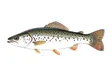
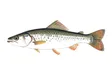
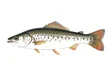
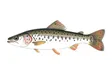
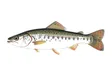
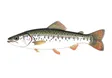
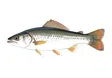
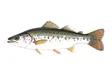
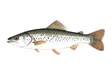
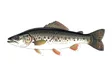
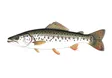
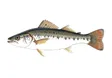
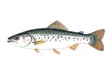
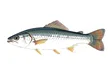
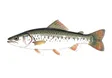
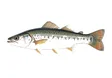
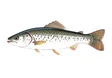
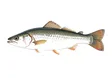
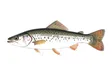
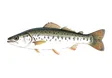
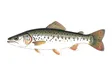
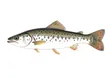
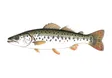
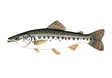
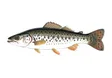
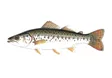
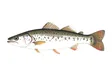
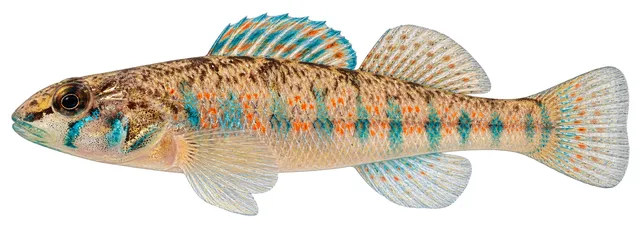
Speckled Darter field guide illustration

About Speckled Darter

The speckled darter (Etheostoma stigmaeum) is a species of freshwater ray-finned fish, a darter from the subfamily Etheostomatinae, part of the family Percidae, which also contains the perches, ruffes and pikeperches. It is endemic to the central and southeastern United States. It occurs in the Mississippi River basin and through the Gulf Coast drainages. It is also found in the Clinch River and the Powell River. This species inhabits rocky or sandy pools in flowing waters up to the size of medium rivers with fast currents. It can reach a length of 6.1 centimetres (2.4 in) TL though most only reach about 4 centimetres (1.6 in).

In 2012, studies found five distinct species that were formerly included in E. stigmaeum. In a paper published in the Bulletin of the Alabama Museum of Natural History, Mayden and Layman described five new species, all named after former U S presidents and one vice president, based on their "leadership in conservation policies":

Description

Speckled darters, Etheostoma stigmaeum, are a member of the family Percidae. They have a moderately blunt snout, with no premaxillary frenum. They can reach a maximum length of about 2.2 inches. They have both spines and rays, their lateral line is incomplete, and their gill covers are slightly connected by a membrane across their throat. The midline of their belly does not have enlarged scales. They have a sandy colored dorsal side and a yellow or white ventral side. There are 6 dark brown saddles and large specks on the dorsum, with 7–11 dark brown blotches down their body. Mating males have turquoise colored bands on their sides and in their fins, as opposed to the typical dark blue. Breeding females are much less brightly colored than the males. They develop extended genital papilla.

Habitat

Speckled darters are freshwater fish. They prefer clear pools of up to 1 m deep, with moderately swift streams. They typically prefer a bottom of sand or sand and gravel.

Reproduction and Life Cycle

Spawning in Missouri begins as early as March and ends as late as May, at temperatures between 57°F and 62°F. The eggs are buried in substrate, where there is a relationship between temperature and incubation period, with higher temperatures lessening the time. Typical incubation period is about 9–10 days at about 62–68°F. Larvae hatch at about 4.2-5.2 mm with a functional jaw and well developed pectoral fins.

Distribution

The speckled darter is found in eastern Oklahoma, southeastern Kansas, western Louisiana, Virginia, northwestern Georgia, western Florida, and in the Gulf drainages from the Sabine River to the Pensacola Bay.

Etymology

The scientific name for the speckled darter is Etheostoma stigmaeum. Etheostoma is derived from the etheo, the Greek word for "to strain", and stoma, the Greek word for "mouth". Stigmaeum is the Greek word for "speckled".

Article text: Wikipedia contributors, Speckled darter (source revision). Licensed under CC BY-SA 4.0. Retrieved 2026-10-11.
Diet and feeding

The FishTraits compilation records these diet categories for this species: invertebrates or larval fish. These are broad categories, not a claim that every individual consumes every example in a category.

Reported feeding positions include bottom feeding. The compilation combines published observations; diets can vary with age, locality, and available food.

Habitat preferences

Reported habitat associations include medium to large rivers, streams and small rivers, creeks.

The source records associations with sand, gravel. An association indicates reported use, rather than an exclusive requirement.

Reproduction and parental care

The compilation reports a representative maturity age of 1 years. Its maturity field summarizes mean, median, or modal estimates, usually for females; male estimates can be used when female data are unavailable. It is not a fixed age at which every fish first breeds.

Batch or serial spawning has been reported somewhere in the species’ range. This does not establish the same spawning pattern for every population.

Recorded spawning months are Mar, Apr, May for the source’s reporting region (MS). This is a regional calendar, not a range-wide schedule.

The reproductive-guild classification includes hiding a brood without subsequent guarding.

Size and recorded longevity

FishTraits reports a maximum total length of 6.1 centimetres. Some entries use an estimated asymptotic length; this value should not be treated as a certified record catch.

Recorded longevity in the compilation is 3 years. Wild observations were preferred, but captive records were accepted where wild records were unavailable, and unspecified records were assumed wild. The value is not a guaranteed wild lifespan or an aquarium life expectancy.

Range

Where it lives

Share of 6,072 GBIF observation records with a state location, across 14 states. The orange dots are USGS stream-survey sites where this species was caught.
0%
54.9%
Share of 6,072 GBIF observation records with a state location, across 14 states. The orange dots are USGS stream-survey sites where this species was caught.

A blank area on the dot layer usually means nobody sampled there, not that the fish is absent. Turn on “every survey site” to see where the survey looked.

The USGS stream survey caught it at 239 of its sites, in 11 states. That survey and the GBIF records are two different counts of two different things, so the site keeps them apart.

Habitat

Water and movement

Water
WoRMS records this species in fresh water.
Migration
Undetermined

Classification

Taxonomy

Kingdom
Animalia
Phylum
Chordata
Superclass
Actinopterygii
Class
Teleostei
Order
Perciformes
Family
Percidae
Genus
Etheostoma
Species
Etheostoma stigmaeum
ITIS TSN
168437
WoRMS AphiaID
1378186
GBIF key
2382334

Common questions about Speckled Darter

What is the scientific name of Speckled Darter?
The scientific name is Etheostoma stigmaeum, in the family Percidae. Classification follows ITIS.
Does Speckled Darter live in fresh water or salt water?
WoRMS records this species in fresh water.
Where has Speckled Darter been recorded in the United States?
GBIF has observations in 14 states, with the most records in Alabama, Mississippi, Kentucky. The map shows observation records, which do not establish the complete natural range.

Closest relatives

Other Etheostoma species

Same family

More Percidae

All 229 species in Percidae