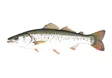
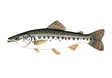
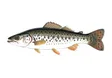
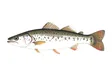
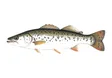
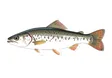
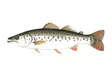
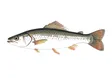
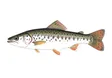
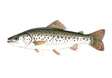
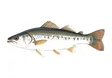
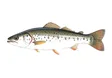
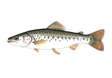
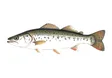
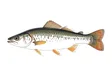
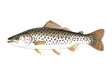
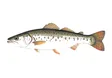
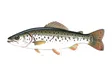
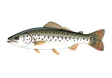
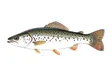
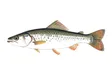
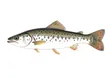
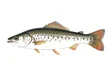
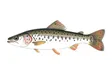
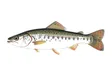
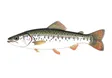
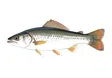
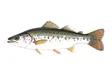
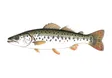
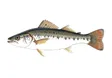
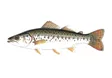
Geographic range
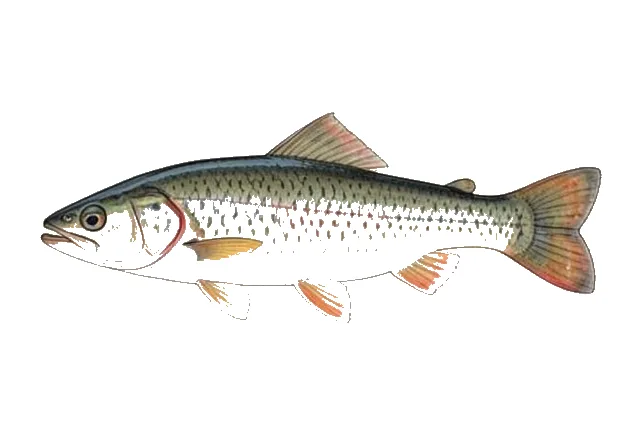
P. macrocephala occurs in the basin of the Ohio River from New York and North Carolina west as far as western central Kentucky and Tennessee.
Habitat
The preferred habitat of P. macrocephala is rocky pools with a strong flow, usually upstream or downstream from riffles with pebbles in clear, small to medium-sized rivers. It also inhabits creeks.
Diet
P. macrocephala is carnivorous, and its food is mainly small crayfishes and mayfly nymphs.
Additional field notes
Longhead darter feed in clear rivers around flowing rocky pools.
Sources: Percina macrocephala species summary
Pool position and prey
FishBase places these pools just upstream or downstream of rubble riffles in small to medium rivers; creeks are also included. This setting distinguishes a flowing pool from an isolated stagnant one. Small crayfish and mayfly nymphs are foods specifically listed in the summary, connecting the fish with bottom-associated stream prey.
Sources: Percina macrocephala species summary
Guide sources
Research reviewed 2026-10-19.
Article text: Wikipedia contributors, Percina macrocephala (source revision). Licensed under CC BY-SA 4.0. Retrieved 2026-10-11.
Diet and feeding
The FishTraits compilation records these diet categories for this species: invertebrates or larval fish. These are broad categories, not a claim that every individual consumes every example in a category.
Reported feeding positions include bottom feeding and surface or water-column feeding. The compilation combines published observations; diets can vary with age, locality, and available food.
Habitat preferences
Reported habitat associations include medium to large rivers, streams and small rivers.
The source records associations with clay or silt, sand, gravel, cobble, boulders, bedrock, vegetation, organic debris. An association indicates reported use, rather than an exclusive requirement.
Reproduction and parental care
The compilation reports a representative maturity age of 1.5 years. Its maturity field summarizes mean, median, or modal estimates, usually for females; male estimates can be used when female data are unavailable. It is not a fixed age at which every fish first breeds.
Recorded spawning months are Mar for the source’s reporting region (NC). This is a regional calendar, not a range-wide schedule.
The reproductive-guild classification includes spawning on open substrates without guarding the brood.
Size and recorded longevity
FishTraits reports a maximum total length of 12 centimetres. Some entries use an estimated asymptotic length; this value should not be treated as a certified record catch.
Recorded longevity in the compilation is 4 years. Wild observations were preferred, but captive records were accepted where wild records were unavailable, and unspecified records were assumed wild. The value is not a guaranteed wild lifespan or an aquarium life expectancy.