Arkansas Darter

Etheostoma cragini

Percidae · freshwater water fish

3 minute read · Species guide

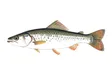
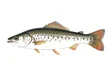
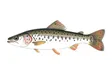
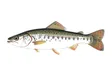
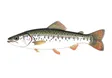
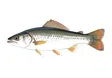
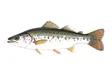
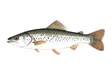
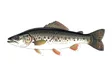
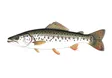
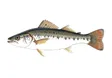
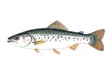
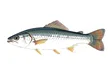
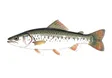
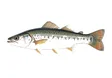
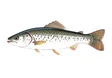
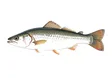
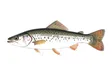
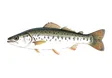
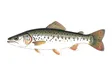
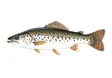
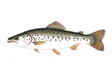
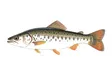
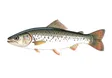
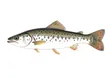
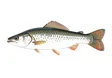
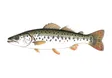
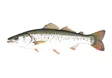
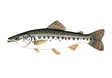
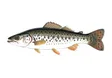
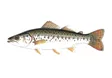
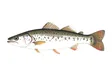
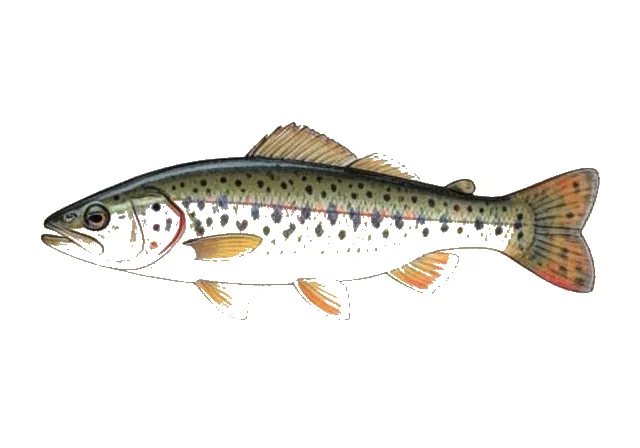
Arkansas Darter field guide illustration

About Arkansas Darter

The Arkansas darter (Etheostoma cragini) is a species of freshwater ray-finned fish, a darter from the subfamily Etheostomatinae, part of the family Percidae, which also contains the perches, ruffes and pikeperches. It is endemic to the United States where it is found in Kansas, Arkansas, Missouri, Colorado, and Oklahoma.

Description

The Arkansas darter has an olive-brown dorsal surface spotted with fine black markings, and a yellowish-white underside except that in males during the breeding season, the belly turns bright orange. It has a blackish wedge-shaped blotch beneath its eye and there are 12 to 14 dark stripes along the sides. This species reaches a maximum size of 6 cm (2.4 in).

Distribution

The Arkansas darter, despite its name, is primarily found in Kansas. However, its range encompasses the Arkansas River drainage system and this extends into eastern Colorado, southwestern Missouri, northeastern Arkansas and north-central Oklahoma, as well.

Behavior

The Arkansas darter moves up and down stream by as much as several kilometers in accordance with varying water flows. It feeds on small insects and their larvae and sometimes consumes plant material such as seeds. It reaches sexual maturity at about a year and spawns during the spring and summer. The eggs are laid in shallow water on gravel bottoms in open areas or among organic debris accumulations.

Status

The IUCN lists the Arkansas darter as being Near Threatened. It has a limited distribution and threats to this species include the lowering of the water level in streams resulting from groundwater pumping in the western part of its range, and potential development pressures in the eastern part. Drought can also cause water levels to fall and runoff from feed lots may cause pollution.

Article text: Wikipedia contributors, Arkansas darter (source revision). Licensed under CC BY-SA 4.0. Retrieved 2026-10-11.
Diet and feeding

The FishTraits compilation records these diet categories for this species: invertebrates or larval fish. These are broad categories, not a claim that every individual consumes every example in a category.

Reported feeding positions include bottom feeding. The compilation combines published observations; diets can vary with age, locality, and available food.

Habitat preferences

Reported habitat associations include creeks, springs or subterranean waters.

The source records associations with muck, clay or silt, sand, gravel, vegetation. An association indicates reported use, rather than an exclusive requirement.

Reproduction and parental care

The compilation reports a representative maturity age of 1 years. Its maturity field summarizes mean, median, or modal estimates, usually for females; male estimates can be used when female data are unavailable. It is not a fixed age at which every fish first breeds.

Batch or serial spawning has been reported somewhere in the species’ range. This does not establish the same spawning pattern for every population.

Recorded spawning months are Feb, Mar, Apr, May, Jun, Jul for the source’s reporting region (MO). This is a regional calendar, not a range-wide schedule.

The reproductive-guild classification includes hiding a brood without subsequent guarding.

Size and recorded longevity

FishTraits reports a maximum total length of 5.1 centimetres. Some entries use an estimated asymptotic length; this value should not be treated as a certified record catch.

Recorded longevity in the compilation is 3 years. Wild observations were preferred, but captive records were accepted where wild records were unavailable, and unspecified records were assumed wild. The value is not a guaranteed wild lifespan or an aquarium life expectancy.

Native range

Arkansas River drainage in southwestern Missouri, northwestern Arkansas, Oklahoma, Kansas, and Colorado (Page and Burr 1991).

Introduction history

According to Miller (1984), the Lytle Pond introduction was carried out by the Colorado Division of Wildlife as part of an experimental transplant, apparently for the preservation of an imperiled or uncommon species. The introduction involved 34 specimens taken from a spring slough along Fountain (about 5 kilometers south of town of Fountain), El Paso County, Colorado. This species was stocked as a conservation measure.

Range

Where it lives

Share of 552 GBIF observation records with a state location, across 5 states. The orange dots are USGS stream-survey sites where this species was caught.
0%
55.4%
Share of 552 GBIF observation records with a state location, across 5 states. The orange dots are USGS stream-survey sites where this species was caught.

A blank area on the dot layer usually means nobody sampled there, not that the fish is absent. Turn on “every survey site” to see where the survey looked.

The USGS stream survey caught it at 151 of its sites, in 4 states. That survey and the GBIF records are two different counts of two different things, so the site keeps them apart.

Habitat

Water and movement

Water
WoRMS records this species in fresh water.
USGS NAS habitat
Freshwater
US status
Native transplant — native to part of the United States, moved to other waters inside it.
Migration
Migratory
Pattern

Classification

Taxonomy

Kingdom
Animalia
Phylum
Chordata
Superclass
Actinopterygii
Class
Teleostei
Order
Perciformes
Family
Percidae
Genus
Etheostoma
Species
Etheostoma cragini
ITIS TSN
168386
WoRMS AphiaID
1019837
GBIF key
2382268

Common questions about Arkansas Darter

What is the scientific name of Arkansas Darter?
The scientific name is Etheostoma cragini, in the family Percidae. Classification follows ITIS.
Does Arkansas Darter live in fresh water or salt water?
WoRMS records this species in fresh water.
Where has Arkansas Darter been recorded in the United States?
GBIF has observations in 5 states, with the most records in Kansas, Oklahoma, Missouri. The map shows observation records, which do not establish the complete natural range.

Closest relatives

Other Etheostoma species

Same family

More Percidae

All 229 species in Percidae