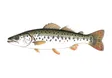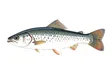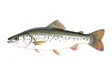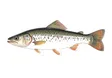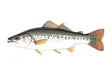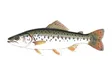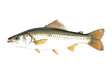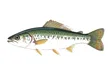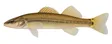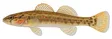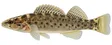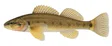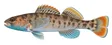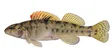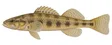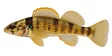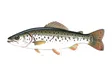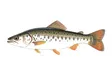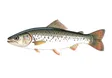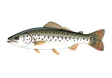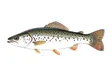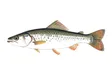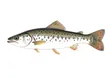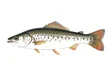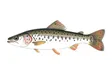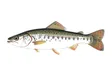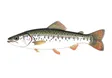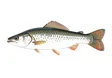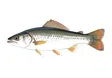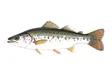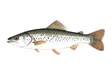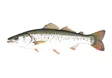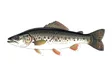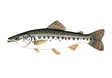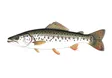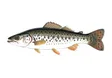
Geographic distribution
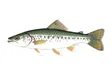
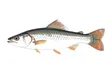
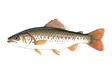
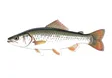
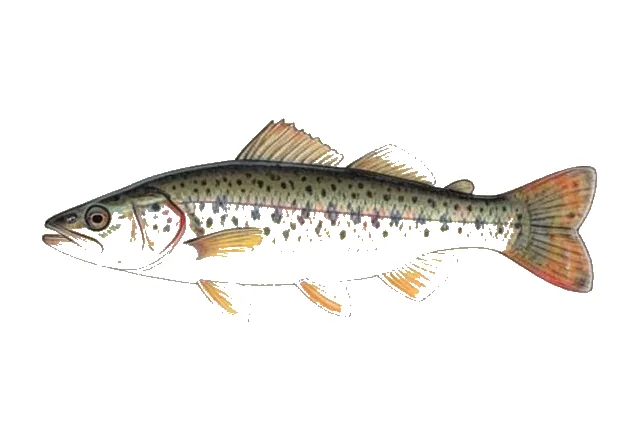
The bloodfin darter occupies small to medium streams on the Cumberland Plateau in and around the Big South Fork. The range of the species is small and patchy and the effects of human expansion are not fully known at this time. Currently, the bloodfin darter occurs in the same streams and river that it has historically. Human expansion may pose a problem for this species, but the effects are not yet known.
Ecology
The bloodfin darter is an invertivore (feeds on invertebrates) in both the adult and juvenile forms and prefers high gradient, medium river, moderate gradient, riffle. The bloodfin darter prefers high to moderate gradient streams that are in the higher elevations of the Cumberland Plateau. The bloodfin dater also needs rocky/gravel bottoms to spawn where the eggs are deposited in between crevices in the rocks.
Life history
The bloodfin darter reaches a maximum length of 9.0 centimeters (3.5 in) and the species breeds in rocky shoals. The bloodfin darter lays eggs in or under rocks that are near fast moving water or riffles of small to medium rivers and streams. The bloodfin darter breeds once per year in the spring. The species lays 20 eggs per mating event and eggs were clumped together; larvae were phototactic and pelagic for 5–21 days before becoming benthic. Fish that are phototactic move towards the light and fish that are pelagic are in open water. Fish that are benthic inhabit the bottom portions of the water column in the habitat that species is in.
Management
Somewhat small extent of occurrence, but listed as Least Concern in view of the fairly large number of subpopulations, lack of evidence of a substantial decline, and apparent lack of major threats.
Additional field notes
Bloodfin darter begin life above the bottom before settling into their rocky river habitat.
Early life in a propagation study
A captive-propagation study summarized by FishBase recorded adhesive eggs laid inside the narrow space between joined ceramic tiles. About 20 eggs were deposited in a mating event, forming a clump. The eggs measured roughly 1.5–1.8 millimetres across. These are observations from captive fish originating in Tennessee’s Big South Fork, rather than measurements of every wild nest.
The larvae were attracted to light and remained in the water column for 5–21 days before becoming bottom-associated. This early pelagic interval contrasts with the fast rocky riffles occupied later in life.
Article text: Wikipedia contributors, Bloodfin darter (source revision). Licensed under CC BY-SA 4.0. Retrieved 2026-10-11.