Fountain Darter

Etheostoma fonticola

Percidae · freshwater water fish

4 minute read · Species guide

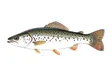
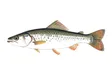
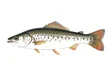
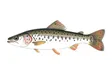
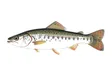
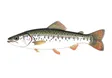
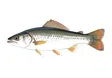
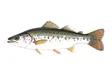
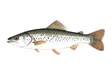
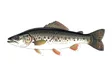
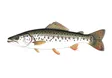
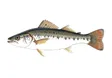
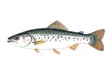
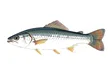
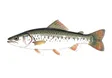
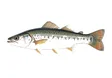
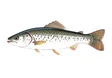
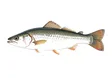
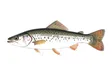
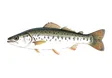
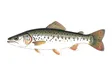
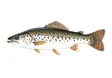
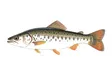
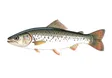
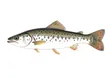
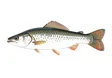
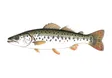
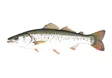
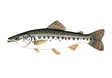
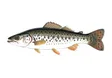
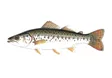
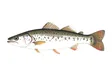
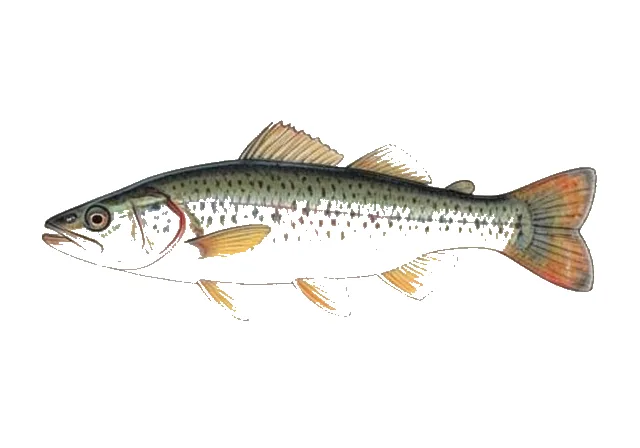
Fountain Darter field guide illustration

About Fountain Darter

The fountain darter (Etheostoma fonticola) is a species of freshwater ray-finned fish, a darter from the subfamily Etheostomatinae, part of the family Percidae, which also contains the perches, ruffes, and pikeperches. It is found in the headwaters of only two rivers in Texas, United States, the Comal River, and the San Marcos River. It is generally smaller than 3 cm (1.2 in) long and feeds on small invertebrates. It is a federally listed endangered species of the United States and is also listed as endangered by the IUCN.

Distribution and habitat

The fountain darter is known from only two locations, primarily the headwaters of the spring-fed San Marcos River, having been observed as far as 1.25 miles downstream, as well as the upper reaches of the Comal River in central Texas. Its geographic isolation is reflective of its incredibly specific habitation preferences, which demand conditions that can only be found in these two Texas river headwaters. In these unique locations, they can be observed in open areas created by a medium current at depths of 3–5 feet near the outlets of contributing spring heads with rates of flow low enough to retain a layer of percolating sand. These springs can be found adjacent to the main springs that deliver the tremendous volumes of cool, clear water that form each river. They require a stable water temperature, within the low 70s °F, year-round, which the springs provide.

The population in the Comal River was extirpated due to spring failure in the 1950s. The current population there is the result of reintroduction in the early 1970s.

Behavior

The fountain darter feeds on small invertebrates. It breeds all year round, and the eggs are deposited on dead leaves, stems, rocks, algae, or other objects. This fish lives for one to two years.

Status

They primarily occupy the sandy tops of lesser-flowing springheads or flat rock surfaces absent of rooted plants or decaying plant matter, and spawn within the vibrantly abundant and healthy vegetation that thrives in these unique, pristine, spring-fed river systems. An extra worry for the future of fountain darters is the parasitic, non-native trematode (Centrocestus formosanus), whose impact on the darter population is not yet known. As of 2011, only the Comal population is seriously affected by the parasite. The National Fish Hatchery and Technology Center in San Marcos keeps a reserve population of 500 adults as a hedge against a man-made or natural event wiping out the fish in the wild. The IUCN rates this species as "endangered". Conservation efforts include encouraging people to use less water to maximize water flow from the springs and to keep the rivers free from trash. The continued survival of wild fountain darters is dependent upon the integrity of the subterranean Edwards Aquifer.

Article text: Wikipedia contributors, Fountain darter (source revision). Licensed under CC BY-SA 4.0. Retrieved 2026-10-11.
Diet and feeding

The FishTraits compilation records these diet categories for this species: invertebrates or larval fish. These are broad categories, not a claim that every individual consumes every example in a category.

Reported feeding positions include bottom feeding and surface or water-column feeding. The compilation combines published observations; diets can vary with age, locality, and available food.

Habitat preferences

Reported habitat associations include streams and small rivers, creeks, springs or subterranean waters.

The source records associations with muck, sand, gravel, vegetation. An association indicates reported use, rather than an exclusive requirement.

Reproduction and parental care

The compilation reports a representative maturity age of 0.8 years. Its maturity field summarizes mean, median, or modal estimates, usually for females; male estimates can be used when female data are unavailable. It is not a fixed age at which every fish first breeds.

Batch or serial spawning has been reported somewhere in the species’ range. This does not establish the same spawning pattern for every population.

Recorded spawning months are Jan, Feb, Mar, Apr, May, Jun, Jul, Aug, Sep, Oct, Nov, Dec for the source’s reporting region (TX). This is a regional calendar, not a range-wide schedule.

The reproductive-guild classification includes spawning on open substrates without guarding the brood.

Size and recorded longevity

FishTraits reports a maximum total length of 3.5 centimetres. Some entries use an estimated asymptotic length; this value should not be treated as a certified record catch.

Recorded longevity in the compilation is 1.5 years. Wild observations were preferred, but captive records were accepted where wild records were unavailable, and unspecified records were assumed wild. The value is not a guaranteed wild lifespan or an aquarium life expectancy.

Range

Where it lives

Share of 263 GBIF observation records with a state location, across 4 states.
0%
98.9%
Share of 263 GBIF observation records with a state location, across 4 states.

Habitat

Water and movement

Water
WoRMS records this species in fresh water.
Migration
Undetermined

Classification

Taxonomy

Kingdom
Animalia
Phylum
Chordata
Superclass
Actinopterygii
Class
Teleostei
Order
Perciformes
Family
Percidae
Genus
Etheostoma
Species
Etheostoma fonticola
ITIS TSN
168395
WoRMS AphiaID
1019817
GBIF key
2382361

Common questions about Fountain Darter

What is the scientific name of Fountain Darter?
The scientific name is Etheostoma fonticola, in the family Percidae. Classification follows ITIS.
Does Fountain Darter live in fresh water or salt water?
WoRMS records this species in fresh water.
Where has Fountain Darter been recorded in the United States?
GBIF has observations in 4 states, with the most records in Texas, Louisiana, New Mexico. The map shows observation records, which do not establish the complete natural range.

Closest relatives

Other Etheostoma species

Same family

More Percidae

All 229 species in Percidae