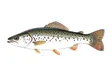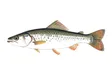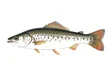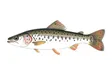
Cherry Darter

Etheostoma etnieri

Percidae · freshwater water fish

3 minute read · Species guide

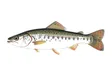
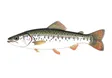
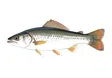
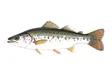
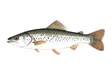
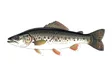
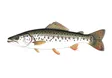
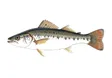
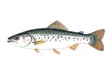
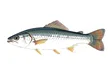
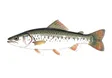
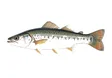
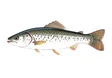
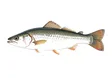
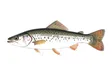
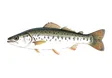
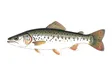
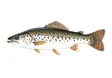
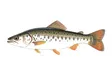
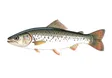
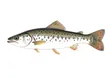
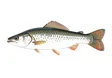
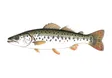
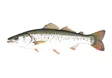
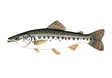
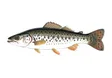
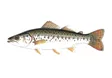
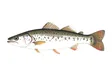
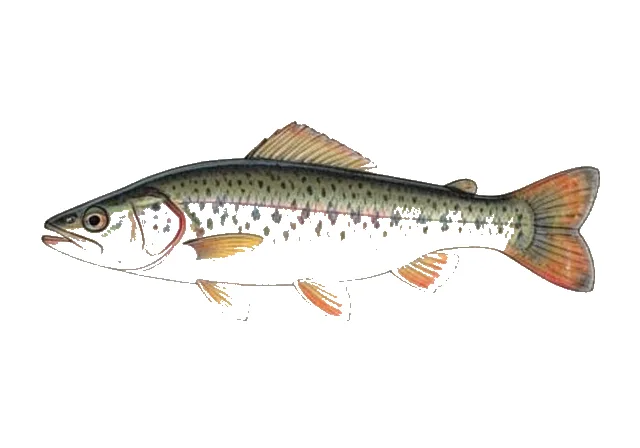
Cherry Darter field guide illustration

About Cherry Darter

The cherry darter (Etheostoma etnieri) is a species of freshwater ray-finned fish, a darter from the subfamily Etheostomatinae, part of the family Percidae, which also contains the perches, ruffes and pikeperches. It is endemic to the upper Caney Fork system of the Cumberland River drainage in the U.S. state of Tennessee.

Appearance and anatomy

The largest males have a standard length of 64 mm (2.5 in) and the largest females 55 mm (2.2 in).

Distribution

The cherry darter is endemic to the upper Caney Fork system of the Cumberland River drainage, central Tennessee. The species is limited to streams flowing over limestones of the Mississippian Eastern Highland Rim. They do not occur in cool, slightly acidic headwaters or in the lower portion of Caney Fork River system. The range includes White, Putnam, Warren, Van Buren, and Grundy Counties.

Ecology

Cherry darters feed primarily on aquatic invertebrates and insects, and are known to inhabit a wide range of habitats from springs and small creeks to large rivers. This species has a preference for small- to medium-sized creeks or streams and is usually collected in riffles and runs of moderate to low turbulence, especially over a gravel substrate. In larger streams and rivers, the species is typically found along the margins.

Life history

Cherry darter spawning peaks in April and early May, and they reach sexual maturity at the age of two. The cherry darter has not been studied extensively, so little else is known of its life history.

Status

Currently, no management plan is in place for this species. The Tennessee Wildlife Resources Agency evaluated the cherry darter in 2001 and deemed it stable and not a great conservation need for the agency. Although this fish is present only within a restricted range, it is common in some parts of that range and no evidence indicates populations in general are dwindling or it is in immediate danger of extinction. For these reasons, the IUCN lists this species as being of "Least Concern". The major potential threat is habitat degradation due to chemical runoff from agriculture, siltation, and in some cases effluent from mining.

Taxonomy and etymology

The cherry darter was first formally described in 1977 by Raymond William Bouchard with the type locality given as Cherry Creek at Tennessee State Route 84, this is a tributary to the Calfkiller River, part of the Caney Fork River system in Tennessee. The specific name honours the American biologist David Etnier.

Article text: Wikipedia contributors, Cherry darter (source revision). Licensed under CC BY-SA 4.0. Retrieved 2026-10-11.
Diet and feeding

The FishTraits compilation records these diet categories for this species: invertebrates or larval fish. These are broad categories, not a claim that every individual consumes every example in a category.

Habitat preferences

Reported habitat associations include streams and small rivers, creeks.

The source records associations with gravel, cobble, boulders, bedrock. An association indicates reported use, rather than an exclusive requirement.

Reproduction and parental care

The compilation reports a representative maturity age of 2 years. Its maturity field summarizes mean, median, or modal estimates, usually for females; male estimates can be used when female data are unavailable. It is not a fixed age at which every fish first breeds.

Recorded spawning months are Mar, Apr, May for the source’s reporting region (TN). This is a regional calendar, not a range-wide schedule.

Size and recorded longevity

FishTraits reports a maximum total length of 7.6 centimetres. Some entries use an estimated asymptotic length; this value should not be treated as a certified record catch.

Range

Where it lives

Share of 348 GBIF observation records with a state location, across 1 states.
0%
100%
Share of 348 GBIF observation records with a state location, across 1 states.

Share of records by state

Habitat

Water and movement

Water
WoRMS records this species in fresh water.
Migration
Undetermined

Classification

Taxonomy

Kingdom
Animalia
Phylum
Chordata
Superclass
Actinopterygii
Class
Teleostei
Order
Perciformes
Family
Percidae
Genus
Etheostoma
Species
Etheostoma etnieri
ITIS TSN
168391
WoRMS AphiaID
1012695
GBIF key
2382393

Common questions about Cherry Darter

What is the scientific name of Cherry Darter?
The scientific name is Etheostoma etnieri, in the family Percidae. Classification follows ITIS.
Does Cherry Darter live in fresh water or salt water?
WoRMS records this species in fresh water.
Where has Cherry Darter been recorded in the United States?
GBIF has observations in 1 states, with the most records in Tennessee. The map shows observation records, which do not establish the complete natural range.

Closest relatives

Other Etheostoma species

Same family

More Percidae

All 229 species in Percidae