Longnose Darter

Percina nasuta

Percidae · freshwater water fish

3 minute read · Species guide

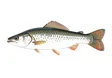
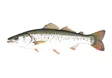
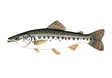
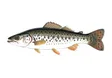
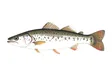
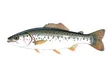
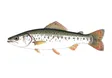
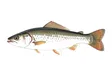
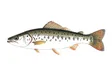
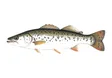
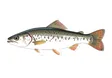
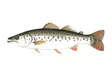
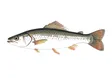
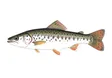
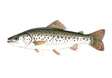
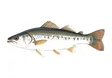
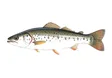
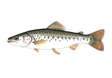
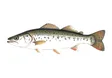
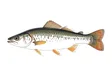
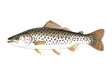
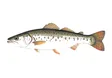
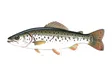
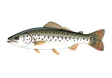
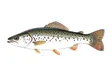
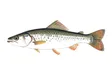
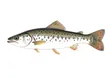
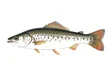
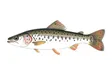
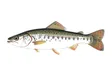
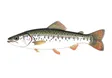
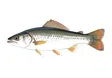
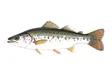
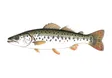
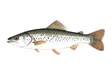
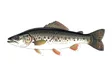
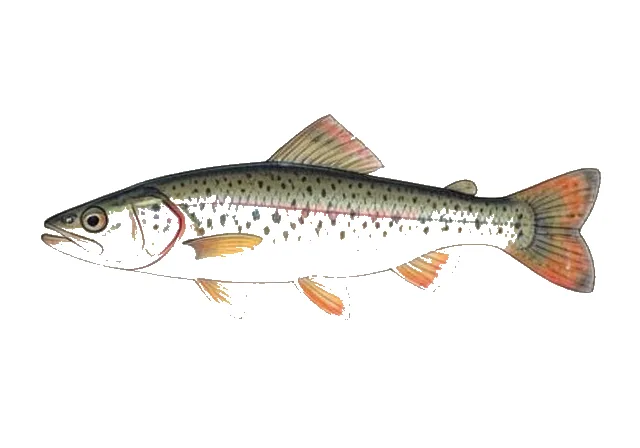
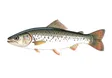
Longnose Darter field guide illustration

About Longnose Darter

The longnose darter (Percina nasuta) is a species of freshwater ray-finned fish, a darter from the subfamily Etheostomatinae, part of the family Percidae, which also contains the perches, ruffes and pikeperches. It is endemic to the United States.

Appearance & Autonomy

The longnose darter is mostly yellow with a stripe of dark blotches down the lateral line. It has a bright yellow stripe on a mostly translucent first dorsal fin, and a block spot at the center of the base of the caudal fin. The rays of the second dorsal fin and the caudal fin are black and yellow striped like the color pattern along the lateral line. This fish can be characterized by a long, pointed snout that can be darker colored than the rest of its body and has been recorded to reach lengths of up to 11 cm.

Distribution

Longnose darters are known to occur in thirteen different streams in three river systems across the southern Missouri Ozarks and the Ouachita mountains in Arkansas and eastern Oklahoma. Populations are sporadic and occur in small pockets in these streams and seem to only dwell in upland environments.

Habitat & Life History

These darters are endemic to upland streams and prefer riffles and pools with clean gravel and boulders to spawn and inhabits the slower pools over sand and silt in the fall. Like most darters, they spawn in clean, silt free crevices and males guard the nest until eggs are hatched.

Diet

Not much is known about diet, but it is speculated that adults consume macro-invertebrates.

Threats

Like any species that requires clean, rocky substrate, the longnose darter is susceptible to siltation. Runoff is also an issue, as fertilizers and other chemicals have the potential to change the pH or dissolved oxygen levels in the water. The construction of dams and reservoirs are likely to have contributed to the isolation of the different populations. This species has been proposed to be listed as Near Threatened by Warren et al. (2000) because of how fragmented the populations are, but the IUCN lists them as a species of Least Concern. Longnose darters are listed as endangered in the state of Oklahoma and are considered the state's rarest fish.

Article text: Wikipedia contributors, Longnose darter (source revision). Licensed under CC BY-SA 4.0. Retrieved 2026-10-11.
Diet and feeding

The FishTraits compilation records these diet categories for this species: invertebrates or larval fish. These are broad categories, not a claim that every individual consumes every example in a category.
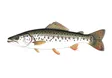
Reported feeding positions include bottom feeding. The compilation combines published observations; diets can vary with age, locality, and available food.

Habitat preferences

Reported habitat associations include medium to large rivers, streams and small rivers.

The source records associations with sand, gravel, cobble, vegetation. An association indicates reported use, rather than an exclusive requirement.

Reproduction and parental care

The compilation reports a representative maturity age of 2 years. Its maturity field summarizes mean, median, or modal estimates, usually for females; male estimates can be used when female data are unavailable. It is not a fixed age at which every fish first breeds.

Batch or serial spawning has been reported somewhere in the species’ range. This does not establish the same spawning pattern for every population.

Recorded spawning months are Mar, Apr, May for the source’s reporting region (AR). This is a regional calendar, not a range-wide schedule.

The reproductive-guild classification includes hiding a brood without subsequent guarding.

Size and recorded longevity

FishTraits reports a maximum total length of 9 centimetres. Some entries use an estimated asymptotic length; this value should not be treated as a certified record catch.

Recorded longevity in the compilation is 4 years. Wild observations were preferred, but captive records were accepted where wild records were unavailable, and unspecified records were assumed wild. The value is not a guaranteed wild lifespan or an aquarium life expectancy.

Range

Where it lives

Share of 369 GBIF observation records with a state location, across 3 states.
0%
74.8%
Share of 369 GBIF observation records with a state location, across 3 states.

Habitat

Water and movement

Water
WoRMS records this species in fresh water.
Migration
Migratory
Pattern

Classification

Taxonomy

Kingdom
Animalia
Phylum
Chordata
Superclass
Actinopterygii
Class
Teleostei
Order
Perciformes
Family
Percidae
Genus
Percina
Species
Percina nasuta
ITIS TSN
168489
WoRMS AphiaID
1525186
GBIF key
2382068

Common questions about Longnose Darter

What is the scientific name of Longnose Darter?
The scientific name is Percina nasuta, in the family Percidae. Classification follows ITIS.
Does Longnose Darter live in fresh water or salt water?
WoRMS records this species in fresh water.
Where has Longnose Darter been recorded in the United States?
GBIF has observations in 3 states, with the most records in Arkansas, Missouri, Oklahoma. The map shows observation records, which do not establish the complete natural range.

Closest relatives

Other Percina species

Same family

More Percidae

All 229 species in Percidae