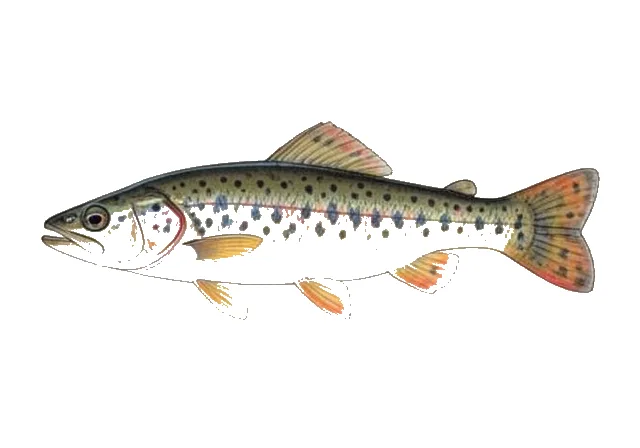
Okaloosa Darter

Etheostoma okaloosae

Percidae · freshwater water fish

3 minute read · Species guide

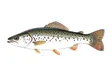
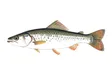
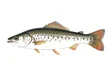
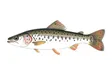
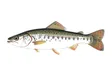
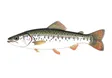
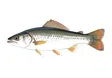
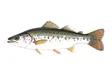
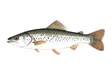
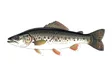
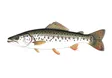
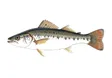
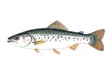
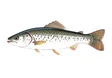
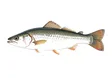
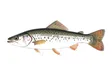
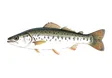
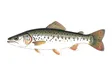
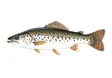
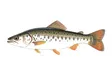
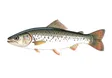
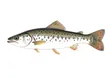
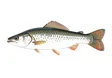
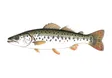
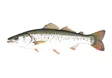
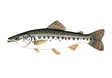
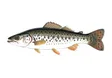
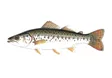
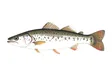
Okaloosa Darter field guide illustration

About Okaloosa Darter

The Okaloosa darter (Etheostoma okaloosae) is a species of freshwater ray-finned fish, a darter from the subfamily Etheostomatinae, part of the family Percidae, which also contains the perches, ruffes and pikeperches. It is indigenous to freshwater streams and tributary systems in Okaloosa and Walton Counties in northwest Florida.

Description

The Okaloosa darter is a small slender fish with a maximum length of 5.3 cm (2.1 in) but a more common adult size is 4.3 cm (1.7 in). It is a silvery brownish-green in color with irregular dark mottling and longitudinal lines of tiny dark spots.

Distribution and habitat

The Okaloosa darter is restricted to six small river systems draining into the Choctawhatchee Bay drainage system in Okaloosa and Walton counties in the panhandle of Florida. Ninety percent of its range is within the Eglin Air Force Base. It is found in shallow clear creeks among vegetation over sandy bottoms. Eggs are deposited on the bed of the creek and are not guarded by an adult fish as happens in some members of this family.

Status

Because of extensive habitat improvement and efforts by the Jackson Guard at Eglin Air Force Base, the United States Fish and Wildlife Service downlisted the species from endangered to threatened status in 2011. The U.S. Fish and Wildlife Service delisted the Okaloosa darter in 2023 due to its recovery. The IUCN has classified this species as being "Least concern". It is protected as a listed species under Annex II of the Specially Protected Areas and Wildife (SPAW) Protocol to the Cartagena Convention since 1991.

All known habitats of the fish (tributaries of Rocky, Toms, and Boggy Bayou) are presently being affected by commercial development and/or road construction.

Article text: Wikipedia contributors, Okaloosa darter (source revision). Licensed under CC BY-SA 4.0. Retrieved 2026-10-11.
Diet and feeding

The FishTraits compilation records these diet categories for this species: invertebrates or larval fish. These are broad categories, not a claim that every individual consumes every example in a category.

Reported feeding positions include bottom feeding. The compilation combines published observations; diets can vary with age, locality, and available food.

Habitat preferences

Reported habitat associations include streams and small rivers, creeks.

The source records associations with sand, vegetation. An association indicates reported use, rather than an exclusive requirement.

Reproduction and parental care

The compilation reports a representative maturity age of 1 years. Its maturity field summarizes mean, median, or modal estimates, usually for females; male estimates can be used when female data are unavailable. It is not a fixed age at which every fish first breeds.

Batch or serial spawning has been reported somewhere in the species’ range. This does not establish the same spawning pattern for every population.

Recorded spawning months are Jan, Feb, Mar, Apr, May, Jun, Jul, Aug, Sep, Oct for the source’s reporting region (FL). This is a regional calendar, not a range-wide schedule.

The reproductive-guild classification includes spawning on open substrates without guarding the brood.

Size and recorded longevity

FishTraits reports a maximum total length of 4.4 centimetres. Some entries use an estimated asymptotic length; this value should not be treated as a certified record catch.

Recorded longevity in the compilation is 2 years. Wild observations were preferred, but captive records were accepted where wild records were unavailable, and unspecified records were assumed wild. The value is not a guaranteed wild lifespan or an aquarium life expectancy.

Range

Where it lives

Share of 221 GBIF observation records with a state location, across 2 states.
0%
98.6%
Share of 221 GBIF observation records with a state location, across 2 states.

Share of records by state

Habitat

Water and movement

Water
WoRMS records this species in fresh water.
Migration
Undetermined

Classification

Taxonomy

Kingdom
Animalia
Phylum
Chordata
Superclass
Actinopterygii
Class
Teleostei
Order
Perciformes
Family
Percidae
Genus
Etheostoma
Species
Etheostoma okaloosae
ITIS TSN
168417
WoRMS AphiaID
1525185
GBIF key
2382356

Common questions about Okaloosa Darter

What is the scientific name of Okaloosa Darter?
The scientific name is Etheostoma okaloosae, in the family Percidae. Classification follows ITIS.
Does Okaloosa Darter live in fresh water or salt water?
WoRMS records this species in fresh water.
Where has Okaloosa Darter been recorded in the United States?
GBIF has observations in 2 states, with the most records in Florida, Alabama. The map shows observation records, which do not establish the complete natural range.

Closest relatives

Other Etheostoma species

Same family

More Percidae

All 229 species in Percidae