Brighteye Darter

Etheostoma lynceum

Percidae · freshwater water fish

4 minute read · Species guide

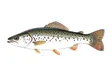
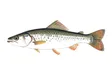
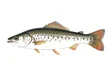
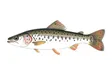
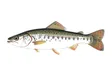
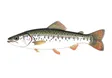
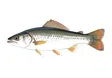
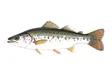
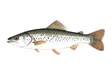
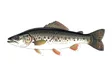
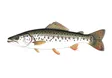
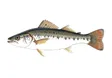
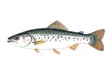
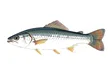
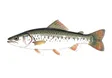
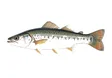
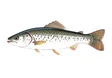
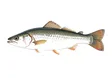
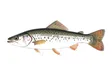
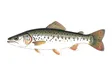
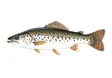
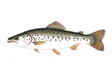
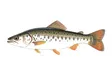
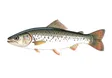
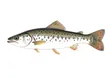
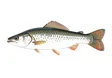
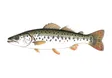
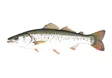
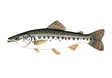
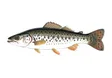
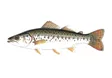
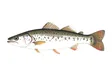
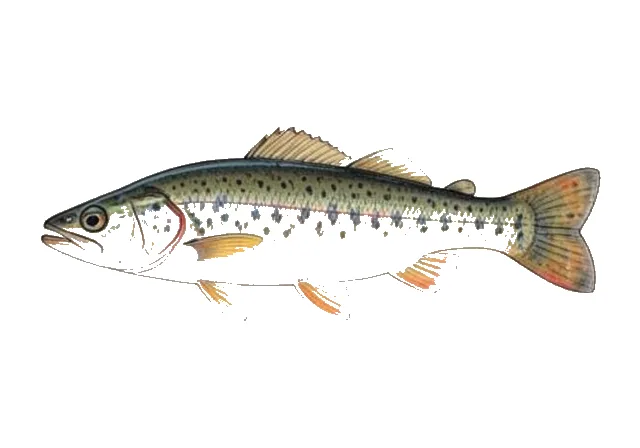
Brighteye Darter field guide illustration

About Brighteye Darter

The brighteye darter (Etheostoma lynceum) is a species of freshwater ray-finned fish, a darter from the subfamily Etheostomatinae, part of the family Percidae, which also contains the perches, ruffes and pikeperches. It is endemic to the eastern United States. The brighteye darter was first described by Oliver Perry Hay in 1885. He noted it is closely related to the banded darter (E. zonale). Until the 1970s, the brighteye darter was generally believed to be a genetic variation of the banded darter.

Distribution

The brighteye darter inhabits the lower, benthopelagic areas of freshwater streams and rivers. The brighteye darter is distributed in eastern tributaries of the Mississippi River from Louisiana north to western Tennessee and eastward along the Gulf Coast to the Escatawpa River system in Mobile County. It can also be found in the former Mississippi embayment in the western part of Kentucky, and in coastal drainages from the Escatawpa River in Alabama to the Mississippi River in Louisiana. Rechannelization may have extirpated them from some of their natural ranges into Alabama, but brighteye darters have been able to find more suitable streams as they travel up the Mississippi River system.

Ecology

The brighteye darter feeds primarily on invertebrates, mainly flies in the family Chironomidae. The larval stages of these flies are an important component of the bottom of the aquatic ecosystem in which the brighteye darter resides. The darter will watch for the larval stage to erupt from its egg casing and eat it before it has time to swim off. These flies hatch year-round and make up 75–80% of the darters' diets. In comparison to other darters to which the brighteye is related, it does not change food source from season to season. Other darters, such as the blackbanded darter (Percina nigrofasciata), can change their diets with every season, thus having much more diverse diets.

The brighteye darter prefers clear, fast-flowing water, with gravel riffles. This type of habitat can be found in several places around the Mississippi River Basin.

Lifecycle

The brighteye reproduces from late February to May. The bright male coloring emerges then, as well as female maturity. The algae forming on the rocks of the streams makes a great adhesive area for the eggs of the female to attach. The clutch size and mass increases significantly in the spawning season, unlike the size of the egg. Ovulated eggs can be 1.2–1.5 millimeters (0.047–0.059 in) in size. After the darter hatches, growth is quick, and it reaches a maximum length of 6.5 centimeters (2.6 in). It takes the brighteye an average of one year for it to grow to maturity and be able to reproduce.

Taxonomy and etymology

The brighteye darter was first formally described in 1885 by the American ichthyologist Oliver Perry Hay (1846–1939) with the type locality given as a shallow rocky branch of the Chickasawha River at Enterprise, Clarke County, Mississippi. The specific name lynceum refers to Lynceus of Messenia, one of the Argonauts who took part in a mythical voyage on board the Argo with Jason. Lynceus was known for his acute vision.

Management

Currently, no management plan is in place for the brighteye darter, mainly due to its ability to react to environmental stressors easily and its widespread distribution. It is also placed on the "Least Concern" list of the federally endangered species of United States. The brighteye darter is protected in the states where it is found, especially in Mississippi.

Article text: Wikipedia contributors, Brighteye darter (source revision). Licensed under CC BY-SA 4.0. Retrieved 2026-10-11.
Diet and feeding

The FishTraits compilation records these diet categories for this species: invertebrates or larval fish. These are broad categories, not a claim that every individual consumes every example in a category.

Reported feeding positions include bottom feeding. The compilation combines published observations; diets can vary with age, locality, and available food.

Habitat preferences

Reported habitat associations include streams and small rivers, creeks.

The source records associations with sand, gravel, organic debris. An association indicates reported use, rather than an exclusive requirement.

Reproduction and parental care

The compilation reports a representative maturity age of 1 years. Its maturity field summarizes mean, median, or modal estimates, usually for females; male estimates can be used when female data are unavailable. It is not a fixed age at which every fish first breeds.

Batch or serial spawning has been reported somewhere in the species’ range. This does not establish the same spawning pattern for every population.

Recorded spawning months are Feb, Mar, Apr, May for the source’s reporting region (MS). This is a regional calendar, not a range-wide schedule.

The reproductive-guild classification includes spawning on open substrates without guarding the brood.

Size and recorded longevity

FishTraits reports a maximum total length of 6.4 centimetres. Some entries use an estimated asymptotic length; this value should not be treated as a certified record catch.

Recorded longevity in the compilation is 3.5 years. Wild observations were preferred, but captive records were accepted where wild records were unavailable, and unspecified records were assumed wild. The value is not a guaranteed wild lifespan or an aquarium life expectancy.

Range

Where it lives

Share of 795 GBIF observation records with a state location, across 6 states. The orange dots are USGS stream-survey sites where this species was caught.
0%
64.4%
Share of 795 GBIF observation records with a state location, across 6 states. The orange dots are USGS stream-survey sites where this species was caught.

A blank area on the dot layer usually means nobody sampled there, not that the fish is absent. Turn on “every survey site” to see where the survey looked.

The USGS stream survey caught it at 76 of its sites, in 2 states. That survey and the GBIF records are two different counts of two different things, so the site keeps them apart.

Habitat

Water and movement

Water
WoRMS records this species in fresh water.
Migration
Undetermined

Classification

Taxonomy

Kingdom
Animalia
Phylum
Chordata
Superclass
Actinopterygii
Class
Teleostei
Order
Perciformes
Family
Percidae
Genus
Etheostoma
Species
Etheostoma lynceum
ITIS TSN
168456
WoRMS AphiaID
1019833
GBIF key
2382322

Common questions about Brighteye Darter

What is the scientific name of Brighteye Darter?
The scientific name is Etheostoma lynceum, in the family Percidae. Classification follows ITIS.
Does Brighteye Darter live in fresh water or salt water?
WoRMS records this species in fresh water.
Where has Brighteye Darter been recorded in the United States?
GBIF has observations in 6 states, with the most records in Mississippi, Tennessee, Louisiana. The map shows observation records, which do not establish the complete natural range.

Closest relatives

Other Etheostoma species

Same family

More Percidae

All 229 species in Percidae