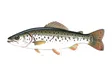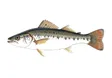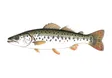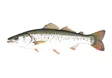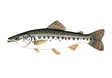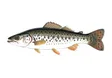
Diet
Arrow darters usually feed on insect larvae, such as blackflies, caddisfly, and beetles. They also frequently feed on mayflies and midges. If the darter is greater than 2.8 inches (7.1 cm), they often feed on small crayfish.
Habitat
Arrow darters are often found in shallow pools of water near large, flat stones. The streams they are found in are so small they are sometimes reduced to puddles. They can be found around wooded debris and rock ledges.
Reproduction and life cycle
Little is known about the reproduction of the arrow darter. In the book, Handbook of Darters by Lawrence Page, pregnant females have been found by a scientist, Bailey, in April. It is probable that spawning occurs from April to May.
Distribution
The arrow darter is found in the rivers and streams spanning Kentucky and Tennessee. This species was found in at least 74 streams in the upper Kentucky River basin. However, surveys have tested and populations of the arrow darter can be found in 47 streams across the same region.
Importance to humans
The arrow darter species is being poisoned by humans mining for coal. The pollution caused by the runoff of explosions is detrimental to the health of the streams nearby, and all those who live in them. The arrow darter is not on the endangered species list yet, but it has been wiped out from more than half of its regions. Protecting the species and the habitat it lives in will protect the drinking water for humans by preserving headwater streams. Polluted streams from coal runoff has been linked to increases of cancer and birth defects in humans. Therefore, it is important to keep the headwater streams from being polluted. This would impact human health and preserve the wildlife and habitats at the same time.
Etymology
Scientific Name: Etheostoma sagitta – Etheostoma: Greek, etheo = to strain + Greek, stoma = mouth; Latin, sagitta: the specific epithet sagitta means arrow.
Article text: Wikipedia contributors, Etheostoma sagitta (source revision). Licensed under CC BY-SA 4.0. Retrieved 2026-10-11.