Smallmouth Bass

Micropterus dolomieu

Centrarchidae · freshwater water fish

10 minute read · Species guide

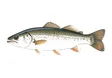
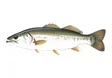
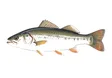
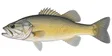
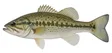
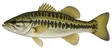
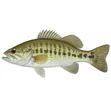
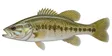
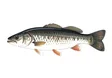
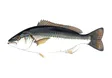
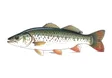
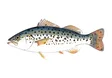
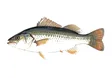
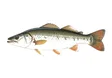
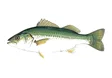
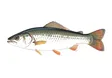
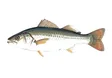
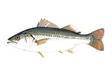
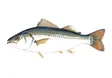
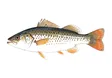
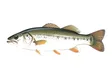
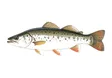
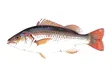
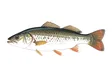
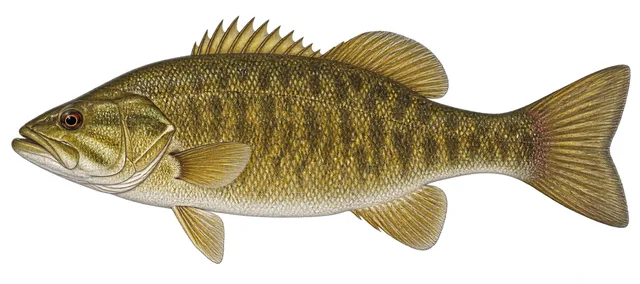
Smallmouth Bass field guide illustration

About Smallmouth Bass

The smallmouth bass (Micropterus dolomieu) is a species of freshwater fish in the sunfish family (Centrarchidae) of the order Centrarchiformes. It is the type species of its genus Micropterus (black basses), and is a popular game fish sought by anglers throughout the temperate zones of North America, and has been spread by stocking —as well as illegal introductions —to many cool-water tributaries and lakes in Canada and more so introduced in the United States. The maximum recorded size is approximately 27 inches (69 cm) and 12 pounds (5.4 kg).

The smallmouth bass is native to the upper and middle Mississippi River basin, the Saint Lawrence River – Great Lakes system, the Champlain Valley, and the Hudson Bay basin. Its common names include smallmouth, bronzeback, brown bass, brownie, smallie, bronze bass, and bareback bass.

Description

Smallmouth have a slender but muscular fusiform body shape making them powerful swimmers. The coloration of the smallmouth bass's ctenoid scales range from golden-olive to dark brown dorsally which fades to a yellowish white ventrally with dark brown vertical bars or blotches along the body and dark brown horizontal bars on the head. The combination of the muscular fusiform body shape and camouflage like coloring make these fish highly effective ambush predators. The coloration can vary greatly depending on the fishes age, habitat, water quality, diet, and the spawning cycle.

Generally, the protruding jaw of the smallmouth does not extend back beyond the eyes which are red or brown. They have two dorsal fins which are separated by a shallow interdorsal notch. The front dorsal has 9–11 spiney rays and the back dorsal has 13–15 soft rays.

Males are generally smaller than females. The males tend to range around two pounds, while females can range from three to six pounds. Their average sizes and coloration can differ, depending on if they are found in lacustrine or riverine habitats. Smallmouth found in riverine habitats are generally long and slender which allows greater agility in moving water, while those found in lacustrine habitats and shorter and deeper bodied. Riverine smallmouth that live in dark water tend to be rather torpedo-shaped and very dark brown to be more efficient for feeding. Lacustrine smallmouth bass, however, that live in sandy areas, tend to be a light yellow-brown and are more oval-shaped.

There are two recognized subspecies, the Northern smallmouth bass (M. dolomieui dolomieui) and the Neosho smallmouth bass (M. dolomieui velox). The Northern smallmouth bass is much more widespread than the much smaller subgroup called the Neosho smallmouth bass. The Neosho are native to an ecologically isolated region of the lower Midwest known as the Central Interior Highlands, which weave through southwestern Missouri, northern Arkansas and northeastern Oklahoma.

The world record size is 11 pounds 15 ounces (5.41 kg) caught in the Dale Hollow reservoir, on the Kentucky – Tennessee border.

Habitat

The smallmouth bass is found in clearer water than the largemouth, especially streams, rivers, and the rocky areas and stumps and also sandy bottoms of lakes and reservoirs. It can also survive in a stronger current than other black bass. The smallmouth prefers cooler water temperatures than its cousin the largemouth bass, and as a result will often seek out deeper, faster moving water during the hot summer months. Because it is intolerant of pollution, the smallmouth bass is a good natural indicator of a healthy environment, though they are still much more resilient than most trout species. Carnivorous, its diet comprises crayfish, amphibians, insects, and smaller fish, while the larvae feed on various zooplankton and insect larvae. Adults also cannibalize young of other parents.

The female can lay up to 21,100 eggs, which are guarded by the male in his nest.

Migration

When the weather gets colder, and the water temperature drops below 16 °C (60 °F), smallmouth will often migrate in search of deeper pools in which they enter a semi-hibernation state, moving sluggishly and feeding very little until the warm season returns. The migration patterns of smallmouth have been tracked and it is not unusual for a smallmouth to travel 12 miles in a single day in a stream, creek or river. The overall migration can exceed 60 miles.

Smallmouth generally begin spawning patterns in spring or early summer when water temperatures are between 15–18 °C (59.0–64.4 °F), which is heavily dependent on latitudinal location. Smallmouth require clean stone, rock, or gravel substrate for a successful spawn.

Angling

In the United States, smallmouth bass were first introduced outside of their native range with the construction of the Erie Canal in 1825, extending the fish's range into central New York state. During the mid-to-late 19th century, smallmouth were transplanted via the nation's rail system to lakes and rivers throughout the northern and western United States, as far as California. Shippers found that smallmouth bass were a hardy species that could be transported in buckets or barrels by rail, sometimes using the spigots from the railroad water tanks to aerate the fingerlings. They were introduced east of the Appalachians just before the Civil War, and afterwards transplanted to the states of New England.

With increased industrialization and land use changes, many of the nation's eastern trout rivers were polluted or experienced elevated water temperatures, reducing the range of native brook trout. Smallmouth bass were often introduced to northern rivers with increased water temperatures and slowly became a popular gamefish with many anglers. Equally adaptable to large, cool-water impoundments and reservoirs, the smallmouth also spread far beyond its original native range. Later, smallmouth populations also began to decline after years of damage caused by overdevelopment and pollution, as well as a loss of river habitat caused by damming many formerly wild rivers to form lakes or reservoirs. Culling by boat electrofishing to suppress their population despite doubling their annual mortality resulted in a larger population of young and early-maturing fish.

In recent years, a renewed emphasis on preserving water quality and riparian habitat in the nation's rivers and lakes, together with stricter management practices, eventually benefited smallmouth populations and has caused a resurgence in their popularity with anglers.

Today, smallmouth bass are very popular game fish, frequently sought by anglers using conventional spinning and bait casting gear, as well as fly fishing tackle. The smallmouth bass is potentially the toughest fighting freshwater fish in North America, and is commonly the targeted species in many fresh water fishing tournaments. In addition to wild populations, the smallmouth bass is stocked in cool rivers and lakes throughout Canada and the United States. In shallow streams, it is a wary fish, though usually not to the extent of most trout. The smallmouth is highly regarded for its topwater fighting ability when hooked – old fishing journals referred to the smallmouth bass as "ounce for ounce and pound for pound the gamest fish that swims". Smallmouth bass are not usually taken for the table, but rather are caught and released by most anglers. However, smaller specimens in cooler water often have higher quality filets of white, firm flesh when cooked.

The current all-tackle world record for a smallmouth bass is 11 lb 15 oz, caught by David Hayes in the Dale Hollow Reservoir, on the Kentucky/Tennessee border, in 1955.

Tackle

In conventional fishing, smallmouth may be successfully caught on a wide range of natural and artificial baits or lures, including crankbaits, hair jigs, plastic jerkbaits, artificial worms, spinnerbaits, and all types of soft plastic lures, including curly tail grubs or tubes with lead head jigs. Spinning reels or baitcasting reels may be used, with line strengths of 6 to 15 pounds typically utilized. According to many, smallmouth typically put up a better, more exciting fight than any other black bass. Rods are usually of ultralight to medium-heavy action. They may also be caught with a fly rod using a dry or wet artificial fly, nymphs, streamers, or imitations of larger aquatic creatures, such as hellgrammites, crawfish, or leeches. Floating topwater popper fly patterns and buzz baits are also popular for smallmouth fishing.

For river fishing, spinning tackle or fly tackle has been the most popular angling tools for smallmouth in North America for many years. When fishing in colder water, it is believed to be more effective to fish with smaller lures like hair jigs or small spinners. During the rest of the year, smallmouth are usually taken using soft plastic tubes or spinnerbaits. The best spots in rivers to fish for smallmouth are behind rocks or in eddies, where water swirls around. Smallmouth can also be taken in cool lakes like Lake Erie or any of the northern lakes.

Article text: Wikipedia contributors, Smallmouth bass (source revision). Licensed under CC BY-SA 4.0. Retrieved 2026-10-11.
Diet and feeding

The FishTraits compilation records these diet categories for this species: invertebrates or larval fish; larger animal prey (a source category covering fish, crayfish, crabs, or frogs). These are broad categories, not a claim that every individual consumes every example in a category.

Reported feeding positions include bottom feeding and surface or water-column feeding. The compilation combines published observations; diets can vary with age, locality, and available food.

Habitat preferences

Reported habitat associations include medium to large rivers, streams and small rivers, creeks.

The source records associations with gravel, cobble. An association indicates reported use, rather than an exclusive requirement.

Reproduction and parental care

The compilation reports a representative maturity age of 3.5 years. Its maturity field summarizes mean, median, or modal estimates, usually for females; male estimates can be used when female data are unavailable. It is not a fixed age at which every fish first breeds.

Recorded spawning months are Apr, May, Jun for the source’s reporting region (NC). This is a regional calendar, not a range-wide schedule.

The reproductive-guild classification includes guarding eggs or young at a spawning substrate or nest.

Size and recorded longevity

FishTraits reports a maximum total length of 69 centimetres. Some entries use an estimated asymptotic length; this value should not be treated as a certified record catch.

Recorded longevity in the compilation is 15 years. Wild observations were preferred, but captive records were accepted where wild records were unavailable, and unspecified records were assumed wild. The value is not a guaranteed wild lifespan or an aquarium life expectancy.

Native range

St. Lawrence and Great Lakes, Hudson Bay (Red River), and Mississippi River basins from southern Quebec to North Dakota and south to northern Alabama and eastern Oklahoma; Atlantic and Gulf slope drainages from Virginia to central Texas (Page and Burr 1991).

Introduction history

Intentional stocking for sportfishing.

Ecological impacts

Introduction of the Smallmouth Bass into the native range of Guadalupe Bass M. treculii in southcentral Texas has resulted in hybridization between the two species (Edwards 1979; Whitmore 1983). This hybrid bass is found in Canyon Lake and the San Marcos system, Guadalupe River drainage, on the Edwards Plateau in Texas (Whitmore 1983; International Game Fish Association 1994). It was first recognized by Edwards (1979) and later verified by Whitmore (1983). The hybrid is fertile and is capable of backcrossing to the parent species, with more backcrossing to Smallmouth Bass than to Guadalupe Bass (Whitmore 1983). Introgressive hybridization represents another threat to the already depleted Guadalupe Bass by compromising its genetic integrity (Whitmore 1983). Although Lake Travis, on the Colorado River, also has been stocked with Smallmouth Bass, Whitmore (1983) found no evidence of hybridization there. Bean et al. (2013) used microsatellites to estimate introgression rates of Smallmouth Bass within Guadalupe Bass in the Brazos, Colorado, Guadalupe-San Antonio, and Nueces drainages; introgression was found within 4 subbasins, with rates highest in the Guadalupe subbasin. The Smallmouth Bass also hybridizes with the Spotted Bass M. punctulatus when stocked in the Spotted Bass's native range or when both species are stocked in the same area. The Smallmouth/Spotted Bass hybrid has been found in the Verde River, Arizona (Minckley 1973); California (Moyle 2002); the Marmaton River, Barbour County, Kansas (Cross 1967; museum specimen KU 4682); and southeastern Oklahoma (formerly described as M. punctulatus wichitae) (Cofer 1995). A third hybrid resulting from stocking Smallmouth Bass is the Smallmouth/Largemouth hybrid. Introduced Smallmouth Bass hybridize with native Largemouth Bass in Squaw Reservoir in northcentral Texas (Whitmore and Hellier 1988).

There are a few benefits despite the negative impacts of Smallmouth Bass. Bass anglers account for a high influx of revenue in the Pacific Northwest, which helps supports the existing fisheries as well as conservation and management efforts in the region. In addition, anglers enjoy increased bag and size limits for Smallmouth Bass. These regulations allow anglers to play a role in managing the native fish populations by decreasing non-native population size (Carey et al. 2011).

Record fish

State records in 9 states

  • Idaho9.72 lb

    Dworshak Reservoir · 10/28/2006 · Dan Steigers

  • Wisconsin9 lbs. 1 oz.

    Indian Lake · Oneida · 06/21/1950

  • Oklahoma8 lbs 7.00 ozs

    Lawtonka Lake · 03/31/2012 · Ryan Wasser · rod and line

  • Montana8.4 lbs.

    Fort Peck Reservoir · 9/24/24 · Joshua Johnson

  • Utah7 lbs. 6 oz.

    Midview Reservoir (Lake Borham) · 1996 · Alan Iorg

  • Arkansas7 lbs., 5 oz.

    Bull Shoals Lake · 04/01/1969 · Acie Dickerson, Lakeview, AR · rod and reel

  • Georgia7 lb, 2 oz

    Lake Chatuge · March 28, 1973 · Jack Hall

  • Texas7.06 lb

    Texoma · Jan 29, 2006 · Jay Fuller · jig

  • Alabamal0 lbs 8 oz

    Wheeler Dam tailwater · 10/8/1950 · Owen F. Smith, Fairfield

  • Texaslength record

    Grapevine Reservoir · Feb 28, 2023 · Charles C. Henderson · Fly Rod, Hollow Fleye

Each figure is the state agency’s own certified record. The site holds record tables for 11 states so far, so a state missing here has not been read yet. It is not a state where this fish holds no record.

Statute

The official state fish of Tennessee

  • Tennesseeas Smallmouth bass (sport fish), named 2005

A state fish is chosen by statute. It says nothing about how common the fish is in the state. See every official state fish.

Range

Where it lives

Share of 56,806 GBIF observation records with a state location, across 47 states. The orange dots are USGS stream-survey sites where this species was caught.
0%
41%
Share of 56,806 GBIF observation records with a state location, across 47 states. The orange dots are USGS stream-survey sites where this species was caught.

A blank area on the dot layer usually means nobody sampled there, not that the fish is absent. Turn on “every survey site” to see where the survey looked.

The USGS stream survey caught it at 5,491 of its sites, in 46 states. That survey and the GBIF records are two different counts of two different things, so the site keeps them apart.

Habitat

Water and movement

Water
WoRMS records this species in fresh water.
USGS NAS habitat
Freshwater
US status
Native transplant — native to part of the United States, moved to other waters inside it.
Migration
Migratory
Pattern

Classification

Taxonomy

Kingdom
Animalia
Phylum
Chordata
Superclass
Actinopterygii
Class
Teleostei
Order
Perciformes
Genus
Micropterus
Species
Micropterus dolomieu
ITIS TSN
550562
WoRMS AphiaID
151296
GBIF key
5211250
Outside the US
ITIS also files it in Canada.

Common questions about Smallmouth Bass

What is the scientific name of Smallmouth Bass?
The scientific name is Micropterus dolomieu, in the family Centrarchidae. Classification follows ITIS.
Does Smallmouth Bass live in fresh water or salt water?
WoRMS records this species in fresh water.
Where has Smallmouth Bass been recorded in the United States?
GBIF has observations in 47 states, with the most records in Pennsylvania, New York, Minnesota. The map shows observation records, which do not establish the complete natural range.

Closest relatives

Other Micropterus species

Same family

More Centrarchidae

Alabama Bass11 states
Micropterus henshalliCentrarchidaeNative and introducedFresh
Banded Sunfish15 states
Enneacanthus obesusCentrarchidaeNativeFresh
Bantam Sunfish12 states
Lepomis symmetricusCentrarchidaeNativeFresh
Black Crappie49 states
Pomoxis nigromaculatusCentrarchidaeNative and introducedFresh
Blackbanded Sunfish8 states
Enneacanthus chaetodonCentrarchidaeNativeFresh
Bluegill49 states
Lepomis macrochirusCentrarchidaeNative and introducedFresh
Bluespotted Sunfish14 states
Enneacanthus gloriosusCentrarchidaeNative and introducedFresh
Cahaba Bass1 states
Micropterus cahabaeCentrarchidaeNativeFresh
Chattahoochee Bass2 states
Micropterus chattahoochaeCentrarchidaeNativeFresh
Dollar Sunfish18 states
Lepomis marginatusCentrarchidaeNativeFresh
Flier18 states
Centrarchus macropterusCentrarchidaeNativeFresh
Florida Largemouth Bass9 states
Micropterus floridanusCentrarchidaeNative and introducedFresh
Green Sunfish46 states
Lepomis cyanellusCentrarchidaeNative and introducedFresh
Guadalupe Bass2 states
Micropterus treculiiCentrarchidaeNative and introducedFresh
Largemouth Bass48 states
Micropterus salmoidesCentrarchidaeNative and introducedFresh
Lepomis solis7 states
CentrarchidaeNative
Longear Sunfish31 states
Lepomis megalotisCentrarchidaeNative and introducedFresh
Mud Sunfish11 states
Acantharchus pomotisCentrarchidaeNativeFresh
Northern Sunfish8 states
Lepomis peltastesCentrarchidaeNativeFresh
Orangespotted Sunfish27 states
Lepomis humilisCentrarchidaeNative and introducedFresh
Ozark Bass3 states
Ambloplites constellatusCentrarchidaeNativeFresh
Pumpkinseed46 states
Lepomis gibbosusCentrarchidaeNative and introducedFreshBrackish
Redbreast Sunfish29 states
Lepomis auritusCentrarchidaeNative and introducedFresh
Redear Sunfish37 states
Lepomis microlophusCentrarchidaeNative and introducedFresh

All 40 species in Centrarchidae