Suwannee Bass

Micropterus notius

Centrarchidae · freshwater water fish

4 minute read · Species guide

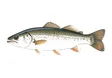
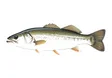
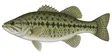
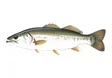
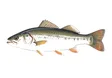
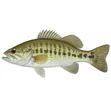
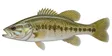
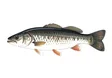
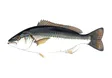
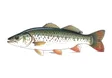
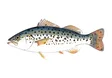
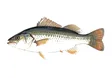
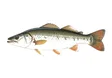
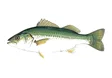
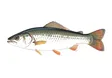
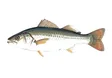
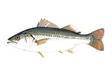
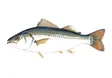
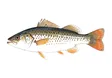
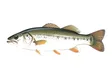
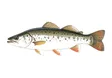
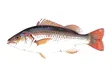
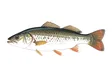
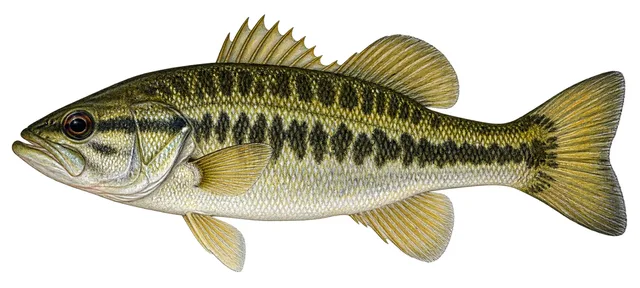
Suwannee Bass field guide illustration

About Suwannee Bass

The Suwannee bass (Micropterus notius) is a species of freshwater fish in the sunfish family (Centrarchidae) of order Centrarchiformes. One of the black basses, This species is native to just two river systems in Florida and Georgia, although it has been introduced elsewhere.

Description

The Suwannee bass is a rather small species compared to its congeners and has a deep body with a large mouth in which the maxilla is placed beneath the eye and there is a circular patch of teeth on the tongue. The base of the soft part of the dorsal fin and the anal fin are scaled. They are mostly brown in color marked with a dozen olive blotches on the flanks. These blotches are wider than the gaps between them towards the head but they merge towards the tail eventually creating a horizontal band near the caudal peduncle. There is a large blotch at the base of the caudal fin which has a pale margin, this is more obvious in young fish which also show bold mottling on the soft part of the dorsal fin, the anal fin and the caudal fin. In the breeding season, the adults show a turquoise coloration on the cheek, breast and belly. This species attains a maximum total length of 40 centimeters (16 in) although a more usual total length would be around 21 centimeters (8.3 in) and the maximum published weight is 1.8 kilograms (4.0 lb).

Distribution

The Suwannee bass is endemic to the southeastern United States where it is native to the lower Suwannee and Ochlockonee River systems in Florida and a small part of Georgia. It has been introduced into the St. Marks River and the Wacissa River in Florida.

Habitat and biology

The Suwannee bass is found in fast-moving shallow areas of rivers, known as shoals, over limestone, this is frequently covered in sand. They usually prefer neutral or basic waters, originating in springs emerging from aquifers in the limestone. They are uncommon in the lower parts of the Suwannee River where there is a tidal influence, but are absent from the upper reaches which are dominated by acidic waters draining from the Okefenokee Swamp. This species has a diet which is dominated by crayfish, although they will eat other invertebrates and fishes. In the lower, tidal reaches of the Suwannee River, the blue crab is taken by this species. The spawning season runs from February to May, peaking in April and May, when the water temperature reaches 18–19 °C (64–66 °F) The eggs are laid in circular depressions excavated near the edges of the streams where they are fertilized by the male. The male then guards the eggs up to the point of hatching. Females have a faster growth rate and attain larger sizes than the males; the males rarely attain lengths greater than 13 inches (33 cm). The females can have a life span of up to 12 years, while the males live up to nine years.

Taxonomy

The Suwannee bass was first formally described by Reeve Maclaren Bailey and Carl Leavitt Hubbs in 1949 with the type locality given as Head of Ichetucknee Springs at Lead, Columbia County, Florida.

Relationship with humans

While not as well known as other black basses, M. notius is also fished for sport. The IGFA all-tackle world record for the species stands at 1.75 kg (3 lb 14 oz) caught from the Suwannee River in 1985, and the length record is 17 inches (43 cm) from the Withlacoochee River in 2025.

Article text: Wikipedia contributors, Suwannee bass (source revision). Licensed under CC BY-SA 4.0. Retrieved 2026-10-11.
Diet and feeding

The FishTraits compilation records these diet categories for this species: larger animal prey (a source category covering fish, crayfish, crabs, or frogs). These are broad categories, not a claim that every individual consumes every example in a category.

Reported feeding positions include bottom feeding and surface or water-column feeding. The compilation combines published observations; diets can vary with age, locality, and available food.

Habitat preferences

Reported habitat associations include medium to large rivers, streams and small rivers, creeks, springs or subterranean waters.

The source records associations with sand, gravel, cobble, bedrock, vegetation. An association indicates reported use, rather than an exclusive requirement.

Reproduction and parental care

The compilation reports a representative maturity age of 3 years. Its maturity field summarizes mean, median, or modal estimates, usually for females; male estimates can be used when female data are unavailable. It is not a fixed age at which every fish first breeds.

Recorded spawning months are Feb, Mar, Apr, May, Jun for the source’s reporting region (FL). This is a regional calendar, not a range-wide schedule.

The reproductive-guild classification includes guarding eggs or young at a spawning substrate or nest.

Size and recorded longevity

FishTraits reports a maximum total length of 40 centimetres. Some entries use an estimated asymptotic length; this value should not be treated as a certified record catch.

Recorded longevity in the compilation is 12 years. Wild observations were preferred, but captive records were accepted where wild records were unavailable, and unspecified records were assumed wild. The value is not a guaranteed wild lifespan or an aquarium life expectancy.

Record fish

State records in 2 states

  • Florida3.89 lb

    Suwannee River · Gilchrist County · 3/2/1985 · Ronnie Everett

  • Georgia3 lb, 9 oz

    Ochlocknee River · October 6, 1984 · Laverne Norton

Each figure is the state agency’s own certified record. The site holds record tables for 11 states so far, so a state missing here has not been read yet. It is not a state where this fish holds no record.

Range

Where it lives

Share of 591 GBIF observation records with a state location, across 3 states.
0%
98.1%
Share of 591 GBIF observation records with a state location, across 3 states.

Share of records by state

Habitat

Water and movement

Water
WoRMS records this species in fresh water.
Migration
Undetermined

Classification

Taxonomy

Kingdom
Animalia
Phylum
Chordata
Superclass
Actinopterygii
Class
Teleostei
Order
Perciformes
Genus
Micropterus
Species
Micropterus notius
ITIS TSN
168164
WoRMS AphiaID
1014262
GBIF key
5211249

Common questions about Suwannee Bass

What is the scientific name of Suwannee Bass?
The scientific name is Micropterus notius, in the family Centrarchidae. Classification follows ITIS.
Does Suwannee Bass live in fresh water or salt water?
WoRMS records this species in fresh water.
Where has Suwannee Bass been recorded in the United States?
GBIF has observations in 3 states, with the most records in Florida, Georgia, Alabama. The map shows observation records, which do not establish the complete natural range.

Closest relatives

Other Micropterus species

Same family

More Centrarchidae

Alabama Bass11 states
Micropterus henshalliCentrarchidaeNative and introducedFresh
Banded Sunfish15 states
Enneacanthus obesusCentrarchidaeNativeFresh
Bantam Sunfish12 states
Lepomis symmetricusCentrarchidaeNativeFresh
Black Crappie49 states
Pomoxis nigromaculatusCentrarchidaeNative and introducedFresh
Blackbanded Sunfish8 states
Enneacanthus chaetodonCentrarchidaeNativeFresh
Bluegill49 states
Lepomis macrochirusCentrarchidaeNative and introducedFresh
Bluespotted Sunfish14 states
Enneacanthus gloriosusCentrarchidaeNative and introducedFresh
Cahaba Bass1 states
Micropterus cahabaeCentrarchidaeNativeFresh
Chattahoochee Bass2 states
Micropterus chattahoochaeCentrarchidaeNativeFresh
Dollar Sunfish18 states
Lepomis marginatusCentrarchidaeNativeFresh
Flier18 states
Centrarchus macropterusCentrarchidaeNativeFresh
Florida Largemouth Bass9 states
Micropterus floridanusCentrarchidaeNative and introducedFresh
Green Sunfish46 states
Lepomis cyanellusCentrarchidaeNative and introducedFresh
Guadalupe Bass2 states
Micropterus treculiiCentrarchidaeNative and introducedFresh
Largemouth Bass48 states
Micropterus salmoidesCentrarchidaeNative and introducedFresh
Lepomis solis7 states
CentrarchidaeNative
Longear Sunfish31 states
Lepomis megalotisCentrarchidaeNative and introducedFresh
Mud Sunfish11 states
Acantharchus pomotisCentrarchidaeNativeFresh
Northern Sunfish8 states
Lepomis peltastesCentrarchidaeNativeFresh
Orangespotted Sunfish27 states
Lepomis humilisCentrarchidaeNative and introducedFresh
Ozark Bass3 states
Ambloplites constellatusCentrarchidaeNativeFresh
Pumpkinseed46 states
Lepomis gibbosusCentrarchidaeNative and introducedFreshBrackish
Redbreast Sunfish29 states
Lepomis auritusCentrarchidaeNative and introducedFresh
Redear Sunfish37 states
Lepomis microlophusCentrarchidaeNative and introducedFresh

All 40 species in Centrarchidae