Green Sunfish

Lepomis cyanellus

Centrarchidae · freshwater water fish

9 minute read · Species guide

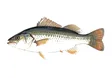
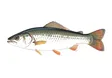
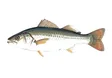
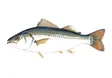
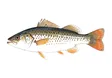
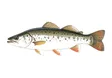
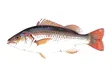
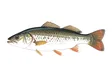
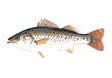
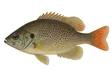
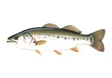
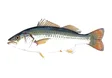
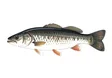
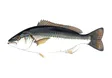
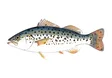
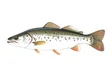
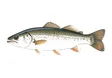
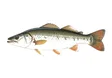
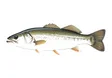
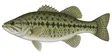
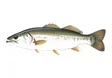
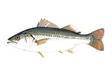
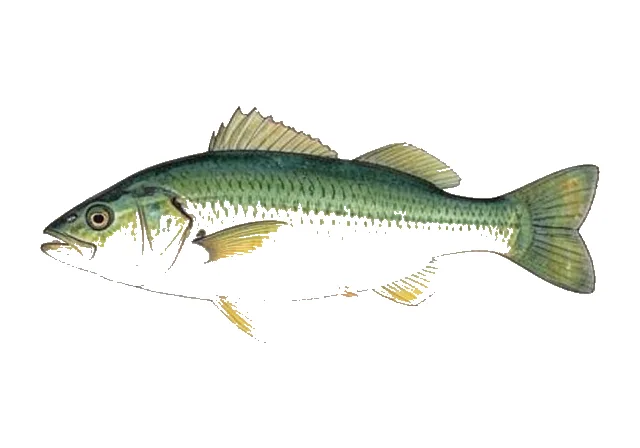
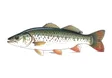
Green Sunfish field guide illustration

About Green Sunfish

The green sunfish (Lepomis cyanellus) is a species of aggressive freshwater fish in the sunfish family (Centrarchidae) of order Centrarchiformes. The green sunfish does not always grow large enough to be an appealing target for anglers, but it is kept as an aquarium fish by hobbyists. They grow to be 3–6 inches (7.6–15.2 cm) long on average, but can achieve a length of 12 inches (30 cm).

Etymology

The generic name Lepomis derives from the Greek λεπίς (scale) and πώμα (cover, plug, operculum). The specific epithet, cyanellus, derives from the Greek κυανός (blue).

Geographic distribution

The green sunfish is native to a wide area of North America, from the Rocky Mountains in the west to the Appalachian Mountains in the east and from the Hudson Bay basin in Canada to the Gulf Coast in the United States and northern Mexico. They are specifically indigenous to a number of lakes and rivers, such as the Great Lakes and some of the basins of the Mississippi River.

Green sunfish have been introduced to many bodies of water all across the United States. The green sunfish is considered an invasive species by the states of Arizona, California, Florida, Georgia and New Jersey, with unconfirmed presence in Vermont and New Hampshire, namely the Connecticut River and its tributaries. Their invasive potential is due in part to their penchant for chasing other sunfish away from mutually preferred habitat of submerged vegetation, a form of interference competition, their relatively large mouth, high fecundity and ability to tolerate sediment pollution. In the state of New Jersey, as of 2021, anglers must destroy green sunfish when caught and should report their catch to a state fisheries biologist. In the state of Florida, a permit is required in order to possess green sunfish as it is listed as a prohibited non-native species there. L. cyanellus has been transplanted to countries in Africa, Asia, and Europe, and has become established in some areas.

Description

The green sunfish is blue-green in color on its back and sides with yellow-flecked bony-ridged (ctenoid) scales, as well as yellow coloration on the ventral sides. The gill covers and sides of head have broken bright blue stripes, causing some to mistakenly confuse them with bluegill. They also have a dark spot located near the back end of the dorsal fin, the base of the anal fin and on the opercular flap. The margins of the soft-rayed portion of the dorsal fin, the caudal fin, the ventral fins and the anal fin are orange or yellow, most pronounced in individuals during breeding periods. L. cyanellus has a relatively big mouth and long snout that extends to beneath the middle of the eye. Its pectoral fins are short with rounded edges containing 13 to 15 pectoral fin rays, a dorsal fin with about 10 dorsal spines followed by 10 to 12 rays and a homocercal tail. The typical length ranges from about 3–7 in and the fish usually weighs less than a pound. The green sunfish reaches a maximum recorded length of about 30 cm (12 in), with a maximum recorded weight of 960 g (2.12 lb). Identification of sunfish species from one another can sometimes be difficult as these species frequently hybridize.

Habitat

The species prefers areas in sluggish backwaters, lakes, and ponds with gravel, sand, or bedrock bottoms. They also can be found in very muddy waters and are able to tolerate poor water conditions. Green sunfish tend to spend their time hiding around rocks, submerged logs, plants, and other things that provide cover.

Diet

Its diet can include aquatic insects and larvae, insects that fall into the water, crayfish, snails, other molluscs, turtle food, frogs, some small fish, fish eggs, bryozoans, zooplankton, other small invertebrates, and sometimes plant material. They are omnivores.

Reproduction

Green sunfish begin spawning in the summer with the exact time varying with location and water temperature. When they do spawn, the males create nests in shallow water by clearing depressions in the bottom, often near a type of shelter such as rocks or submerged logs. The male defends his nest from other males using visual displays and physical force when necessary. On occasion, simply constructing a nest is sufficient for the male to attract a mate, but when it is not he will court a female with grunts and lead her to his nest.

They continue their courtship dance, swimming with each other around the nest until the female descends to deposit her eggs in the nest. The female will lay 2,000 to 26,000 eggs and leave them for the male to guard. He keeps watch over them until they hatch in three to five days, while protecting them and fanning them with his fins, keeping them clean and providing them with oxygenated water. When they hatch, the fry remain near the nest for a few days, then leave to feed and fend for themselves. After the eggs have hatched, the male will often seek to attract another female to lay her eggs in his nest. Lepomis cyanellus typically live between four and six years in the wild.

Green sunfish tend to nest in areas close to other green sunfish, as well as other species of sunfish. Due to the close proximity of multiple nests, a green sunfish female may deposit some of her eggs into the nest of a male of a different species. This in turn leads to the next generation containing some amount of hybrids. These green sunfish hybrids will often look like a combination of their parents, often making it difficult to distinguish one species from another.

Anatomy and physiology

The retina of the green sunfish includes a mosaic of cone cells and double cone cells in a regular arrangement. The green sunfish has been theorized to have vision that is sensitive to the polarization of light, which could enhance visibility of targets in scattering media if a processing technique called polarization difference imaging is employed by the fish. Experimental evidence, however, suggests that green sunfish are not able to visually discriminate on the basis of light polarization. Thus, the function of the green sunfish's retinal patterning is not known, although the two different types of cone cell present in green sunfish do facilitate color discrimination.

IGFA records

The International Game Fish Association (IGFA) all-tackle world record for the species stands at 0.96 kg (2 lb 2 oz), caught from Stockton Lake, Missouri in 1971.

Aquaria

An aggressive sunfish, it is difficult to keep with other green sunfishes, other sunfishes, or even other perciform fishes in general unless kept in very spacious aquaria or ponds. Like many fishes, it is more tolerant of distantly related species (i.e., catfishes and minnows), if they are too large to be eaten. The green sunfish accepts a variety of foods, including flakes, pellets, krill, brine shrimp, bloodworms, and live prey.

Article text: Wikipedia contributors, Green sunfish (source revision). Licensed under CC BY-SA 4.0. Retrieved 2026-10-11.
Diet and feeding

The FishTraits compilation records these diet categories for this species: invertebrates or larval fish; larger animal prey (a source category covering fish, crayfish, crabs, or frogs). These are broad categories, not a claim that every individual consumes every example in a category.

Reported feeding positions include bottom feeding and surface or water-column feeding. The compilation combines published observations; diets can vary with age, locality, and available food.

Habitat preferences

Reported habitat associations include medium to large rivers, streams and small rivers, creeks, still-water habitats.

The source records associations with muck, clay or silt, sand, gravel, vegetation, organic debris, large woody material. An association indicates reported use, rather than an exclusive requirement.

Reproduction and parental care

The compilation reports a representative maturity age of 2 years. Its maturity field summarizes mean, median, or modal estimates, usually for females; male estimates can be used when female data are unavailable. It is not a fixed age at which every fish first breeds.

Recorded spawning months are May, Jun, Jul, Aug for the source’s reporting region (NC). This is a regional calendar, not a range-wide schedule.

The reproductive-guild classification includes guarding eggs or young at a spawning substrate or nest.

Size and recorded longevity

FishTraits reports a maximum total length of 31 centimetres. Some entries use an estimated asymptotic length; this value should not be treated as a certified record catch.

Recorded longevity in the compilation is 8 years. Wild observations were preferred, but captive records were accepted where wild records were unavailable, and unspecified records were assumed wild. The value is not a guaranteed wild lifespan or an aquarium life expectancy.

Native range

Great Lakes, Hudson Bay, and Mississippi River basins from New York and Ontario west to Minnesota, South Dakota, and Wyoming, and south to the Gulf; Gulf Slope drainages from Mobile Bay, Georgia and Alabama, to the Rio Grande, Texas. Also northern Mexico (Page and Burr 1991).

Introduction history

Accidentally stocked as bluegill L. macrochirus or with other intended species (i.e., stock contaminant). In Hawaii, first discovered in the Western Kauai Lagoons. That site had been previously stocked with "bluegill" from various plantation reservoirs on Kauai; therefore, it is likely that L. cyanellus was present in Hawaii some time prior to its collection (Devick 1991a). It has been suggested that Green Sunfish were planted inadvertently in Lake Mead in 1937 (Holden and Stalnaker 1975). It may have reached the upper part of the Colorado River either by moving upstream from Lake Mead or by being introduced separately in that region (Holden and Stalnaker 1975).

Ecological impacts

Green Sunfish appear to be at least partially responsible for local extinctions of California roach Hesperoleucus symmetricus in California (Moyle and Nichols 1974; Moyle 1976a, 1976b; Smith 1982). In California, aggressive Green Sunfish outcompete native Sacramento perch Archoplites interruptus (Moyle 1976a). They may chase Sacramento perch away from spawning areas and out of favored places, such as shallow weedy areas, and into open water (Moyle 1976a). Once in open water, the perch are more vulnerable to predation and have less available food. Introduced Green Sunfish also compete with and prey on other native fishes (Moyle 1976a; Lemly 1985). Lemly (1985) found that Green Sunfish reduced populations of native species, and altered population structure, relative dominance, and distribution patterns in North Carolina Piedmont streams. In that study, he found that Green Sunfish preyed heavily on minnows, and in fact, may have been responsible for the elimination of two cyprinid species in the study area. Introduced Green Sunfish prey heavily on the native Gila chub Gila intermedia in Sabino Creek, AZ (Dudley and Matter 2000). Green Sunfish may compete with and adversely affect young Colorado pikeminnow Ptychocheilus lucius, an endangered species (Karp and Tyus 1990). Green Sunfish readily hybridize with other Lepomis species (Moyle 1976a; Sigler and Sigler 1987). In cold lakes the often overpopulate and reduce trout populations (McKechnie and Tharratt 1966). Their large mouth allows them to compete with larger fish for prey items, and to prey on eggs and young of other fishes (McKechnie and Tharratt 1966). Green Sunfish and other introduced predatory centrarchids are likely responsible for the decline of native ranid frogs in California, California tiger salamander Ambystoma californiense populations (Hayes and Jennings 1986; Dill and Cordone 1997), and the Chiricahua leopard frog Rana chiricahuensis in southeastern Arizona (Rosen et al. 1995).

Record fish

State records in 10 states

  • Oklahoma2 lbs 7.00 ozs

    Pontotoc Co. Pond · 10/16/1972 · Eddie Shulanberger · rod and line

  • Arkansas1 lb., 11 oz.

    pond, Dierks · 04/12/1976 · Keith McCullough, Dierks, AR · rod and reel

  • Alabama1 lbs 9 oz

    McLamore Pond, Walker County · 8/10/2005 · Caleb Miller, Parrish

  • Wisconsin1 lb. 9 oz.

    Wind Lake · Racine · 08/23/1967

  • Georgia1 lb, 7 oz

    Private pond · February 25, 2006 · Jeff Sumner

  • Minnesota1 lb 4 oz

    North Arbor Lake · Hennepin · 6/14/2005

  • Utah15.5 oz.

    Glassman Pond · 2003 · Sean Buchanan

  • Idaho0.67 lb

    Fernan Lake · 06/25/2019 · John Moore

  • Montana0.56 lbs.

    Castle Rock Reservoir · 6/19/91 · Roger Fliger

  • Texaslength record

    Little Blanco River · Sep 19, 2015 · Marco N. Garcia · Fly Rod, black wullu bugger

  • Texaslength record

    Little Blanco River · Sep 19, 2015 · Marco N. Garcia · Fly Rod, black wullu bugger

Each figure is the state agency’s own certified record. The site holds record tables for 11 states so far, so a state missing here has not been read yet. It is not a state where this fish holds no record.

Range

Where it lives

Share of 61,733 GBIF observation records with a state location, across 46 states. The orange dots are USGS stream-survey sites where this species was caught.
0%
17.2%
Share of 61,733 GBIF observation records with a state location, across 46 states. The orange dots are USGS stream-survey sites where this species was caught.

A blank area on the dot layer usually means nobody sampled there, not that the fish is absent. Turn on “every survey site” to see where the survey looked.

The USGS stream survey caught it at 12,448 of its sites, in 46 states. That survey and the GBIF records are two different counts of two different things, so the site keeps them apart.

Habitat

Water and movement

Water
WoRMS records this species in fresh water.
USGS NAS habitat
Freshwater
US status
Native transplant — native to part of the United States, moved to other waters inside it.
Migration
Undetermined
Pattern
Disagreement
4 published references do not agree on the pattern: Non-migratory, Potamodromous. The site shows every assignment rather than picking one.

Classification

Taxonomy

Kingdom
Animalia
Phylum
Chordata
Superclass
Actinopterygii
Class
Teleostei
Order
Perciformes
Genus
Lepomis
Species
Lepomis cyanellus
ITIS TSN
168132
WoRMS AphiaID
1022845
GBIF key
2394494
Outside the US
ITIS also files it in Canada, Mexico.

Common questions about Green Sunfish

What is the scientific name of Green Sunfish?
The scientific name is Lepomis cyanellus, in the family Centrarchidae. Classification follows ITIS.
Does Green Sunfish live in fresh water or salt water?
WoRMS records this species in fresh water.
Where has Green Sunfish been recorded in the United States?
GBIF has observations in 46 states, with the most records in Texas, Oklahoma, Minnesota. The map shows observation records, which do not establish the complete natural range.

Closest relatives

Other Lepomis species

Same family

More Centrarchidae

Alabama Bass11 states
Micropterus henshalliCentrarchidaeNative and introducedFresh
Banded Sunfish15 states
Enneacanthus obesusCentrarchidaeNativeFresh
Bantam Sunfish12 states
Lepomis symmetricusCentrarchidaeNativeFresh
Black Crappie49 states
Pomoxis nigromaculatusCentrarchidaeNative and introducedFresh
Blackbanded Sunfish8 states
Enneacanthus chaetodonCentrarchidaeNativeFresh
Bluegill49 states
Lepomis macrochirusCentrarchidaeNative and introducedFresh
Bluespotted Sunfish14 states
Enneacanthus gloriosusCentrarchidaeNative and introducedFresh
Cahaba Bass1 states
Micropterus cahabaeCentrarchidaeNativeFresh
Chattahoochee Bass2 states
Micropterus chattahoochaeCentrarchidaeNativeFresh
Dollar Sunfish18 states
Lepomis marginatusCentrarchidaeNativeFresh
Flier18 states
Centrarchus macropterusCentrarchidaeNativeFresh
Florida Largemouth Bass9 states
Micropterus floridanusCentrarchidaeNative and introducedFresh
Guadalupe Bass2 states
Micropterus treculiiCentrarchidaeNative and introducedFresh
Largemouth Bass48 states
Micropterus salmoidesCentrarchidaeNative and introducedFresh
Lepomis solis7 states
CentrarchidaeNative
Longear Sunfish31 states
Lepomis megalotisCentrarchidaeNative and introducedFresh
Mud Sunfish11 states
Acantharchus pomotisCentrarchidaeNativeFresh
Northern Sunfish8 states
Lepomis peltastesCentrarchidaeNativeFresh
Orangespotted Sunfish27 states
Lepomis humilisCentrarchidaeNative and introducedFresh
Ozark Bass3 states
Ambloplites constellatusCentrarchidaeNativeFresh
Pumpkinseed46 states
Lepomis gibbosusCentrarchidaeNative and introducedFreshBrackish
Redbreast Sunfish29 states
Lepomis auritusCentrarchidaeNative and introducedFresh
Redear Sunfish37 states
Lepomis microlophusCentrarchidaeNative and introducedFresh
Redeye Bass12 states
Micropterus coosaeCentrarchidaeNative and introducedFresh

All 40 species in Centrarchidae