Dollar Sunfish

Lepomis marginatus

Centrarchidae · freshwater water fish

5 minute read · Species guide

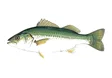
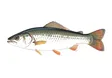
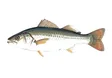
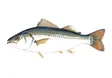
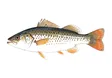
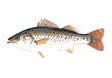
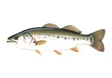
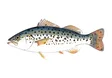
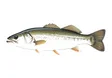
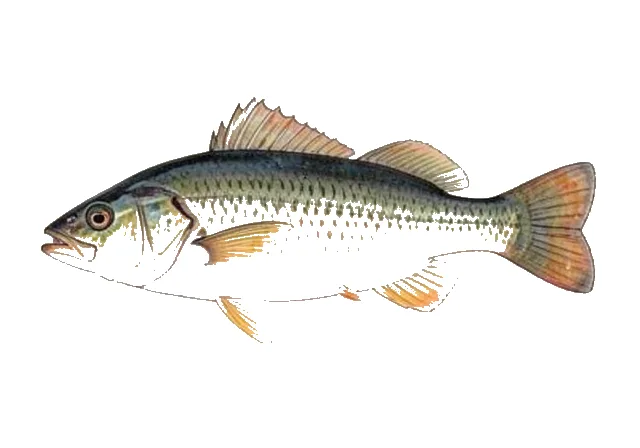
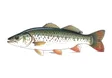
Dollar Sunfish field guide illustration

About Dollar Sunfish

The dollar sunfish (Lepomis marginatus) is a species of freshwater fish in the sunfish family (family Centrarchidae) of order Centrarchiformes. It is categorized as a warm-water panfish. Early settlers said that this species of sunfish resembled a European species they called "bream". Historically it has been found along the Southern Atlantic coastal drainages from North Carolina to Florida, and west to Texas. Lepomis marginatus mainly feeds on detritus and filamentous algae as well as a few terrestrial insects (Homoptera, Hymenoptera). The juvenile and mature fish do not have many predators, but the eggs in the nest are in danger of predation from a few different species of fish.

The dollar sunfish can have different breeding seasons depending on where it is located geographically. On average the dollar sunfish breeds from April to September, and in some states such as North Carolina, it breeds from May to August. They always finish breeding before the weather turns cold. These fish breed mainly on sandy substrates. "Bourgeois" males build and tend nests, court females, and care for eggs and young. The average lifespan is around six years, and it can grow up to a maximum of 100 mm.

Currently there are very well-managed creel limits for the sunfish species. The creel limits help to protect the species from being over-harvested. Other species of sunfish have been stocked in Tennessee lakes; however, the dollar sunfish has yet to be stocked in any of the river drainages of Tennessee.

Geographic distribution

Historically, the dollar sunfish has been found along Southern Atlantic coastal drainages from North Carolina to Florida, and extending west to Texas. The species is most common in the southeastern United States, becoming increasingly uncommon in the western part of its range Its current range in North America is the Tar River in North Carolina to Brazos River in Texas in the US; the former Mississippi Embayment in the US from western Kentucky and eastern Arkansas south to Gulf of Mexico. There have been a few records of the dollar sunfish in the Tennessee and Mississippi river drainage. However, due to its great similarity in appearance to younger specimens of the longear sunfish, L. megalotis, the distribution of L. marginatus has not been well understood in certain portions of its range.

Description

The dollar sunfish is a small sunfish species, achieving a length of 4–5 inches (10–13 cm) as an adult. Like longear sunfish, the dark ear flap on the operculum is outlined in white. There are bright blue lines that start near the fish's mouth and extend, often discontinuously, through the operculum. The dollar sunfish typically has twelve rays on each of its pectoral fins. Its lateral line is often faintly outlined in red. The caudal fin has a shallow fork. During the spawning season, males will develop brighter coloration, with deep orange color appearing along the belly accompanied by ventral extension of the rows of iridescent scales found on the body.

Ecology

The micro-distribution of the dollar sunfish is characterized by a pH of 7–7.8 and a temperature of 16–28 °C (61–82 °F).

Life history

The spawning season of the dollar sunfish occurs in the spring, from April–October at water temperatures of 16.8–25.6 degrees Celsius; peak spawning activity during late spring and summer. Their nests are solitary, usually adjacent to logs or some other structure; nests range from 30–94 cm in diameter, are 15–20 cm deep at center, and are usually constructed over sand. Usually the males will make the nest on a hard sand substrate. Females produce an average of 3302 eggs, with a range of 322–9206, depending on their body size. Individuals in Carolina are mature at age two and have a life span of six years.

Management

Laws and regulations exist to protect dollar sunfish populations. Most states enforce a creel limit, which is a limit on the maximum number of fish that a single person can catch in one day. However, there is no creel limit or size limit for the nongame pan fish in the state of Tennessee. The dollar sunfish is not federally or state listed as threatened or endangered. However, it is vulnerable to habitat destruction. State conservation and resource agencies, such as TWRA, are currently working to protect this species. There are also some areas set aside in the Mississippi and Ohio Valley plains to help conserve the populations.

Article text: Wikipedia contributors, Dollar sunfish (source revision). Licensed under CC BY-SA 4.0. Retrieved 2026-10-11.
Diet and feeding

The FishTraits compilation records these diet categories for this species: algae or phytoplankton; detritus or unidentified plant material; invertebrates or larval fish. These are broad categories, not a claim that every individual consumes every example in a category.

Reported feeding positions include bottom feeding and surface or water-column feeding. The compilation combines published observations; diets can vary with age, locality, and available food.

Habitat preferences

Reported habitat associations include medium to large rivers, streams and small rivers, creeks, still-water habitats.

The source records associations with muck, clay or silt, sand, vegetation. An association indicates reported use, rather than an exclusive requirement.

Reproduction and parental care

The compilation reports a representative maturity age of 2 years. Its maturity field summarizes mean, median, or modal estimates, usually for females; male estimates can be used when female data are unavailable. It is not a fixed age at which every fish first breeds.

Batch or serial spawning has been reported somewhere in the species’ range. This does not establish the same spawning pattern for every population.

Recorded spawning months are May, Jun, Jul, Aug for the source’s reporting region (NC). This is a regional calendar, not a range-wide schedule.

The reproductive-guild classification includes guarding eggs or young at a spawning substrate or nest.

Size and recorded longevity

FishTraits reports a maximum total length of 12 centimetres. Some entries use an estimated asymptotic length; this value should not be treated as a certified record catch.

Recorded longevity in the compilation is 6 years. Wild observations were preferred, but captive records were accepted where wild records were unavailable, and unspecified records were assumed wild. The value is not a guaranteed wild lifespan or an aquarium life expectancy.

Range

Where it lives

Share of 6,357 GBIF observation records with a state location, across 18 states. The orange dots are USGS stream-survey sites where this species was caught.
0%
45.7%
Share of 6,357 GBIF observation records with a state location, across 18 states. The orange dots are USGS stream-survey sites where this species was caught.

A blank area on the dot layer usually means nobody sampled there, not that the fish is absent. Turn on “every survey site” to see where the survey looked.

The USGS stream survey caught it at 338 of its sites, in 12 states. That survey and the GBIF records are two different counts of two different things, so the site keeps them apart.

Habitat

Water and movement

Water
WoRMS records this species in fresh water.
Migration
Not migratory

Classification

Taxonomy

Kingdom
Animalia
Phylum
Chordata
Superclass
Actinopterygii
Class
Teleostei
Order
Perciformes
Genus
Lepomis
Species
Lepomis marginatus
ITIS TSN
168152
WoRMS AphiaID
1419259
GBIF key
2394497
Outside the US
ITIS also files it in Canada.

Common questions about Dollar Sunfish

What is the scientific name of Dollar Sunfish?
The scientific name is Lepomis marginatus, in the family Centrarchidae. Classification follows ITIS.
Does Dollar Sunfish live in fresh water or salt water?
WoRMS records this species in fresh water.
Where has Dollar Sunfish been recorded in the United States?
GBIF has observations in 18 states, with the most records in Florida, Texas, Georgia. The map shows observation records, which do not establish the complete natural range.

Closest relatives

Other Lepomis species

Same family

More Centrarchidae

Alabama Bass11 states
Micropterus henshalliCentrarchidaeNative and introducedFresh
Banded Sunfish15 states
Enneacanthus obesusCentrarchidaeNativeFresh
Bantam Sunfish12 states
Lepomis symmetricusCentrarchidaeNativeFresh
Black Crappie49 states
Pomoxis nigromaculatusCentrarchidaeNative and introducedFresh
Blackbanded Sunfish8 states
Enneacanthus chaetodonCentrarchidaeNativeFresh
Bluegill49 states
Lepomis macrochirusCentrarchidaeNative and introducedFresh
Bluespotted Sunfish14 states
Enneacanthus gloriosusCentrarchidaeNative and introducedFresh
Cahaba Bass1 states
Micropterus cahabaeCentrarchidaeNativeFresh
Chattahoochee Bass2 states
Micropterus chattahoochaeCentrarchidaeNativeFresh
Flier18 states
Centrarchus macropterusCentrarchidaeNativeFresh
Florida Largemouth Bass9 states
Micropterus floridanusCentrarchidaeNative and introducedFresh
Green Sunfish46 states
Lepomis cyanellusCentrarchidaeNative and introducedFresh
Guadalupe Bass2 states
Micropterus treculiiCentrarchidaeNative and introducedFresh
Largemouth Bass48 states
Micropterus salmoidesCentrarchidaeNative and introducedFresh
Lepomis solis7 states
CentrarchidaeNative
Longear Sunfish31 states
Lepomis megalotisCentrarchidaeNative and introducedFresh
Mud Sunfish11 states
Acantharchus pomotisCentrarchidaeNativeFresh
Northern Sunfish8 states
Lepomis peltastesCentrarchidaeNativeFresh
Orangespotted Sunfish27 states
Lepomis humilisCentrarchidaeNative and introducedFresh
Ozark Bass3 states
Ambloplites constellatusCentrarchidaeNativeFresh
Pumpkinseed46 states
Lepomis gibbosusCentrarchidaeNative and introducedFreshBrackish
Redbreast Sunfish29 states
Lepomis auritusCentrarchidaeNative and introducedFresh
Redear Sunfish37 states
Lepomis microlophusCentrarchidaeNative and introducedFresh
Redeye Bass12 states
Micropterus coosaeCentrarchidaeNative and introducedFresh

All 40 species in Centrarchidae