Banded Sunfish

Enneacanthus obesus

Centrarchidae · freshwater water fish

3 minute read · Species guide

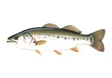
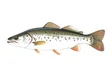
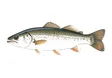
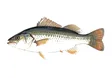
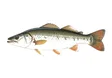
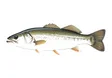
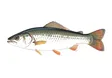
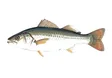
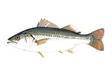
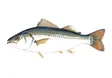
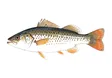
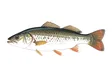
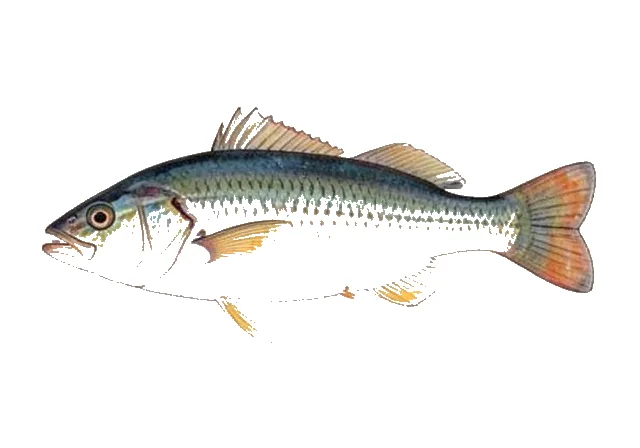
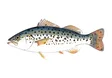
Banded Sunfish field guide illustration

About Banded Sunfish

The banded sunfish (Enneacanthus obesus) is a freshwater fish of the family, Centrarchidae. They can grow to 2–3 inches long. They are native to North America.

Description

The banded sunfish is similar to the blackbanded sunfish and has a very compressed and deep body. Its sides are iridescent and dark colored. There are dark bands on its side and nuptial males and females will develop blue specks on their bodies. Its mouth is upturned and its pectoral and tail fins are rounded. It grows to an approximate length of 9.5 cm.

Distribution

The banded sunfish is found in the Atlantic coastal drainages of North America from southern Maine south to central Florida and along the Gulf slope as far west as the Perdido River drainage in Alabama.

Habitat

The banded sunfish is found in small ponds and backwaters of creeks to small and large rivers and boggy brooks over sand or mud in sluggish, acidic, heavily vegetated waters.

Diet

The banded sunfish feeds upon aquatic insects and microcrustaceans.

Reproduction

Spawning occurs from April through July. They can spawn when they become one year old. The male will construct a sand or gravel nest where the eggs are laid but does guard the eggs as the eggs are buoyant and float way from the nest.

Status

The banded sunfish is currently endangered in Pennsylvania, New York, New Jersey, New Hampshire, and Connecticut. Globally, however, its population is stable and is listed as Least Concern on the IUCN Red List.

Taxonomy and etymology

The banded sunfish was first formally described as Pomotis obesus in 1854 by the French ichthyologist Charles Frédéric Girard (1822-1895) with the type locality given as Framingham and in a branch of the Charles River, at Holliston, Massachusetts. The generic name Enneacanthus means "nine-spined"while the specific name obesus means"fat".

Article text: Wikipedia contributors, Banded sunfish (source revision). Licensed under CC BY-SA 4.0. Retrieved 2026-10-11.
Diet and feeding

The FishTraits compilation records these diet categories for this species: aquatic or other vascular plants; invertebrates or larval fish. These are broad categories, not a claim that every individual consumes every example in a category.

Reported feeding positions include surface or water-column feeding. The compilation combines published observations; diets can vary with age, locality, and available food.

Habitat preferences

Reported habitat associations include streams and small rivers, creeks, still-water habitats.

The source records associations with muck, clay or silt, sand, vegetation, organic debris. An association indicates reported use, rather than an exclusive requirement.

Reproduction and parental care

The compilation reports a representative maturity age of 1 years. Its maturity field summarizes mean, median, or modal estimates, usually for females; male estimates can be used when female data are unavailable. It is not a fixed age at which every fish first breeds.

Recorded spawning months are Apr, May, Jun, Jul for the source’s reporting region (VA). This is a regional calendar, not a range-wide schedule.

The reproductive-guild classification includes guarding eggs or young at a spawning substrate or nest.

Size and recorded longevity

FishTraits reports a maximum total length of 9.5 centimetres. Some entries use an estimated asymptotic length; this value should not be treated as a certified record catch.

Recorded longevity in the compilation is 6 years. Wild observations were preferred, but captive records were accepted where wild records were unavailable, and unspecified records were assumed wild. The value is not a guaranteed wild lifespan or an aquarium life expectancy.

Range

Where it lives

Share of 1,764 GBIF observation records with a state location, across 15 states. The orange dots are USGS stream-survey sites where this species was caught.
0%
29.8%
Share of 1,764 GBIF observation records with a state location, across 15 states. The orange dots are USGS stream-survey sites where this species was caught.

A blank area on the dot layer usually means nobody sampled there, not that the fish is absent. Turn on “every survey site” to see where the survey looked.

The USGS stream survey caught it at 130 of its sites, in 12 states. That survey and the GBIF records are two different counts of two different things, so the site keeps them apart.

Habitat

Water and movement

Water
WoRMS records this species in fresh water.
Migration
Not migratory

Classification

Taxonomy

Kingdom
Animalia
Phylum
Chordata
Superclass
Actinopterygii
Class
Teleostei
Order
Perciformes
Genus
Enneacanthus
Species
Enneacanthus obesus
ITIS TSN
168117
WoRMS AphiaID
1419161
GBIF key
2394549

Common questions about Banded Sunfish

What is the scientific name of Banded Sunfish?
The scientific name is Enneacanthus obesus, in the family Centrarchidae. Classification follows ITIS.
Does Banded Sunfish live in fresh water or salt water?
WoRMS records this species in fresh water.
Where has Banded Sunfish been recorded in the United States?
GBIF has observations in 15 states, with the most records in New Jersey, Florida, North Carolina. The map shows observation records, which do not establish the complete natural range.

Closest relatives

Other Enneacanthus species

Same family

More Centrarchidae

Alabama Bass11 states
Micropterus henshalliCentrarchidaeNative and introducedFresh
Bantam Sunfish12 states
Lepomis symmetricusCentrarchidaeNativeFresh
Black Crappie49 states
Pomoxis nigromaculatusCentrarchidaeNative and introducedFresh
Blackbanded Sunfish8 states
Enneacanthus chaetodonCentrarchidaeNativeFresh
Bluegill49 states
Lepomis macrochirusCentrarchidaeNative and introducedFresh
Bluespotted Sunfish14 states
Enneacanthus gloriosusCentrarchidaeNative and introducedFresh
Cahaba Bass1 states
Micropterus cahabaeCentrarchidaeNativeFresh
Chattahoochee Bass2 states
Micropterus chattahoochaeCentrarchidaeNativeFresh
Dollar Sunfish18 states
Lepomis marginatusCentrarchidaeNativeFresh
Flier18 states
Centrarchus macropterusCentrarchidaeNativeFresh
Florida Largemouth Bass9 states
Micropterus floridanusCentrarchidaeNative and introducedFresh
Green Sunfish46 states
Lepomis cyanellusCentrarchidaeNative and introducedFresh
Guadalupe Bass2 states
Micropterus treculiiCentrarchidaeNative and introducedFresh
Largemouth Bass48 states
Micropterus salmoidesCentrarchidaeNative and introducedFresh
Lepomis solis7 states
CentrarchidaeNative
Longear Sunfish31 states
Lepomis megalotisCentrarchidaeNative and introducedFresh
Mud Sunfish11 states
Acantharchus pomotisCentrarchidaeNativeFresh
Northern Sunfish8 states
Lepomis peltastesCentrarchidaeNativeFresh
Orangespotted Sunfish27 states
Lepomis humilisCentrarchidaeNative and introducedFresh
Ozark Bass3 states
Ambloplites constellatusCentrarchidaeNativeFresh
Pumpkinseed46 states
Lepomis gibbosusCentrarchidaeNative and introducedFreshBrackish
Redbreast Sunfish29 states
Lepomis auritusCentrarchidaeNative and introducedFresh
Redear Sunfish37 states
Lepomis microlophusCentrarchidaeNative and introducedFresh
Redeye Bass12 states
Micropterus coosaeCentrarchidaeNative and introducedFresh

All 40 species in Centrarchidae