Mud Sunfish

Acantharchus pomotis

Centrarchidae · freshwater water fish

5 minute read · Species guide

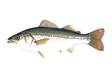
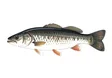
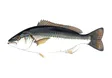
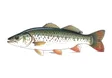
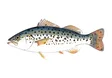
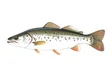
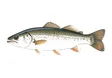
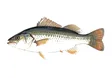
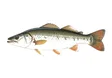
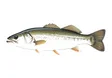
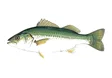
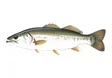
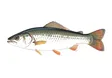
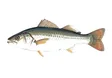
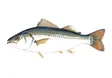
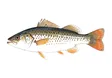
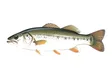
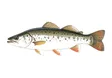
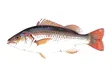
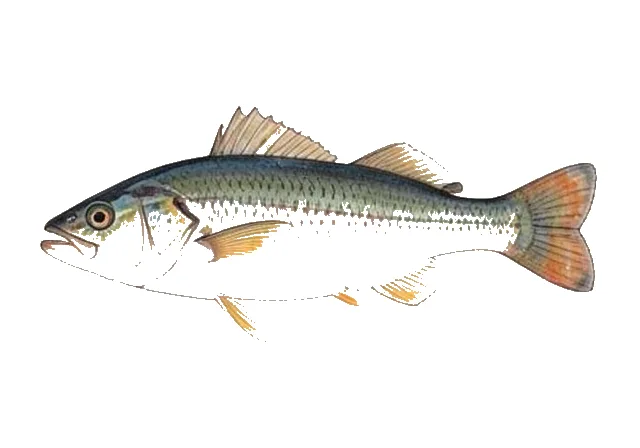
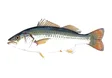
Mud Sunfish field guide illustration

About Mud Sunfish

The mud sunfish (Acantharchus pomotis) is a freshwater ray-finned fish, a sunfish from the family Centrarchidae, which widely distributed in the fresh waters along the Atlantic coast of North America, ranging from New York to Alabama. It is the only species in the genus Acantharchus.

Taxonomy

The mud sunfish was first formally described as Centrarchus pomotis by Spencer Fullerton Baird in 1855 with the type locality given as Cedar Swamp Creek in, Beesley's Point, New Jersey and the Hackensack River in Rockland County, New York. In 1864, Theodore Nicholas Gill placed it in its own monospecific genus Acantharchus, the new genus name being a compound of the Greek words acanthus meaning "thorn"and asrcus meaning"anus".

Description

The mud sunfish is a small fish which can be distinguished from other members of its family by its possession of five or more spines in its anal fin, by having less than 15 gill rakers and in being the only species in its family that has cycloid scales.

Its body is oblong and compressed with a large mouth and eyes. This species has rounded pectoral and caudal fins. which are clear through to dark olive in color and the anal fin has a black margin. It has a dark spot on the gill cover and the color of its body varies from brown on the back to yellowish tan on the flanks, while the juveniles are pale olive. There are three or four parallel dusky, horizontal stripes which extend from the cheek along the body. They can grow to a maximum total length of 21 centimeters (8.3 in), although 14.1 centimeters (5.6 in) is a more common total length.

Distribution and habitat

The mud sunfish occurs along the eastern seaboard of the United States from southern New York south as far as northern Florida. The range of this species just extends into Alabama where they have been recorded in Beaver Dam Creek in Washington County. There is a gap in their range in Maryland and Virginia, along the western part of Chesapeake Bay between the Susquehanna River and the Potomac River. It is not common anywhere in its range.

The mud sunfish is found in freshwaters which are stained dark with tannins. It has been recorded in slow-moving sluggish, well vegetated creeks, rivers, ponds, lakes and swamps. As its common name suggests it prefers substrates consisting of mud or detritus.

Breeding

This is a nocturnal species which lives at naturally low densities and as a result there have been few studies conducted on it. What has been discovered is that spawning appears to vary with latitude with gravid females being collected during the late spring and early summer in Delaware while further south, in North Carolina and Georgia spawning takes place during the early fall and late winter. They have a maximum life span of eight years and sexual maturity is attained at one year old. Their diet is made up largely of invertebrates including amphipods, decapods, and beetles with some smaller fishes and Odonata.

Conservation

The IUCN has assessed the status of the mud sunfish as Least Concern and states that its population is stable. In individual states, however, there have been significant reductions in the species range. In New York the species was only recorded from the Hackensack River and it has not been collected from there since 1935. Its range has also significantly reduced in New Jersey, particularly in the northern and central parts of the state but it remains reasonable common and widespread in the Pinelands. In New Jersey the fish's decline is possibly a result of a number of reasons including land use and habitat changes and the introduction of non-native fish which predate on the mud sunfish and in this state it has been recommended that it be classified as a species of special concern. It has been extirpated from Pennsylvania.

Article text: Wikipedia contributors, Mud sunfish (source revision). Licensed under CC BY-SA 4.0. Retrieved 2026-10-11.
Diet and feeding

The FishTraits compilation records these diet categories for this species: invertebrates or larval fish; larger animal prey (a source category covering fish, crayfish, crabs, or frogs). These are broad categories, not a claim that every individual consumes every example in a category.

Reported feeding positions include bottom feeding and surface or water-column feeding. The compilation combines published observations; diets can vary with age, locality, and available food.

Habitat preferences

Reported habitat associations include streams and small rivers, creeks, still-water habitats.

The source records associations with muck, vegetation, organic debris, large woody material. An association indicates reported use, rather than an exclusive requirement.

Reproduction and parental care

The compilation reports a representative maturity age of 1 years. Its maturity field summarizes mean, median, or modal estimates, usually for females; male estimates can be used when female data are unavailable. It is not a fixed age at which every fish first breeds.

Recorded spawning months are Jun for the source’s reporting region (NJ). This is a regional calendar, not a range-wide schedule.

The reproductive-guild classification includes guarding eggs or young at a spawning substrate or nest.

Size and recorded longevity

FishTraits reports a maximum total length of 21 centimetres. Some entries use an estimated asymptotic length; this value should not be treated as a certified record catch.

Recorded longevity in the compilation is 4 years. Wild observations were preferred, but captive records were accepted where wild records were unavailable, and unspecified records were assumed wild. The value is not a guaranteed wild lifespan or an aquarium life expectancy.

Range

Where it lives

Share of 1,227 GBIF observation records with a state location, across 11 states. The orange dots are USGS stream-survey sites where this species was caught.
0%
33.2%
Share of 1,227 GBIF observation records with a state location, across 11 states. The orange dots are USGS stream-survey sites where this species was caught.

A blank area on the dot layer usually means nobody sampled there, not that the fish is absent. Turn on “every survey site” to see where the survey looked.

The USGS stream survey caught it at 130 of its sites, in 7 states. That survey and the GBIF records are two different counts of two different things, so the site keeps them apart.

Habitat

Water and movement

Water
WoRMS records this species in fresh water.
Migration
Not migratory

Classification

Taxonomy

Kingdom
Animalia
Phylum
Chordata
Superclass
Actinopterygii
Class
Teleostei
Order
Perciformes
Genus
Acantharchus
Species
Acantharchus pomotis
ITIS TSN
168095
WoRMS AphiaID
293694
GBIF key
2394540

Common questions about Mud Sunfish

What is the scientific name of Mud Sunfish?
The scientific name is Acantharchus pomotis, in the family Centrarchidae. Classification follows ITIS.
Does Mud Sunfish live in fresh water or salt water?
WoRMS records this species in fresh water.
Where has Mud Sunfish been recorded in the United States?
GBIF has observations in 11 states, with the most records in North Carolina, New Jersey, South Carolina. The map shows observation records, which do not establish the complete natural range.

Same family

More Centrarchidae

Alabama Bass11 states
Micropterus henshalliCentrarchidaeNative and introducedFresh
Banded Sunfish15 states
Enneacanthus obesusCentrarchidaeNativeFresh
Bantam Sunfish12 states
Lepomis symmetricusCentrarchidaeNativeFresh
Black Crappie49 states
Pomoxis nigromaculatusCentrarchidaeNative and introducedFresh
Blackbanded Sunfish8 states
Enneacanthus chaetodonCentrarchidaeNativeFresh
Bluegill49 states
Lepomis macrochirusCentrarchidaeNative and introducedFresh
Bluespotted Sunfish14 states
Enneacanthus gloriosusCentrarchidaeNative and introducedFresh
Cahaba Bass1 states
Micropterus cahabaeCentrarchidaeNativeFresh
Chattahoochee Bass2 states
Micropterus chattahoochaeCentrarchidaeNativeFresh
Dollar Sunfish18 states
Lepomis marginatusCentrarchidaeNativeFresh
Flier18 states
Centrarchus macropterusCentrarchidaeNativeFresh
Florida Largemouth Bass9 states
Micropterus floridanusCentrarchidaeNative and introducedFresh
Green Sunfish46 states
Lepomis cyanellusCentrarchidaeNative and introducedFresh
Guadalupe Bass2 states
Micropterus treculiiCentrarchidaeNative and introducedFresh
Largemouth Bass48 states
Micropterus salmoidesCentrarchidaeNative and introducedFresh
Lepomis solis7 states
CentrarchidaeNative
Longear Sunfish31 states
Lepomis megalotisCentrarchidaeNative and introducedFresh
Northern Sunfish8 states
Lepomis peltastesCentrarchidaeNativeFresh
Orangespotted Sunfish27 states
Lepomis humilisCentrarchidaeNative and introducedFresh
Ozark Bass3 states
Ambloplites constellatusCentrarchidaeNativeFresh
Pumpkinseed46 states
Lepomis gibbosusCentrarchidaeNative and introducedFreshBrackish
Redbreast Sunfish29 states
Lepomis auritusCentrarchidaeNative and introducedFresh
Redear Sunfish37 states
Lepomis microlophusCentrarchidaeNative and introducedFresh
Redeye Bass12 states
Micropterus coosaeCentrarchidaeNative and introducedFresh

All 40 species in Centrarchidae