Shoal Bass

Micropterus cataractae

Centrarchidae · freshwater water fish

5 minute read · Species guide

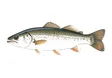
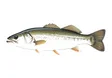
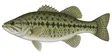
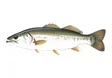
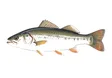
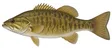
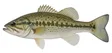
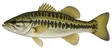
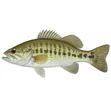
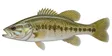
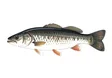
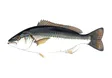
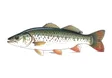
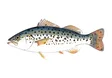
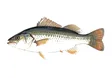
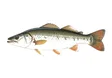
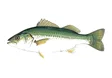
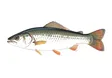
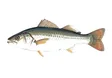
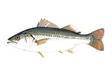
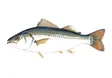
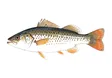
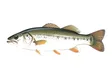
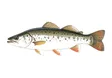
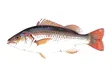
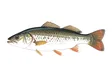
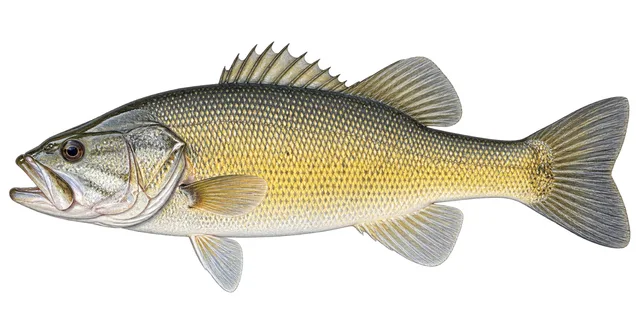
Shoal Bass field guide illustration

About Shoal Bass

The shoal bass (Micropterus cataractae) is a species of freshwater fish in the sunfish family (Centrarchidae) of order Centrarchiformes. One of the black basses, it is native to waters in Florida and Georgia. It is also occasionally found in rivers and streams of East Alabama where it has been declared an endangered species and cannot legally be kept if caught by fishermen. Of typical size for a black bass, M. cataractae reaches a maximum recorded length of 24 inches (61 cm) and a maximum published weight of 8 pounds, 12 ounces.

Only described for the first time in 1999, ichthyologists are still expanding what is known about the species. The shoal bass is often confused with the redeye bass, due to its red-tinted eyes. It is also often confused with the smallmouth bass, due to its faint vertical stripes along the side of its body.

Description

This species was formerly considered either a redeye bass or subspecies of the redeye bass. In 1999 it was described as a new species.

The red color of eyes associates this species with the redeye and Suwannee bass at first glance. However, it is more closely related morphologically to the spotted bass. Shoal bass are generally olive green to nearly black along the back. A dusky dark blotch about 50 to 67 percent of the size of the eye occurs on the back edge of the gill cover. Three diagonal black lines radiate along the side of the head looking like war paint. Ten to fifteen vertical blotches appear along the sides with tiger-stripes often appearing in between.

The belly is creamy or white and wavy lines may appear slightly above the white belly on the sides. The dorsal, caudal and anal fins are dark olive green to grayish black. Pelvic fins may have a cream colored leading edge with dark spots.

The shoal bass has scales on the base portion of the soft-rayed dorsal fins, clearly connected first and second dorsal fins, and an upper jaw bone that does not extend beyond the eyes.

Range and habitat

The shoal bass is becoming increasingly uncommon in the Apalachicola and Chipola rivers because so few shoals exist and competition with non-native spotted bass has increased. It is also known in the Chattahoochee River drainage; and is most plentiful in the relatively undammed Flint River of Georgia, as well as lakes such as Blackshear and West Point. Shoal bass are closely associated with rock shoals and are uncommon in other habitat due to their unique spawning requirements.

The conservation status of shoal bass is vulnerable throughout its range. Good fishing still exists in Georgia's Flint River, but anglers are encouraged to catch and release. Conversely, anglers are urged to keep all spotted bass caught on the Flint River because of its competition with and potential for hybridizing with the shoal bass.

Behavior

Shoal bass spawn in coarse gravel at the heads of creek pools in April and May, to early June. They prefer a spawning temperature of 64 to 79 °F (18 to 26 °C). Like the largemouth, the male prepares the nest and guards the eggs and fry.

Shoal bass feed mainly on aquatic insects on the surface. They also feed on larval insects, crayfish and fish. Shoal bass grow much faster than redeye bass.

Sporting quality

Shoal bass offer similar sporting quality to that of other species of black bass. They can be caught using worms, minnows, or crayfish as well as small spinners and a wide variety of small surface lures. Some have been known to reach more than eight pounds. As a sport fish, specific bag and size limit regulations apply, and you can register a qualifying catch as part of the Florida Fish and Wildlife Conservation Commission's "Big Catch" program.

The shoal bass has white, flaky meat, which tends to be drier than that of a largemouth or spotted bass.

The world record shoal bass was 8 pounds, 12 ounces according to the International Game Fish Association. The fish was caught October 23, 1977, in the Apalachicola River, Florida. This bass was a shoal bass, but originally reported as the Apalachicola form of redeye bass.

Shoal bass are also popular targets for fly fishers, who find them easy to access in their preferred river environments. The practice of fly fishing for shoal bass is becoming more widespread.

The shoal bass fights harder than its cousin, the largemouth bass, and has more stamina. They prefer moderate to heavy current and will take crawdad patterns aggressively. Five pound shoal bass are considered trophies, but fish above seven pounds are caught each year.

Article text: Wikipedia contributors, Shoal bass (source revision). Licensed under CC BY-SA 4.0. Retrieved 2026-10-11.
Diet and feeding

The FishTraits compilation records these diet categories for this species: invertebrates or larval fish; larger animal prey (a source category covering fish, crayfish, crabs, or frogs). These are broad categories, not a claim that every individual consumes every example in a category.

Reported feeding positions include bottom feeding and surface or water-column feeding. The compilation combines published observations; diets can vary with age, locality, and available food.

Habitat preferences

Reported habitat associations include medium to large rivers.

The source records associations with clay or silt, sand, gravel, boulders, vegetation, organic debris, large woody material. An association indicates reported use, rather than an exclusive requirement.

Reproduction and parental care

The compilation reports a representative maturity age of 3 years. Its maturity field summarizes mean, median, or modal estimates, usually for females; male estimates can be used when female data are unavailable. It is not a fixed age at which every fish first breeds.

Recorded spawning months are Apr, May, Jun for the source’s reporting region (AL). This is a regional calendar, not a range-wide schedule.

The reproductive-guild classification includes guarding eggs or young at a spawning substrate or nest.

Size and recorded longevity

FishTraits reports a maximum total length of 50 centimetres. Some entries use an estimated asymptotic length; this value should not be treated as a certified record catch.

Recorded longevity in the compilation is 8 years. Wild observations were preferred, but captive records were accepted where wild records were unavailable, and unspecified records were assumed wild. The value is not a guaranteed wild lifespan or an aquarium life expectancy.

Native range

Apalachicola River drainage of Alabama, Florida, and Georgia (Williams and Burgess 1999).

Introduction history

Intentional authorized stocking for sportfishing.

Record fish

State records in 3 states

  • Georgia8 lb, 5 oz

    Chattahoochee River · December 23, 2021 · Joseph Matthew McWhorter

  • Georgia8 lb, 5 oz

    Flint River · April 16, 2022 · Clark Wheeler

  • Alabama6 lbs 11 oz

    Halawakee Creek · 2/25/1996 · Darrell Trawick, Salem

  • Florida5.95 lb

    Chipola River · Calhoun · 11/18/2017 · Sheldon Grace

Each figure is the state agency’s own certified record. The site holds record tables for 11 states so far, so a state missing here has not been read yet. It is not a state where this fish holds no record.

Range

Where it lives

Share of 378 GBIF observation records with a state location, across 4 states. The orange dots are USGS stream-survey sites where this species was caught.
0%
75.7%
Share of 378 GBIF observation records with a state location, across 4 states. The orange dots are USGS stream-survey sites where this species was caught.

A blank area on the dot layer usually means nobody sampled there, not that the fish is absent. Turn on “every survey site” to see where the survey looked.

The USGS stream survey caught it at 27 of its sites, in 2 states. That survey and the GBIF records are two different counts of two different things, so the site keeps them apart.

Habitat

Water and movement

Water
WoRMS records this species in fresh water.
USGS NAS habitat
Freshwater
US status
Native transplant — native to part of the United States, moved to other waters inside it.
Migration
Not migratory

Classification

Taxonomy

Kingdom
Animalia
Phylum
Chordata
Superclass
Actinopterygii
Class
Teleostei
Order
Perciformes
Genus
Micropterus
Species
Micropterus cataractae
ITIS TSN
564610
WoRMS AphiaID
1010282
GBIF key
5211258
Outside the US
ITIS also files it in Caribbean Territories.

Common questions about Shoal Bass

What is the scientific name of Shoal Bass?
The scientific name is Micropterus cataractae, in the family Centrarchidae. Classification follows ITIS.
Does Shoal Bass live in fresh water or salt water?
WoRMS records this species in fresh water.
Where has Shoal Bass been recorded in the United States?
GBIF has observations in 4 states, with the most records in Georgia, Alabama, Florida. The map shows observation records, which do not establish the complete natural range.

Closest relatives

Other Micropterus species

Same family

More Centrarchidae

Alabama Bass11 states
Micropterus henshalliCentrarchidaeNative and introducedFresh
Banded Sunfish15 states
Enneacanthus obesusCentrarchidaeNativeFresh
Bantam Sunfish12 states
Lepomis symmetricusCentrarchidaeNativeFresh
Black Crappie49 states
Pomoxis nigromaculatusCentrarchidaeNative and introducedFresh
Blackbanded Sunfish8 states
Enneacanthus chaetodonCentrarchidaeNativeFresh
Bluegill49 states
Lepomis macrochirusCentrarchidaeNative and introducedFresh
Bluespotted Sunfish14 states
Enneacanthus gloriosusCentrarchidaeNative and introducedFresh
Cahaba Bass1 states
Micropterus cahabaeCentrarchidaeNativeFresh
Chattahoochee Bass2 states
Micropterus chattahoochaeCentrarchidaeNativeFresh
Dollar Sunfish18 states
Lepomis marginatusCentrarchidaeNativeFresh
Flier18 states
Centrarchus macropterusCentrarchidaeNativeFresh
Florida Largemouth Bass9 states
Micropterus floridanusCentrarchidaeNative and introducedFresh
Green Sunfish46 states
Lepomis cyanellusCentrarchidaeNative and introducedFresh
Guadalupe Bass2 states
Micropterus treculiiCentrarchidaeNative and introducedFresh
Largemouth Bass48 states
Micropterus salmoidesCentrarchidaeNative and introducedFresh
Lepomis solis7 states
CentrarchidaeNative
Longear Sunfish31 states
Lepomis megalotisCentrarchidaeNative and introducedFresh
Mud Sunfish11 states
Acantharchus pomotisCentrarchidaeNativeFresh
Northern Sunfish8 states
Lepomis peltastesCentrarchidaeNativeFresh
Orangespotted Sunfish27 states
Lepomis humilisCentrarchidaeNative and introducedFresh
Ozark Bass3 states
Ambloplites constellatusCentrarchidaeNativeFresh
Pumpkinseed46 states
Lepomis gibbosusCentrarchidaeNative and introducedFreshBrackish
Redbreast Sunfish29 states
Lepomis auritusCentrarchidaeNative and introducedFresh
Redear Sunfish37 states
Lepomis microlophusCentrarchidaeNative and introducedFresh

All 40 species in Centrarchidae