Longear Sunfish

Lepomis megalotis

Centrarchidae · freshwater water fish

8 minute read · Species guide

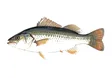
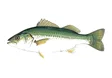
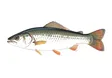
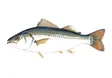
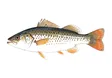
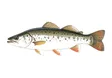
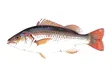
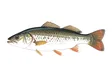
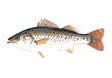
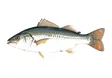
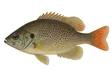
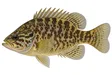
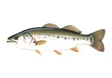
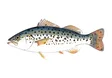
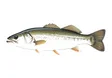
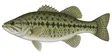
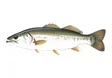
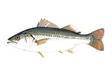
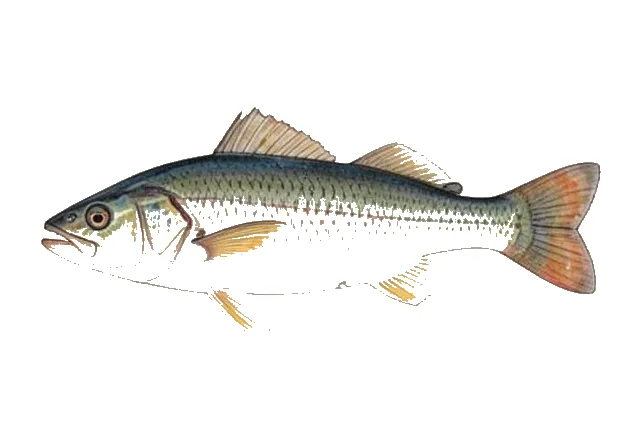
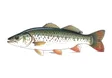
Longear Sunfish field guide illustration

About Longear Sunfish

The longear sunfish (Lepomis megalotis) is a freshwater fish in the sunfish family, Centrarchidae, of order Centrarchiformes. It is native to the area of eastern North America stretching from the Great Lakes down to northeastern Mexico. The longear sunfish reaches a maximum recorded length of about 24 cm (9.4 in), with a maximum recorded weight of 790 g (1.74 lb). Most do not live beyond six years. The longear sunfish is quite colorful, with an olive to rusty-brown back, bright orange belly and vermiculate blue-green bars on the sides of its head, the latter two features most pronounced in breeding males. A unique characteristic of longear sunfish is their elongated operculum flap, giving an appearance of a "long ear". It is black and often has a white margin. The pectoral fin is relatively short and would not reach the snout if it were reflected anteriorly. In breeding males, iridescent blue spots develop on the dorsum and sides and the fin membranes turn orange in all fins except the ventral ones, which may be blue to black, and the pectoral ones. Lepomis megalotis can be distinguished from closely related dollar sunfish L. marginatus by a greater number of cheek scale rows, by having one to two additional pectoral fin rays and by the slope of the opercular flap, which is distinctly upward in L. marginatus but is closer to horizontal in males of L. megalotis, although female and subadult L. megalotis may have upward slanting opercular flaps.

The species prefers densely vegetated, shallow waters in lakes, ponds, and sluggish streams. Its diet can include insects, aquatic invertebrates, and small fish. Avoiding strong currents, longear sunfish are usually present in small to moderate flowing streams, rivers, and reservoirs. The genus Lepomis has a well-characterized mating behavior where parental care is done by the male. The male makes and defends the nest, and fans the eggs to remove silt and other debris until the larvae hatch. Some longear females produce 4,000 eggs. They spawn in groups but do not form large colonies.

Longear sunfish are better at getting food in moving waters than still waters; this may explain why they are more abundant in streams than lakes. For the most part, longear sunfish are active during the day and inactive at night. There are very few conservation acts currently being performed in order to maintain the distribution and abundance of this species.

Geographic distribution

Longear sunfish are found in North America, primarily in the Mississippi and Great Lakes regions. Longear sunfish are mostly found in freshwater areas west of the Appalachian Mountains. Some Lepomis populations are located as far north and west as southern Quebec and Minnesota. The species has also been spotted in places as far south and west as central Mexico and New Mexico. The species has been introduced to stream ecosystems along the eastern coast of the United States. The distribution of the longear sunfish throughout North America has not been affected since the species has been followed. This may be due to the species' ability to travel throughout large bodies of water, thus avoiding dams and man-made interferences along smaller streams. They are also able to occupy different body of water types, thus making them more resilient to a decrease in their range distribution.

Ecology

Longear sunfish feed more extensively near the surface of the water than other sunfish species. Lepomis megalotis is mostly a carnivorous fish that eats aquatic insects, small crustaceans, fish eggs, young bass, and even young sunfish. They have also been observed eating dragonflies and other insects which travel over the surface of the water. Other observed prey have been detritus, gnat larvae, snails, day flies and leeches. The diets of adult longear (longer than 102 mm) are composed of terrestrial insects (37%), fish (31%), aquatic insects (21%), and fish eggs (7%). Largemouth bass, smallmouth bass and wading birds are all natural predators to the longear sunfish. Smaller species of longear can be preyed on by larger sunfish populations. Sunfish are an important link in the food chain. They act as both predator and prey within their ecosystems. Other sunfish species and larger predatory fishes compete with the longear for food and resources.

Longear sunfish, like additional members of the family Centrarchidae, are freshwater fish. They prefer streams with a firm clay bottom or gravel with clear waters and they typically stay nearby aquatic vegetation. Although more abundant near the sources of streams, sunfish can be found in water sources of all sizes and are also found in lakes. Longear sunfish usually reside in shallower, warmer headwaters of streams with a steady flow. They spend most of their time near aquatic vegetation, or other forms of cover such as roots, brush piles, and undercut banks. This allows for them to hide from potential predators. Sunfish species are especially intolerant to turbid waters. Human-induced changes to stream ecosystems could potentially disrupt the sunfish distribution. Destruction of aquatic vegetation from human runoff could destroy aquatic plants that are essential for the protection and cover of this species against predators. Chemical runoff into large rivers could also disturb the pH of the longear's natural ecosystem.

Life history

Longear sunfish tend to breed during the late spring and early summer (late May to late August). During breeding seasons they are generally found in shallower, warmer waters near the sources of streams which have pools. Like most other members of Lepomis, longear sunfish are colonial nesters. Male longear sunfish build the nests without assistance from the females. Preferred substrate for nesting is gravel, if available, but they will build in sand or hard mud if necessary. A male longear will guard the nest territory during all phases of reproduction. The clutch size can be anywhere from 140 to 2800 eggs per reproductive cycle. After hatching, it only takes the longear sunfish two to three years to reach sexual maturity. The average life-span of the Lepomis megalotis in the wild is usually four to six years, but there have been cases where individuals have lived up to nine years. Longear sunfish cannot tolerate cloudy or mucky water. Throughout the 20th century their populations have been reduced in areas where their native streams have suffered increased cloudiness. This cloudiness could potentially be a result of human induced erosion for agriculture or industry purposes. Increased human disturbance along streams and rivers could continue to increase the reduction of longear populations due to the murkiness of rivers and streams.

Current management

Longear sunfish are not currently endangered in any of their native habitats. They are not listed federally or internationally as threatened or endangered, but efforts are still being conducted in order to protect the species. Small conservation actions are taking place all over the US. Control of non-point source pollution from urbanization and agricultural practices is needed for this species, which is intolerant of turbidity. Habitat degradation and loss from shoreline and watershed agriculture threatens this species which prefers clear, shallow streams with aquatic vegetation. Sedimentation and agricultural runoff also threatens this species which is believed to have been lost from many locations because of the effects of soil erosion. The longear sunfish is not in danger of overfishing, because it is not considered a sport fish, and because the sunfish is not especially good for eating. The longear sunfish is currently threatened in states such as Wisconsin and New York. Refuge areas in these two states are being created along lakes and streams in order to protect the few, disjunct locations where this species live. Since this species has a fairly large distribution nationally and its abundance is still quite high, there are not many conservation groups taking serious action in preserving this species. The longear sunfish tends to do well in rivers and streams that do not undergo much disturbance. If man-made disturbances continue to disrupt shorelines then agencies may begin to see an increased reduction in the Lepomis megalotis abundance nationwide.

Angling

The IGFA all tackle world record for the species stands at 0.79 kg (1 lb 12 oz) caught from Elephant Butte Lake in New Mexico in 1985.

Article text: Wikipedia contributors, Longear sunfish (source revision). Licensed under CC BY-SA 4.0. Retrieved 2026-10-11.
Diet and feeding

The FishTraits compilation records these diet categories for this species: aquatic or other vascular plants; invertebrates or larval fish; larger animal prey (a source category covering fish, crayfish, crabs, or frogs); fish or frog eggs. These are broad categories, not a claim that every individual consumes every example in a category.

Reported feeding positions include bottom feeding and surface or water-column feeding. The compilation combines published observations; diets can vary with age, locality, and available food.

Habitat preferences

Reported habitat associations include medium to large rivers, streams and small rivers, creeks, still-water habitats.

The source records associations with sand, gravel, cobble, vegetation. An association indicates reported use, rather than an exclusive requirement.

Reproduction and parental care

The compilation reports a representative maturity age of 2 years. Its maturity field summarizes mean, median, or modal estimates, usually for females; male estimates can be used when female data are unavailable. It is not a fixed age at which every fish first breeds.

Recorded spawning months are May, Jun, Jul, Aug for the source’s reporting region (NC). This is a regional calendar, not a range-wide schedule.

The reproductive-guild classification includes guarding eggs or young at a spawning substrate or nest.

Size and recorded longevity

FishTraits reports a maximum total length of 24 centimetres. Some entries use an estimated asymptotic length; this value should not be treated as a certified record catch.

Recorded longevity in the compilation is 7 years. Wild observations were preferred, but captive records were accepted where wild records were unavailable, and unspecified records were assumed wild. The value is not a guaranteed wild lifespan or an aquarium life expectancy.

Native range

St. Lawrence and Great Lakes, Hudson Bay, Mississippi River, and Gulf Slope drainages west of the Appalachian Mountains from southern Quebec west to western Ontario and Minnesota, and south to the Florida panhandle and southern Texas; on the Gulf Slope from the Choctawhatchee River, Florida, to the Rio Grande, Texas and New Mexico. Also in northeastern Mexico (Page and Burr 1991).

Introduction history

Accidental stocking as a result of stock contamination with other centrarchids. The record from Missouri refers to a 1985 collection that was the first in Missouri from any Mississippi River tributary above the junction of the Mississippi and Missouri rivers. The longear's presence here may be due to an undocumented introduction (Pflieger 1997).

Record fish

State records in 3 states

  • Arkansas1 lb., 2 oz.

    Table Rock Lake · 04/22/1991 · Carl Bohannan, Eureka Springs, AR · rod and reel

  • Texas0.72 lb

    Lake Zebco · Oct 12, 2010 · Taylor Musso · corn

  • Yellow River · 5/12/1990 · Jerry Jones, Ozark

  • Texaslength record

    Colorado River · Feb 18, 2018 · Jason R. Hennesey · Fly Rod, Hennesey"s purple headed

Each figure is the state agency’s own certified record. The site holds record tables for 11 states so far, so a state missing here has not been read yet. It is not a state where this fish holds no record.

Range

Where it lives

Share of 28,907 GBIF observation records with a state location, across 31 states. The orange dots are USGS stream-survey sites where this species was caught.
0%
16.4%
Share of 28,907 GBIF observation records with a state location, across 31 states. The orange dots are USGS stream-survey sites where this species was caught.

A blank area on the dot layer usually means nobody sampled there, not that the fish is absent. Turn on “every survey site” to see where the survey looked.

The USGS stream survey caught it at 6,136 of its sites, in 23 states. That survey and the GBIF records are two different counts of two different things, so the site keeps them apart.

Habitat

Water and movement

Water
WoRMS records this species in fresh water.
USGS NAS habitat
Freshwater
US status
Native transplant — native to part of the United States, moved to other waters inside it.
Migration
Undetermined
Pattern
Disagreement
2 published references do not agree on the pattern: Non-migratory, Potamodromous. The site shows every assignment rather than picking one.

Classification

Taxonomy

Kingdom
Animalia
Phylum
Chordata
Superclass
Actinopterygii
Class
Teleostei
Order
Perciformes
Genus
Lepomis
Species
Lepomis megalotis
ITIS TSN
168153
WoRMS AphiaID
1042658
GBIF key
2394510
Outside the US
ITIS also files it in Mexico.

Common questions about Longear Sunfish

What is the scientific name of Longear Sunfish?
The scientific name is Lepomis megalotis, in the family Centrarchidae. Classification follows ITIS.
Does Longear Sunfish live in fresh water or salt water?
WoRMS records this species in fresh water.
Where has Longear Sunfish been recorded in the United States?
GBIF has observations in 31 states, with the most records in Alabama, Texas, Oklahoma. The map shows observation records, which do not establish the complete natural range.

Closest relatives

Other Lepomis species

Same family

More Centrarchidae

Alabama Bass11 states
Micropterus henshalliCentrarchidaeNative and introducedFresh
Banded Sunfish15 states
Enneacanthus obesusCentrarchidaeNativeFresh
Bantam Sunfish12 states
Lepomis symmetricusCentrarchidaeNativeFresh
Black Crappie49 states
Pomoxis nigromaculatusCentrarchidaeNative and introducedFresh
Blackbanded Sunfish8 states
Enneacanthus chaetodonCentrarchidaeNativeFresh
Bluegill49 states
Lepomis macrochirusCentrarchidaeNative and introducedFresh
Bluespotted Sunfish14 states
Enneacanthus gloriosusCentrarchidaeNative and introducedFresh
Cahaba Bass1 states
Micropterus cahabaeCentrarchidaeNativeFresh
Chattahoochee Bass2 states
Micropterus chattahoochaeCentrarchidaeNativeFresh
Dollar Sunfish18 states
Lepomis marginatusCentrarchidaeNativeFresh
Flier18 states
Centrarchus macropterusCentrarchidaeNativeFresh
Florida Largemouth Bass9 states
Micropterus floridanusCentrarchidaeNative and introducedFresh
Green Sunfish46 states
Lepomis cyanellusCentrarchidaeNative and introducedFresh
Guadalupe Bass2 states
Micropterus treculiiCentrarchidaeNative and introducedFresh
Largemouth Bass48 states
Micropterus salmoidesCentrarchidaeNative and introducedFresh
Lepomis solis7 states
CentrarchidaeNative
Mud Sunfish11 states
Acantharchus pomotisCentrarchidaeNativeFresh
Northern Sunfish8 states
Lepomis peltastesCentrarchidaeNativeFresh
Orangespotted Sunfish27 states
Lepomis humilisCentrarchidaeNative and introducedFresh
Ozark Bass3 states
Ambloplites constellatusCentrarchidaeNativeFresh
Pumpkinseed46 states
Lepomis gibbosusCentrarchidaeNative and introducedFreshBrackish
Redbreast Sunfish29 states
Lepomis auritusCentrarchidaeNative and introducedFresh
Redear Sunfish37 states
Lepomis microlophusCentrarchidaeNative and introducedFresh
Redeye Bass12 states
Micropterus coosaeCentrarchidaeNative and introducedFresh

All 40 species in Centrarchidae