Redbreast Sunfish

Lepomis auritus

Centrarchidae · freshwater water fish

6 minute read · Species guide

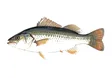
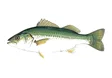
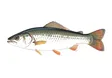
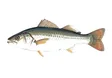
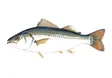
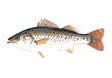
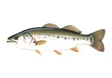
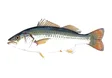
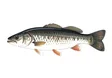
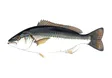
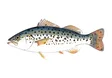
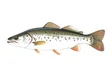
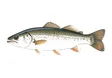
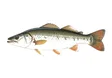
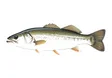
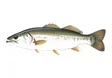
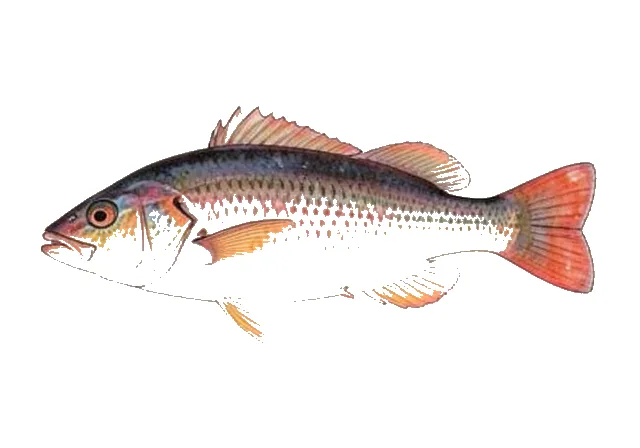
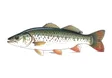
Redbreast Sunfish field guide illustration

About Redbreast Sunfish

The redbreast sunfish (Lepomis auritus) is a species of freshwater fish in the sunfish family (Centrarchidae) of the order Centrarchiformes. The type species of its genus, it is native to the river systems of eastern Canada and the United States. The redbreast sunfish reaches a maximum recorded length of about 30 centimetres (12 in).

The species prefers vegetated and rocky pools and lake margins for its habitat. Its diet can include insects, snails, and other small invertebrates. A panfish popular with anglers, the redbreast sunfish is also kept as an aquarium fish by hobbyists. Redbreast sunfish are usually caught with live bait such as nightcrawlers, crickets, grasshoppers, waxworms, or mealworms. They can also be caught using small lures or flies. Most anglers use light spinning tackle to catch redbreast sunfish. It is popular with fly anglers in the winter because it will more readily strike a moving fly than will bluegills in cooler water.

As is typical for the sunfishes, the female redbreast sunfish lays her eggs (about 1000) in a substrate depression built by the male. The male guards the eggs and fry.

Description

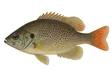
The average length of the redbreast sunfish is around 11 centimetres (4 in) with a record 30.5 centimetres (12.0 in). The record weight for the fish is 0.79 kilograms (1.7 lb). The redbreast sunfish is characterized by a long black opercular flap, which is longer than those of most other sunfish in its range. There are a few blue iridescent vermiculations on the head. Small teeth may be appreciated, mostly on the roof of the mouth. There are faint vertical bars present on the olive-green bodies of both sexes, which may become more apparent as the background coloration changes to blue-green near the lateral line. Males have darker ventral coloration than that of females, ranging from orange-yellow to orange-red. The caudal fin has a shallow fork and may have orange to red pigmentation. It is common within the redbreast sunfish's native and introduced range for hybridization with other sunfish species to occur.

Distribution

The species' native range is in the eastern United States and Canada, in rivers emptying into the Atlantic Ocean. The redbreast sunfish tends to be more of a cool-river species, but also inhabits freshwater lakes and streams. The species has been introduced as far west as Louisiana and West Texas. Lepomis auritus has been transplanted to and become established in Germany, Italy, Mexico, and Puerto Rico. The effects of introduced populations of redbreast sunfish on native species are not well studied.

Ecology

Redbreast sunfish mainly consume immature aquatic insects. Mayflies, small fish, and dragonfly larvae consist of the majority of the sunfish's diet based on stomach content. Small crayfish may also be consumed. Being an opportunistic feeder, the fish competes with other sunfish and larger predatory fish that prey on the same food they do.

Larger piscivorous fish are the main predators of smaller redbreast sunfish. Micropterus species are a major threat to sunfish because of their shared habitat and the availability of the sunfish. The sunfish prefers structures around banks and overhanging branches that provide food, shade, and protection. Lepomis auritus survives best in water with a current and a pH between 7.0 and 7.5. Lack of current, overly acidic, or basic water can dramatically affect the sunfish's survival rate.

Human influence on abiotic factors, such as sunlight, and biotic factors, such as predator numbers, can have a major influence on sunfish. Clearing debris from the bank can increase the amount of sunlight that reaches the water, thus increasing water temperature, while also decreasing the number of hiding places along the bank that sunfish can use. Decreasing the number of larger predatory fish by harvesting them will increase the survival rate of the redbreast sunfish.

Life history

The redbreast sunfish is a spring spawner on sand-gravel substrate, depending on location or when water temperature reaches 16–26 °C (61–79 °F). Males build a nest in shallow water. The female deposits her eggs in the nest, and the male guards the nest after fertilizing the eggs. Cuckoldry, in which a non-nesting male fertilizes eggs left in a nest, has also been observed. Average egg production for the sunfish is around 3000, depending on the age of the female. Mature ova are around 2.1 millimetres (0.083 in) in diameter. Reproductive maturity is reached in the second year of life. They have been known to have a maximum lifespan of around eight years. Currently, humans do not play a large role in influencing life history due to large populations and secluded areas.

Management

Currently, the redbreast sunfish is not on the federal or state endangered or threatened species list. The species is thriving in its natural habitat.

Angling

The IGFA all-tackle world record for the species stands at 0.79 kilograms (1 lb 12 oz) caught from the Suwannee River in Florida in 1984. A Georgia state record fish caught in the Satilla River in May 2022 tied the world record. A North Carolina state record fish caught on the Lumber River in 2019 weighed 2 pounds 1 ounce (0.94 kg).

Article text: Wikipedia contributors, Redbreast sunfish (source revision). Licensed under CC BY-SA 4.0. Retrieved 2026-10-11.
Diet and feeding

The FishTraits compilation records these diet categories for this species: invertebrates or larval fish; larger animal prey (a source category covering fish, crayfish, crabs, or frogs). These are broad categories, not a claim that every individual consumes every example in a category.

Reported feeding positions include bottom feeding and surface or water-column feeding. The compilation combines published observations; diets can vary with age, locality, and available food.

Habitat preferences

Reported habitat associations include medium to large rivers, streams and small rivers, creeks, still-water habitats.

The source records associations with muck, sand, gravel, cobble, vegetation. An association indicates reported use, rather than an exclusive requirement.

Reproduction and parental care

The compilation reports a representative maturity age of 2 years. Its maturity field summarizes mean, median, or modal estimates, usually for females; male estimates can be used when female data are unavailable. It is not a fixed age at which every fish first breeds.

Batch or serial spawning has been reported somewhere in the species’ range. This does not establish the same spawning pattern for every population.

Recorded spawning months are Apr, May, Jun for the source’s reporting region (NC). This is a regional calendar, not a range-wide schedule.

The reproductive-guild classification includes guarding eggs or young at a spawning substrate or nest.

Size and recorded longevity

FishTraits reports a maximum total length of 30.5 centimetres. Some entries use an estimated asymptotic length; this value should not be treated as a certified record catch.

Recorded longevity in the compilation is 6 years. Wild observations were preferred, but captive records were accepted where wild records were unavailable, and unspecified records were assumed wild. The value is not a guaranteed wild lifespan or an aquarium life expectancy.

Native range

Atlantic and Gulf Slope drainages, from New Brunswick to central Florida, and west to the Apalachicola and Choctawhatchee drainages, Georgia and Florida (Page and Burr 1991).

Introduction history

Intentional stocking for sportfishing.

Ecological impacts

There is circumstantial evidence to indicate that Redbreast Sunfish are displacing native longear sunfish (L. megalotis) in eastern Tennessee through direct competition (Etnier and Starnes 1993). Will form natural hybrids with warmouth, green, bluegill, and pumpkinseed sunfish (Scribner et al. 2001).

Record fish

State records in 4 states

  • Florida2.08 lb

    Suwannee River · Gilchrist County · 4/29/1988 · Jerrel Dewees, Jr.

  • Georgia1 lb, 12 oz

    Satilla River · May 7, 2022 · Lester Roberts

  • Texas1.75 lb

    Wheeler Branch Reservoir · May 31, 2020 · Cher Coen · finesse jig

  • Alabama1 lb 4 oz

    Choctawhatchee River · 6/12/2010 · Archie Russ, Brantley

  • Texaslength record

    Brazos River · Dec 6, 2025 · Jamie Meaux · Fly Rod, J-Moe Briminator

Each figure is the state agency’s own certified record. The site holds record tables for 11 states so far, so a state missing here has not been read yet. It is not a state where this fish holds no record.

Range

Where it lives

Share of 30,256 GBIF observation records with a state location, across 29 states. The orange dots are USGS stream-survey sites where this species was caught.
0%
18.8%
Share of 30,256 GBIF observation records with a state location, across 29 states. The orange dots are USGS stream-survey sites where this species was caught.

A blank area on the dot layer usually means nobody sampled there, not that the fish is absent. Turn on “every survey site” to see where the survey looked.

The USGS stream survey caught it at 2,527 of its sites, in 21 states. That survey and the GBIF records are two different counts of two different things, so the site keeps them apart.

Habitat

Water and movement

Water
WoRMS records this species in fresh water.
USGS NAS habitat
Freshwater
US status
Native transplant — native to part of the United States, moved to other waters inside it.
Migration
Not migratory

Classification

Taxonomy

Kingdom
Animalia
Phylum
Chordata
Superclass
Actinopterygii
Class
Teleostei
Order
Perciformes
Genus
Lepomis
Species
Lepomis auritus
ITIS TSN
168131
WoRMS AphiaID
151291
GBIF key
2394491
Outside the US
ITIS also files it in Canada, Caribbean Territories, Mexico.

Common questions about Redbreast Sunfish

What is the scientific name of Redbreast Sunfish?
The scientific name is Lepomis auritus, in the family Centrarchidae. Classification follows ITIS.
Does Redbreast Sunfish live in fresh water or salt water?
WoRMS records this species in fresh water.
Where has Redbreast Sunfish been recorded in the United States?
GBIF has observations in 29 states, with the most records in Georgia, Texas, Pennsylvania. The map shows observation records, which do not establish the complete natural range.

Closest relatives

Other Lepomis species

Same family

More Centrarchidae

Alabama Bass11 states
Micropterus henshalliCentrarchidaeNative and introducedFresh
Banded Sunfish15 states
Enneacanthus obesusCentrarchidaeNativeFresh
Bantam Sunfish12 states
Lepomis symmetricusCentrarchidaeNativeFresh
Black Crappie49 states
Pomoxis nigromaculatusCentrarchidaeNative and introducedFresh
Blackbanded Sunfish8 states
Enneacanthus chaetodonCentrarchidaeNativeFresh
Bluegill49 states
Lepomis macrochirusCentrarchidaeNative and introducedFresh
Bluespotted Sunfish14 states
Enneacanthus gloriosusCentrarchidaeNative and introducedFresh
Cahaba Bass1 states
Micropterus cahabaeCentrarchidaeNativeFresh
Chattahoochee Bass2 states
Micropterus chattahoochaeCentrarchidaeNativeFresh
Dollar Sunfish18 states
Lepomis marginatusCentrarchidaeNativeFresh
Flier18 states
Centrarchus macropterusCentrarchidaeNativeFresh
Florida Largemouth Bass9 states
Micropterus floridanusCentrarchidaeNative and introducedFresh
Green Sunfish46 states
Lepomis cyanellusCentrarchidaeNative and introducedFresh
Guadalupe Bass2 states
Micropterus treculiiCentrarchidaeNative and introducedFresh
Largemouth Bass48 states
Micropterus salmoidesCentrarchidaeNative and introducedFresh
Lepomis solis7 states
CentrarchidaeNative
Longear Sunfish31 states
Lepomis megalotisCentrarchidaeNative and introducedFresh
Mud Sunfish11 states
Acantharchus pomotisCentrarchidaeNativeFresh
Northern Sunfish8 states
Lepomis peltastesCentrarchidaeNativeFresh
Orangespotted Sunfish27 states
Lepomis humilisCentrarchidaeNative and introducedFresh
Ozark Bass3 states
Ambloplites constellatusCentrarchidaeNativeFresh
Pumpkinseed46 states
Lepomis gibbosusCentrarchidaeNative and introducedFreshBrackish
Redear Sunfish37 states
Lepomis microlophusCentrarchidaeNative and introducedFresh
Redeye Bass12 states
Micropterus coosaeCentrarchidaeNative and introducedFresh

All 40 species in Centrarchidae