Redear Sunfish

Lepomis microlophus

Centrarchidae · freshwater water fish

6 minute read · Species guide

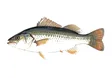
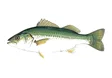
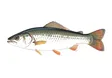
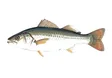
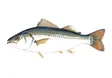
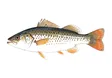
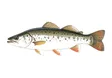
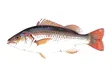
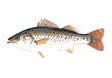
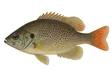
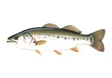
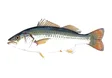
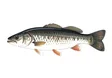
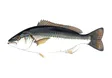
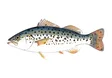
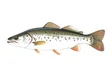
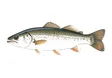
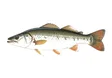
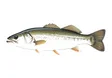
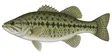
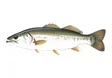
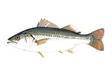
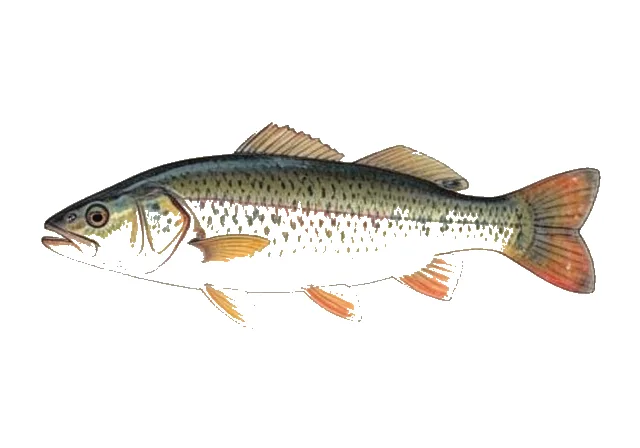
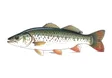
Redear Sunfish field guide illustration

About Redear Sunfish

The redear sunfish (Lepomis microlophus), also known as the shellcracker, Georgia bream, cherry gill, chinquapin, stumpknocker, and sun perch, is a freshwater fish in the family Centrarchidae and is native to the southeastern United States. Due to its popularity as a sport fish, it has been widely introduced across North America.

Description

Redear sunfish generally resemble bluegill except for coloration and somewhat larger maximum size. The redear sunfish also has faint vertical bars traveling downwards from its dorsal. It is dark-colored dorsally and yellow-green ventrally. Unlike bluegill, the male has a cherry-red edge on its operculum; females have orange coloration in this area. The adult fish are between 20 and 24 cm (7.9 and 9.4 in) in length. Max length is 43.2 cm (17.0 in), compared to a maximum of about 40 cm (16 in) for the bluegill. Redear sunfish on average reach about 0.45 kg (0.99 lb), also larger than the average bluegill.

Habitat and range

Redear sunfish are native to the southeastern United States. They range from North Carolina to Florida, west to southern Illinois and Missouri, and south to the Rio Grande drainage in Texas. However, this fish has been widely introduced to other locations such as the states of Ohio and Arizona.

In the wild, redear sunfish inhabit warm, quiet waters of lakes, ponds, streams, and reservoirs. They prefer to be near logs and vegetation, and tend to congregate in groups around these features. This sunfish is also located in many freshwater marsh wetlands.

Diet

The favorite food of this sunfish is snails, which it obtains by cracking their shells, hence this feisty gamefish's common name: shellcracker. These fish meander along lakebeds, seeking and cracking open snails and other shelled creatures. VanderKooy et al. (2000) observed that large L. microlophus predominantly focus on hard-shelled prey such as ostracods, hydrobiid snails and mussels throughout the entire year. In the same field investigation, it was observed that smaller fish tended to also consume zooplankton, amphipods, chironomid and ceratopongonid larvae and cladocerans, with varied distributions depending on the season. They are also believed to feed on algae, aquatic worms, copepoda, midge larvae, ephemeropteran and odonata nymphs, crayfish, small fish, and fish eggs. Redear sunfish have thick pharyngeal teeth which allow them to crunch exoskeletons. They are even capable of opening small clams. The specialization of this species for the deep-water, mollusk-feeding niche allows it to be introduced to lakes without the risk of competition with fish that prefer shallower water or surface-feeding. In recent years, the stocking of redear has found new allies due to the fish's ability to eat quagga mussels, a prominent invasive species in many freshwater drainages.

Reproduction

During spawning, males congregate and create nests close together in colonies, and females visit to lay eggs. The redear sunfish may occasionally hybridize with other sunfish species.

Fossil record

The redear sunfish is the first-known species of Centrarchidae based on fossil records, as old as 16.3 million years, dating back to the Middle Miocene.

Relationship with humans

Redear sunfish is a popular panfish among recreational anglers. The IGFA all-tackle world record for the species stands at 2.83 kg (6 lb 4 oz) caught in 2021 from Lake Havasu in Arizona.

Article text: Wikipedia contributors, Redear sunfish (source revision). Licensed under CC BY-SA 4.0. Retrieved 2026-10-11.
Diet and feeding

The FishTraits compilation records these diet categories for this species: algae or phytoplankton; aquatic or other vascular plants; detritus or unidentified plant material; invertebrates or larval fish. These are broad categories, not a claim that every individual consumes every example in a category.

Reported feeding positions include bottom feeding and surface or water-column feeding. The compilation combines published observations; diets can vary with age, locality, and available food.

Habitat preferences

Reported habitat associations include medium to large rivers, streams and small rivers, creeks, still-water habitats.

The source records associations with muck, clay or silt, sand, vegetation. An association indicates reported use, rather than an exclusive requirement.

Reproduction and parental care

The compilation reports a representative maturity age of 2 years. Its maturity field summarizes mean, median, or modal estimates, usually for females; male estimates can be used when female data are unavailable. It is not a fixed age at which every fish first breeds.

Batch or serial spawning has been reported somewhere in the species’ range. This does not establish the same spawning pattern for every population.

Recorded spawning months are May, Jun, Jul, Aug for the source’s reporting region (NC). This is a regional calendar, not a range-wide schedule.

The reproductive-guild classification includes guarding eggs or young at a spawning substrate or nest.

Size and recorded longevity

FishTraits reports a maximum total length of 43.2 centimetres. Some entries use an estimated asymptotic length; this value should not be treated as a certified record catch.

Recorded longevity in the compilation is 5 years. Wild observations were preferred, but captive records were accepted where wild records were unavailable, and unspecified records were assumed wild. The value is not a guaranteed wild lifespan or an aquarium life expectancy.

Identification and appearance

Deep-bodied, olive colored, with darker spots and flecks of red, and occasionally vertical bars along the sides. The hind end of the gill flap is black with a white border and has a red spot on the tip (hence its name). The chest color is yellowish to cream colored.The mouth is small and when closed barely reaches only to the front margin of the eye. The pectoral fins are long and more pointed than those of other sunfish; the first dorsal fin contains 10 sharp spines, followed by 10 to 12 rays. Moyle (1976); Hubbs et al. (1991); Page and Burr (1991); Etnier and Starnes (1993). Lepomis microlophus is composed of two unnamed subspecies; one in Florida, Georgia, and southern Alabama, the other throughout the rest of its range. The two subspecies may no longer be distinguishable due to interbreeding caused by stocking programs (Page and Burr 1991).

Native range

The native range for this species is Atlantic coast of North America (USEPA 2008). Page and Burr (1991) report the range as Atlantic and Gulf Slope drainages from about the Savannah River, South Carolina, to the Nueces River, Texas; north in the Mississippi River basin to southern Indiana and Illinois. Rohde et al. (2009) also conclude that the native range includes the Savannah River in Georgia and extends south through Florida and west to the Rio Grande River, and north in the Mississippi River Valley to southern Illinois and Indiana. Jenkins and Burkhead (1994) cite Bailey (1938) in reporting that the native range on the Atlantic slope may not be any farther north than Georgia.

Habitat and ecology

The redear sunfish is a molluscivorous species of the Centrarchid family. It lives in vegetated littoral zones of small to large lakes, marshes, and reservoirs, and streams or rivers with sluggish to slow-moving flow (French and Morgan 1995). It prefers the deeper waters of warm ponds, lakes, reservoirs, and swamps, and favors clear water with abundant vegetation and other cover with a substrate of mud or sand (IUCN Redlist, 2013). This species often nests in colonies on the bottom of shallow areas (IUCN Redlist, 2013).

Introduction history

Intentional stocking for sportfishing. In Iowa, fish found in interior streams are believed to be escapes from stocked lakes (Harlan et al. 1987). The species' recent (1991) discovery in Vermont is somewhat of a mystery. It appears the most likely means of introduction there is stock contamination of privately stocked Micropterus (Whittier and Hartel 1997).

Ecological impacts

Hybridizes with other Lepomis species (Scribner et al. 2001).

Record fish

State records in 6 states

  • Florida4.86 lb

    Merritts Mill Pond · Jackson County · 3/13/1986 · Joseph Floyd

  • Alabama4 lbs 4 oz

    Chattahoochee Park · 5/5/1962 · Jeff Lashley, Gordon

  • Georgia4 lb, 2 oz

    Richmond County pond · June 6, 1995 · Pat Lawrence

  • Arkansas2 lbs., 14 oz.

    Bois d’Arc Lake · 05/04/1985 · Glenda Tatom, Stamps, AR · rod and reel

  • Oklahoma2 lbs 5.60 ozs

    Strong City, Pond · 04/25/2023 · Cord Smith · rod and line

  • Texaslength record

    Lady Bird Lake · May 10, 2011 · Daniel Laudermilk · worm

  • Texaslength record

    San Marcos River · Aug 18, 2014 · Molly H. Polk · Fly Rod, anderson slayer

Each figure is the state agency’s own certified record. The site holds record tables for 11 states so far, so a state missing here has not been read yet. It is not a state where this fish holds no record.

Range

Where it lives

Share of 24,112 GBIF observation records with a state location, across 37 states. The orange dots are USGS stream-survey sites where this species was caught.
0%
29.2%
Share of 24,112 GBIF observation records with a state location, across 37 states. The orange dots are USGS stream-survey sites where this species was caught.

A blank area on the dot layer usually means nobody sampled there, not that the fish is absent. Turn on “every survey site” to see where the survey looked.

The USGS stream survey caught it at 1,320 of its sites, in 28 states. That survey and the GBIF records are two different counts of two different things, so the site keeps them apart.

Habitat

Water and movement

Water
WoRMS records this species in fresh water.
USGS NAS habitat
Freshwater
US status
Native transplant — native to part of the United States, moved to other waters inside it.
Migration
Not migratory

Classification

Taxonomy

Kingdom
Animalia
Phylum
Chordata
Superclass
Actinopterygii
Class
Teleostei
Order
Perciformes
Genus
Lepomis
Species
Lepomis microlophus
ITIS TSN
168154
WoRMS AphiaID
1042661
GBIF key
2394501
Outside the US
ITIS also files it in Caribbean Territories, Mexico.

Common questions about Redear Sunfish

What is the scientific name of Redear Sunfish?
The scientific name is Lepomis microlophus, in the family Centrarchidae. Classification follows ITIS.
Does Redear Sunfish live in fresh water or salt water?
WoRMS records this species in fresh water.
Where has Redear Sunfish been recorded in the United States?
GBIF has observations in 37 states, with the most records in Florida, Georgia, Texas. The map shows observation records, which do not establish the complete natural range.

Closest relatives

Other Lepomis species

Same family

More Centrarchidae

Alabama Bass11 states
Micropterus henshalliCentrarchidaeNative and introducedFresh
Banded Sunfish15 states
Enneacanthus obesusCentrarchidaeNativeFresh
Bantam Sunfish12 states
Lepomis symmetricusCentrarchidaeNativeFresh
Black Crappie49 states
Pomoxis nigromaculatusCentrarchidaeNative and introducedFresh
Blackbanded Sunfish8 states
Enneacanthus chaetodonCentrarchidaeNativeFresh
Bluegill49 states
Lepomis macrochirusCentrarchidaeNative and introducedFresh
Bluespotted Sunfish14 states
Enneacanthus gloriosusCentrarchidaeNative and introducedFresh
Cahaba Bass1 states
Micropterus cahabaeCentrarchidaeNativeFresh
Chattahoochee Bass2 states
Micropterus chattahoochaeCentrarchidaeNativeFresh
Dollar Sunfish18 states
Lepomis marginatusCentrarchidaeNativeFresh
Flier18 states
Centrarchus macropterusCentrarchidaeNativeFresh
Florida Largemouth Bass9 states
Micropterus floridanusCentrarchidaeNative and introducedFresh
Green Sunfish46 states
Lepomis cyanellusCentrarchidaeNative and introducedFresh
Guadalupe Bass2 states
Micropterus treculiiCentrarchidaeNative and introducedFresh
Largemouth Bass48 states
Micropterus salmoidesCentrarchidaeNative and introducedFresh
Lepomis solis7 states
CentrarchidaeNative
Longear Sunfish31 states
Lepomis megalotisCentrarchidaeNative and introducedFresh
Mud Sunfish11 states
Acantharchus pomotisCentrarchidaeNativeFresh
Northern Sunfish8 states
Lepomis peltastesCentrarchidaeNativeFresh
Orangespotted Sunfish27 states
Lepomis humilisCentrarchidaeNative and introducedFresh
Ozark Bass3 states
Ambloplites constellatusCentrarchidaeNativeFresh
Pumpkinseed46 states
Lepomis gibbosusCentrarchidaeNative and introducedFreshBrackish
Redbreast Sunfish29 states
Lepomis auritusCentrarchidaeNative and introducedFresh
Redeye Bass12 states
Micropterus coosaeCentrarchidaeNative and introducedFresh

All 40 species in Centrarchidae