Orangespotted Sunfish

Lepomis humilis

Centrarchidae · freshwater water fish

8 minute read · Species guide

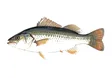
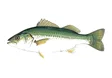
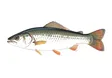
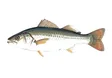
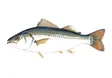
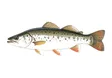
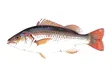
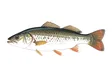
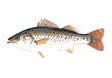
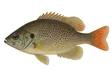
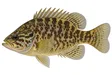
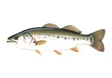
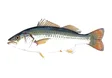
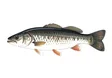
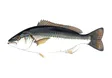
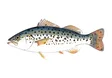
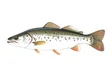
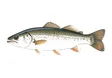
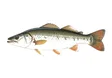
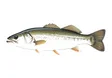
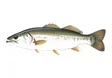
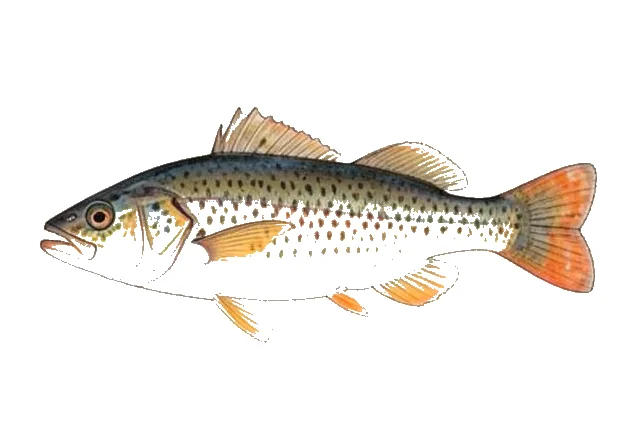
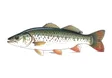
Orangespotted Sunfish field guide illustration

About Orangespotted Sunfish

The orangespotted sunfish (Lepomis humilis) is a North American species of freshwater fish in the sunfish family (Centrarchidae) of order Centrarchiformes. These fish are widely distributed across the middle and eastern United States, from the Rocky Mountains to the east, from the Great Lakes south into the Gulf Coast. The orangespotted sunfish is ecologically unique and thrives in turbid, shallow systems that have few predators and low oxygen contents. The species prefers vegetated areas in sluggish backwaters or lakes, and can also be found in turbid rivers. The orangespotted sunfish can extend its range in lower-quality waters, which is not characteristic of other sunfish. Orangespotted sunfish vary in total length and age for different river basin originations, but can be found to live four to seven years, and recorded lengths are up to 15 cm (5.9 in).

Males make grunting noises to attract females to mate, and are known to nest in 'colonies' or aggregations. Spawning patterns are similar to those of other sunfish. Due to the wide distribution of this fish, the species is not endangered and management plans are almost nonexistent presently. The orangespotted sunfish has been introduced to many habitats, such as rivers in Florida, Alabama, Texas, Colorado, Michigan, and Canada.

Geographic distribution

In North America, this species is common in many places; it ranges from the Great Lakes to Hudson Bay, from the Mississippi River down to the Gulf Coast and in the Colorado River from Alabama to Texas. Some studies find that, in general, orangespotted sunfish tend to live in turbid, long, large lakes, which is evident by its geographic distribution. The orangespotted sunfish is found in the Canard River near Ontario, Canada, though it is an introduced species. In Texas, this species has been introduced in the past as far south as the Rio Grande basin.

Ecology

The orangespotted sunfish prefers to reside in shallow, silt-laden waters such as floodplain pools, or waters with fine substrates such as sand. As species of the fish age and develop, they explore new territories and expand their ecological limits through migration. The dominant prey of orangespotted sunfish includes insects, such as corixids and chironomids, zooplankton, other small invertebrates that live in the water column, and fish. Though orangespotted sunfish can be found in different parts of a lake, their prey items do not vary much throughout the lake compared to other sunfish species. If reared in an environment with altered prey availability, the species has been found to show phenotypic plasticity or morphological differences in response to this changed environmental condition. Certain prey types require different methods of prey capture, so as the orangespotted sunfish develop, their body can be more elongated with an angled snout, or more deep-bodied with a blunt snout, depending on the prey type.

Life history

Orangespotted sunfish breed once or twice in June and July, like most other sunfish, in colonies in shallow water near shore. Floodplain and backwater areas are known to include important spawning and nursery sites for orangespotted sunfish. Its reproductive classification is a lithopelagophil, which means the fish spawn on gravel and the embryos are pelagic. Orangespotted sunfish nesting areas are often geographically close by other species' areas and easily become crowded, which can increase the incidence of hybridization with other Lepomis. Other fish species, such as Topeka shiners (Notropis topeka), are said to be 'nest associates' of orangespotted and other sunfishes, meaning they establish spawning territories on the periphery of sunfish nests. This is because nesting sunfish have been known to expose suitable spawning sites for other species, like the Topeka shiner, by fanning the spot with their caudal fins to aerate the eggs.

Some sunfish species make courtship sounds to attract females. For instance, when nesting orangespotted sunfish males see a female, they make grunting sounds while rushing back and forth between the female and the nest repeatedly to try to win her. The amplitude and frequency of the courtship sounds of orangespotted sunfish are distinct to the species and can be differentiated by female listeners from the sounds of other sunfish species if they do not occur simultaneously. Orangespotted sunfish have a maximum age between four and seven years, an average length of 3 cm (1.2 in), and can reach a maximum recorded length of about 15 cm (5.9 in).

Current management

The floodplain environment is easily subject to change, by natural or human activities. In many habitats that are natural homes to orangespotted sunfish, connectivity between rivers and lakes has been altered and flooding incidents have been reduced for agricultural gain. The orangespotted sunfish is one of many species that are characteristic to floodplain lakes and has been affected by the degradation of this system. The flat nature of floodplain lake areas makes agricultural runoff and runoff from manufacturers a distinct problem to water quality. Inputs from runoff can increase sedimentation, which has many detrimental effects to habitats, such as reduced oxygen concentration and lake eutrophication, a nutrient enrichment of lake water from runoff. Fortunately for orangespotted sunfish, a species that thrives in turbid, shallow systems with low oxygen content, increased sedimentation is not decreasing their habitat, though the changes may be fragmenting the habitat.

In Canada, according to the Fisheries Act, this and all fish species are required to be protected for spawning, nursery, and residence habitat through proper species management. Currently, studies have used many methods to assess orangespotted sunfish population assemblages such as traps of plastic netting, pulsed DC electrofishing, tandem fyke and mini-fyke nets.

Management recommendations

This species is not as vulnerable to human-induced change as most freshwater fish. The orangespotted sunfish lives in lakes largely surrounded by agricultural areas, so collaboration between managers, farmers and other watershed managing organizations in the region is necessary. Watershed disorders, such as increased sedimentation and turbidity, must be addressed first by management planners when designing a plan for orangespotted sunfish. Not much information has been collected on the changes of floodplain waters, and more is needed to fully understand the needs of the orangespotted sunfish before management can be implemented. One solution to decrease lake sedimentation is through a process of 'lake drawdowns,' which are installed by managers to compact sediments and controlled by pumps. The drawdowns mimic pre-dam conditions that would naturally harden and compact sediment. This process can be expensive, but it has already been implemented by the United States Army Corps of Engineers in Swan Lake, Illinois through their habitat rehabilitation and enhancement project (HREP). Seasonal drawdowns can increase river connectivity and has been seen to increase habitat for orangespotted sunfish populations.

Water pollution by energy plants, such as the one monitored by TDEC, is a long-term problem that will have to be taken into account by managers for many years. More studies should be done in all documented locations of orangespotted sunfish to assess the current population assemblages, and to track any future changes that occur. Monitoring can be done through the use of nets or electrofishing to measure population densities. At present, no lands need to be protected for this non-endangered fish, but careful consideration should be taken if new dams are created that fragment the orangespotted sunfish's habitat.

Article text: Wikipedia contributors, Orangespotted sunfish (source revision). Licensed under CC BY-SA 4.0. Retrieved 2026-10-11.
Diet and feeding

The FishTraits compilation records these diet categories for this species: invertebrates or larval fish; larger animal prey (a source category covering fish, crayfish, crabs, or frogs). These are broad categories, not a claim that every individual consumes every example in a category.

Reported feeding positions include bottom feeding and surface or water-column feeding. The compilation combines published observations; diets can vary with age, locality, and available food.

Habitat preferences

Reported habitat associations include streams and small rivers, creeks, still-water habitats.

The source records associations with clay or silt, sand, gravel, vegetation. An association indicates reported use, rather than an exclusive requirement.

Reproduction and parental care

The compilation reports a representative maturity age of 1.5 years. Its maturity field summarizes mean, median, or modal estimates, usually for females; male estimates can be used when female data are unavailable. It is not a fixed age at which every fish first breeds.

Batch or serial spawning has been reported somewhere in the species’ range. This does not establish the same spawning pattern for every population.

Recorded spawning months are May, Jun, Jul, Aug for the source’s reporting region (WI). This is a regional calendar, not a range-wide schedule.

The reproductive-guild classification includes guarding eggs or young at a spawning substrate or nest.

Size and recorded longevity

FishTraits reports a maximum total length of 15 centimetres. Some entries use an estimated asymptotic length; this value should not be treated as a certified record catch.

Recorded longevity in the compilation is 4 years. Wild observations were preferred, but captive records were accepted where wild records were unavailable, and unspecified records were assumed wild. The value is not a guaranteed wild lifespan or an aquarium life expectancy.

Identification and appearance

Spawning males carry orange-red lines of the cheeks and gill covers. Their bellies and lower fins are reddish. Ear lobes are dark with a pale border. Large mouth that extends to front of eye when closed; spiny dorsal fin with 10 spines, directly connected to soft part of fin; long gill flap with vivid orange spots on the side; medium gill raker length; sides olive colored with fine golden or emerald dots. Becker (1983); Hubbs et al. (1991); Page and Burr (1991); Etnier and Starnes (1993).

Native range

Hudson Bay (Red River), and Mississippi River basin from Ohio to southern North Dakota, and south to Louisiana; Gulf Slope drainages from Mobile Bay, Alabama, to the Colorado River, Texas (Page and Burr, 1991).

Habitat and ecology

L. humilis breeding season is during the summer. L. humilis construct round nests in gravel to lay their eggs; males guard and fan eggs until fry emerge (Barney and Anson, 1923). Females may lay as many as 4,700 eggs (Barney and Anson, 1923).

Introduction history

Usually unintentional stocking as stock contaminant with other centrarchids. Probably competes with young bass Micropterus spp., bluegill L. macrochirus, and crappies Pomoxis spp. for food (Cross 1967). Orangespotted Sunfish expanded its range eastward across Ohio aided by introductions into farm ponds and reservoirs (Trautman 1981). It gained access to the Lake Erie drainage when it overcame a spillway (probably aided by humans) dividing the Wabash (Ohio basin) from the St. Marys system (Great Lakes basin). It then invaded the Maumee River and progressed downriver to Lake Erie (Trautman 1981).

Ecological impacts

Orangespotted Sunfish probably competes for food with young bass, bluegill, and crappies (Cross 1967).

Record fish

The Wisconsin state record

  • Wisconsin0 lbs. 0.48 oz.

    Crawfish River · Dodge · 06/15/2024

Each figure is the state agency’s own certified record. The site holds record tables for 11 states so far, so a state missing here has not been read yet. It is not a state where this fish holds no record.

Range

Where it lives

Share of 13,079 GBIF observation records with a state location, across 27 states. The orange dots are USGS stream-survey sites where this species was caught.
0%
31.6%
Share of 13,079 GBIF observation records with a state location, across 27 states. The orange dots are USGS stream-survey sites where this species was caught.

A blank area on the dot layer usually means nobody sampled there, not that the fish is absent. Turn on “every survey site” to see where the survey looked.

The USGS stream survey caught it at 2,170 of its sites, in 21 states. That survey and the GBIF records are two different counts of two different things, so the site keeps them apart.

Habitat

Water and movement

Water
WoRMS records this species in fresh water.
USGS NAS habitat
Freshwater
US status
Native transplant — native to part of the United States, moved to other waters inside it.
Migration
Undetermined

Classification

Taxonomy

Kingdom
Animalia
Phylum
Chordata
Superclass
Actinopterygii
Class
Teleostei
Order
Perciformes
Genus
Lepomis
Species
Lepomis humilis
ITIS TSN
168151
WoRMS AphiaID
1042354
GBIF key
2394483
Outside the US
ITIS also files it in Canada.

Common questions about Orangespotted Sunfish

What is the scientific name of Orangespotted Sunfish?
The scientific name is Lepomis humilis, in the family Centrarchidae. Classification follows ITIS.
Does Orangespotted Sunfish live in fresh water or salt water?
WoRMS records this species in fresh water.
Where has Orangespotted Sunfish been recorded in the United States?
GBIF has observations in 27 states, with the most records in Oklahoma, Texas, Illinois. The map shows observation records, which do not establish the complete natural range.

Closest relatives

Other Lepomis species

Same family

More Centrarchidae

Alabama Bass11 states
Micropterus henshalliCentrarchidaeNative and introducedFresh
Banded Sunfish15 states
Enneacanthus obesusCentrarchidaeNativeFresh
Bantam Sunfish12 states
Lepomis symmetricusCentrarchidaeNativeFresh
Black Crappie49 states
Pomoxis nigromaculatusCentrarchidaeNative and introducedFresh
Blackbanded Sunfish8 states
Enneacanthus chaetodonCentrarchidaeNativeFresh
Bluegill49 states
Lepomis macrochirusCentrarchidaeNative and introducedFresh
Bluespotted Sunfish14 states
Enneacanthus gloriosusCentrarchidaeNative and introducedFresh
Cahaba Bass1 states
Micropterus cahabaeCentrarchidaeNativeFresh
Chattahoochee Bass2 states
Micropterus chattahoochaeCentrarchidaeNativeFresh
Dollar Sunfish18 states
Lepomis marginatusCentrarchidaeNativeFresh
Flier18 states
Centrarchus macropterusCentrarchidaeNativeFresh
Florida Largemouth Bass9 states
Micropterus floridanusCentrarchidaeNative and introducedFresh
Green Sunfish46 states
Lepomis cyanellusCentrarchidaeNative and introducedFresh
Guadalupe Bass2 states
Micropterus treculiiCentrarchidaeNative and introducedFresh
Largemouth Bass48 states
Micropterus salmoidesCentrarchidaeNative and introducedFresh
Lepomis solis7 states
CentrarchidaeNative
Longear Sunfish31 states
Lepomis megalotisCentrarchidaeNative and introducedFresh
Mud Sunfish11 states
Acantharchus pomotisCentrarchidaeNativeFresh
Northern Sunfish8 states
Lepomis peltastesCentrarchidaeNativeFresh
Ozark Bass3 states
Ambloplites constellatusCentrarchidaeNativeFresh
Pumpkinseed46 states
Lepomis gibbosusCentrarchidaeNative and introducedFreshBrackish
Redbreast Sunfish29 states
Lepomis auritusCentrarchidaeNative and introducedFresh
Redear Sunfish37 states
Lepomis microlophusCentrarchidaeNative and introducedFresh
Redeye Bass12 states
Micropterus coosaeCentrarchidaeNative and introducedFresh

All 40 species in Centrarchidae