Bantam Sunfish

Lepomis symmetricus

Centrarchidae · freshwater water fish

5 minute read · Species guide

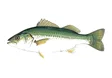
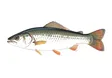
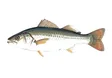
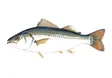
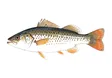
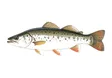
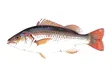
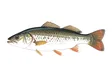
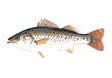
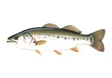
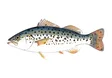
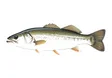
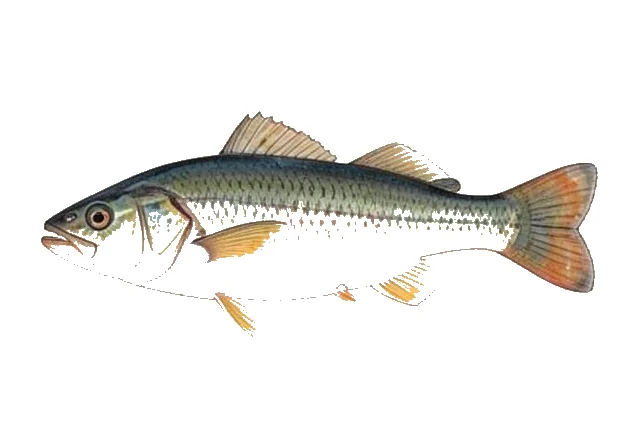
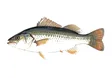
Bantam Sunfish field guide illustration

About Bantam Sunfish

The bantam sunfish (Lepomis symmetricus) is a species of freshwater fish in the genus Lepomis common throughout Louisiana, in extreme southeastern Texas, in southern Arkansas, and in a few places in western Kentucky and western Tennessee.

Description

The bantam sunfish is dark in color with around ten vertical stripes visible along each flank. The lower jaw protrudes noticeably beyond the upper.

Distribution and habitat

The northern and southern boundaries for the bantam sunfish coincide fairly heavily with the former Mississippi Embayment from southern Illinois to the Gulf of Mexico. As for the eastern and western boundaries, the bantam sunfish occurs along the Gulf Coast from Eagle Lake (in the Colorado River drainage) in Texas east through the Biloxi River system in Mississippi. The species is common only in a few states. These states include Louisiana where the fish resides statewide, extreme southeastern Texas, southern Arkansas, and a few places in western Kentucky and western Tennessee. The bantam sunfish is also known to occur, less commonly, in parts of extreme southwestern Illinois, the Bootheel of Missouri, McCurtain County in Oklahoma, and some Mississippi and Gulf Coast drainages of the State of Mississippi.

Historically, isolated populations of the bantam sunfish occurred above the Fall Line in the Illinois River at Pekin, in backwater ponds and sloughs of the Wabash River drainage in White County, Illinois, and the Pine Hills. In Illinois, the range of the bantam sunfish is considered to be limited to the Wolf Lake region of Union County. Newer records extend the Illinois range of the bantam sunfish south through the Clear Creek drainage to Horseshoe Lake, Alexander County, and through the Cache River drainage in Buttonland Swamp, Limekiln Slough, and Grassy Slough. Previous collections in the Cache River drainage failed to produce any bantam sunfish.

Ecology

One study of the gut contents of wild-caught bantam sunfish revealed a diverse diet dominated by gastropods, odonate larvae, and micro- crustaceans. Bantam sunfish individuals of less than 21mm in length fed primarily upon aquatic Hemiptera, micro-crustaceans, and chironomids, while individuals of more than 40 mm in length commonly ate gastropods, amphipods, and larger dipteran larvae. Bantam sunfish of all size classes regularly consumed dragonfly larvae.

The bantam sunfish has no known predators. Many predatory fish coexist in the habitat of bantam sunfish; however, predation has not been documented in literature reports. One extensive study at Wolf Lake, Illinois found no evidence of predation on the bantam sunfish. Gut analysis of potential predators, including largemouth bass, black crappie, white crappie, warmouth, bluegill, and yellow bullhead revealed a lack of predation on bantam sunfish.

The bantam sunfish typically inhabits sloughs, oxbows, ponds, backwaters, lakes, and swamps. The vegetated margins of these environments are dominated by spatterdock, American lotus, broadleaf arrowhead, coontail (Ceratophyllum demersum), and duckweed (Lemna spp.) and are the preferred habitat for this fish. Substrates commonly consist of detritus, mud, and silt, with some sand.

Environmental degradation caused by anthropogenic disturbance, particularly drainage of wetlands, is probably the greatest threat to the persistence of bantam sunfish in the wild. Wetlands and swamps have been channelized, dredged, drained, and converted to croplands. Rapid population growth in the southern portions of the United States poses multiple threats to aquatic biota as the development of land and water resources continues to accelerate. Over-collection for scientific research and educational purposes could become a problem given the bantam sunfish's short lifespan.

Life history

The typical spawning period for the species throughout its range is from mid-April to early June. Only large males at least one year and 40 mm in length appear to be sexually mature and do most of the spawning. Females become sexually mature at one year of age; these individuals may be as short as 34 mm in length. However, the largest females develop the earliest mature ova and probably contribute most to the spawning effort.

There is little published data on the nest associates, nest sites and nesting behavior of the bantam sunfish in the wild. One of the few accounts is from Robinson; observations were made in a roadside pool in Saline County, Arkansas, where bantam sunfish had recently spawned in depressions in the mud and leaf litter substrate.

Conservation

Environmental degradation caused by anthropogenic disturbance, particularly drainage of wetlands, is probably the greatest threat to the bantam sunfish. "We are not aware of any current management activities being employed in any states focusing on populations of L. symmetricus, except that Illinois is apparently planning possible introduction of the species back into its historic range on the Illinois River (probably backwaters or oxbow lakes) near Pekin...We are not aware of any past or current conservation activities being employed in any states focusing on populations of L. symmetricus, except for its inclusion on State lists of endangered/threatened or special concern species". Limited information on the spawning and nesting habits of bantam sunfish in the wild make it near impossible to determine if populations are reproducing at a sustainable level.

Article text: Wikipedia contributors, Bantam sunfish (source revision). Licensed under CC BY-SA 4.0. Retrieved 2026-10-11.
Diet and feeding

The FishTraits compilation records these diet categories for this species: invertebrates or larval fish. These are broad categories, not a claim that every individual consumes every example in a category.

Reported feeding positions include bottom feeding and surface or water-column feeding. The compilation combines published observations; diets can vary with age, locality, and available food.

Habitat preferences

Reported habitat associations include streams and small rivers, still-water habitats.

The source records associations with muck, clay or silt, vegetation. An association indicates reported use, rather than an exclusive requirement.

Reproduction and parental care

The compilation reports a representative maturity age of 1 years. Its maturity field summarizes mean, median, or modal estimates, usually for females; male estimates can be used when female data are unavailable. It is not a fixed age at which every fish first breeds.

Recorded spawning months are Apr, May, Jun for the source’s reporting region (MS). This is a regional calendar, not a range-wide schedule.

The reproductive-guild classification includes guarding eggs or young at a spawning substrate or nest.

Size and recorded longevity

FishTraits reports a maximum total length of 9 centimetres. Some entries use an estimated asymptotic length; this value should not be treated as a certified record catch.

Recorded longevity in the compilation is 3.5 years. Wild observations were preferred, but captive records were accepted where wild records were unavailable, and unspecified records were assumed wild. The value is not a guaranteed wild lifespan or an aquarium life expectancy.

Range

Where it lives

Share of 1,454 GBIF observation records with a state location, across 12 states. The orange dots are USGS stream-survey sites where this species was caught.
0%
44.7%
Share of 1,454 GBIF observation records with a state location, across 12 states. The orange dots are USGS stream-survey sites where this species was caught.

A blank area on the dot layer usually means nobody sampled there, not that the fish is absent. Turn on “every survey site” to see where the survey looked.

The USGS stream survey caught it at 30 of its sites, in 6 states. That survey and the GBIF records are two different counts of two different things, so the site keeps them apart.

Habitat

Water and movement

Water
WoRMS records this species in fresh water.
Migration
Not migratory

Classification

Taxonomy

Kingdom
Animalia
Phylum
Chordata
Superclass
Actinopterygii
Class
Teleostei
Order
Perciformes
Genus
Lepomis
Species
Lepomis symmetricus
ITIS TSN
168156
WoRMS AphiaID
1019890
GBIF key
2394485

Common questions about Bantam Sunfish

What is the scientific name of Bantam Sunfish?
The scientific name is Lepomis symmetricus, in the family Centrarchidae. Classification follows ITIS.
Does Bantam Sunfish live in fresh water or salt water?
WoRMS records this species in fresh water.
Where has Bantam Sunfish been recorded in the United States?
GBIF has observations in 12 states, with the most records in Texas, Louisiana, Mississippi. The map shows observation records, which do not establish the complete natural range.

Closest relatives

Other Lepomis species

Same family

More Centrarchidae

Alabama Bass11 states
Micropterus henshalliCentrarchidaeNative and introducedFresh
Banded Sunfish15 states
Enneacanthus obesusCentrarchidaeNativeFresh
Black Crappie49 states
Pomoxis nigromaculatusCentrarchidaeNative and introducedFresh
Blackbanded Sunfish8 states
Enneacanthus chaetodonCentrarchidaeNativeFresh
Bluegill49 states
Lepomis macrochirusCentrarchidaeNative and introducedFresh
Bluespotted Sunfish14 states
Enneacanthus gloriosusCentrarchidaeNative and introducedFresh
Cahaba Bass1 states
Micropterus cahabaeCentrarchidaeNativeFresh
Chattahoochee Bass2 states
Micropterus chattahoochaeCentrarchidaeNativeFresh
Dollar Sunfish18 states
Lepomis marginatusCentrarchidaeNativeFresh
Flier18 states
Centrarchus macropterusCentrarchidaeNativeFresh
Florida Largemouth Bass9 states
Micropterus floridanusCentrarchidaeNative and introducedFresh
Green Sunfish46 states
Lepomis cyanellusCentrarchidaeNative and introducedFresh
Guadalupe Bass2 states
Micropterus treculiiCentrarchidaeNative and introducedFresh
Largemouth Bass48 states
Micropterus salmoidesCentrarchidaeNative and introducedFresh
Lepomis solis7 states
CentrarchidaeNative
Longear Sunfish31 states
Lepomis megalotisCentrarchidaeNative and introducedFresh
Mud Sunfish11 states
Acantharchus pomotisCentrarchidaeNativeFresh
Northern Sunfish8 states
Lepomis peltastesCentrarchidaeNativeFresh
Orangespotted Sunfish27 states
Lepomis humilisCentrarchidaeNative and introducedFresh
Ozark Bass3 states
Ambloplites constellatusCentrarchidaeNativeFresh
Pumpkinseed46 states
Lepomis gibbosusCentrarchidaeNative and introducedFreshBrackish
Redbreast Sunfish29 states
Lepomis auritusCentrarchidaeNative and introducedFresh
Redear Sunfish37 states
Lepomis microlophusCentrarchidaeNative and introducedFresh
Redeye Bass12 states
Micropterus coosaeCentrarchidaeNative and introducedFresh

All 40 species in Centrarchidae