Slender Madtom

Noturus exilis

Ictaluridae · freshwater water fish

6 minute read · Species guide

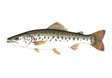
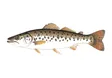
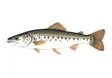
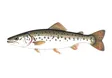
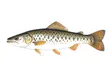
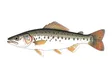
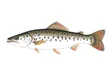
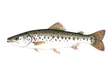
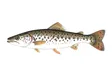
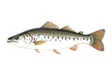
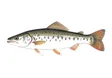
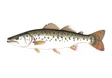
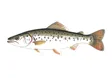
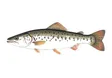
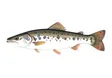
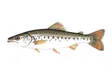
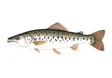
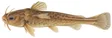
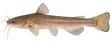
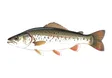
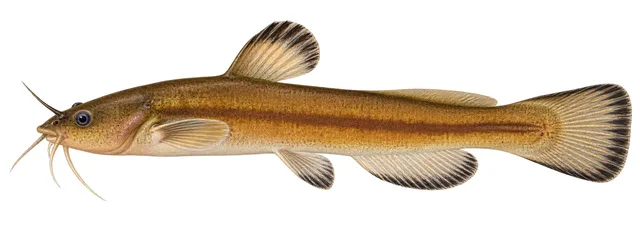
Slender Madtom field guide illustration

About Slender Madtom

Noturus exilis, also called the slender madtom, is a species of the catfish family Ictaluridae. Ictaluridae includes bullheads, madtoms, channel catfish, and blue catfish. Noturus exilis is found in the central portion of the Mississippi River basin, but is most abundant in Ozarkian streams. Slender madtoms occur west of the Mississippi River in the Ozarks of Oklahoma, Arkansas, and Missouri north to southern Wisconsin and Minnesota. It also occurs east of the Mississippi River in the uplands of Alabama, Tennessee, and Kentucky in the Tennessee, Cumberland, and Green drainages. Edward Nelson first described Noturus exilis in 1876. The slender madtom is moderately large with a terminal to sub-terminal mouth, flat head, small eyes, and black marginal bands on the median fins. Most slender madtoms are less than 90 millimetres (3.5 in). Noturus flavus and Noturus nocturnus are rather similar in shape and coloration to Norturus exilis. Slender madtoms inhabit small to medium-sized streams, in riffle and flowing pool habitats with coarse gravel to slab rock substrates. The presence of a shelter object, such as a large rock, seems to be important in habitat selection.

Distribution

Slender madtoms inhabit two disjunct areas of the Central Highlands: one in the Ozark Highlands ranging from eastern Kansas and Oklahoma to the southern tip of Illinois and including most of Missouri and northwest Arkansas, and the other in the Eastern Highlands, from middle Tennessee and part of southeastern Kentucky, ranging into northern Alabama and Mississippi. The slender madtom also occurs as several smaller, isolated populations in Iowa, Illinois and southern Wisconsin and Minnesota. Slender madtoms have seen a decrease in population size from their previous habitat ranges. Due to habitat alteration along the small streams of the Tennessee drainage, this species may be in great danger of extirpation from Mississippi. It has also declined in the northern part of its range in Wisconsin, due primarily to agricultural runoff or alterations in river flow due to dams. The slender madtom's range has mostly likely decreased due to dam construction, channelization, and agricultural runoff.

Ecology

The slender madtom's diet consists of midges, mayflies, caddisflies, isopods, amphipods, and copepods, but ephemeroteran naiads and chironomid larvae make up a majority of their diet. Smallmouth bass (Micropterus dolomieu) is a known predator of slender madtoms, which may be one reason why slender madtoms prefers a nocturnal lifestyle, seeking cover during the day when this visual predator is on the prowl. Embryo predation by Orconectes virilis (virile crayfish), Campostoma anomalum (central stoneroller) and Etheostoma caeruleum (rainbow darter) has also been noted. The slender madtom and the orangethroat darter (Etheostoma spectabile) also compete for and share the same diet. The slender madtom inhabits the rocky riffles and pools of creeks and small rivers, spending much of the day hiding under large rocks and emerging to feed at night. Slender madtoms feed preferably after dusk and before dawn. Slender Madtoms have also been observed in high percentages in vegetated patches and backwaters during late summer. The slender madtom can be found in streams with current speeds from 8–92 cm/s and can be found at depths between 5–42 cm. The slender madtom has never been a strong swimmer, which has reduced their dispersal over the centuries.

Life history

Mayden and Burr found that reproductive activity was concentrated from mid-June through July at water temperatures of 23.5–29 °C in Southern Illinois. Large lowland rivers, such as the Missouri River and Mississippi River, have high silt loads, covering the gravel and rocks that madtoms require for nesting and diurnal refugia. Spawning sites are usually cavities excavated under large rocks, usually in pool areas. Nests have been found to contain 27–74 eggs and are protected by the male until the yolk sac is absorbed by the juveniles. Hatching occurs within eight to nine days in 25 °C water. Individuals are one half the length of a one-year-old by three weeks. Summer is the season of greatest growth, particularly during the first two years of life, and in winter growth slows to a near standstill. Females are capable of spawning their first summer, especially in harsher northern conditions, as long as a critical size is attained (approximately 50 mm in southern Illinois). In contrast, males do not breed until two years of age. The ratio of ovary weight to adjusted body weight (GSI) increased in females in fall and spring, with greater rates of growth in mature adults. Slender madtom are usually 3 inches (7.6 cm) or less in size with a maximum of about 4 inches (10 cm). Slender madtoms can live up to 5 years of age, but most have been collected between 1–3 years old. Adult slender madtoms are weak dispersers, with poor swimming abilities, a characteristic that may have contributed to the existence of two disjoint populations of the species.

Current management

Populations across the slender madtom's range have declined since the late 1970s. The species is nearly extirpated in Wisconsin, although once more widespread there than in Minnesota. Causes for decline may include siltation and turbidity in farming areas, and the dewatering of habitats by hydropower operations. Poor farming practices near streams could be contributing sediments and large amounts of nutrients into streams inhabited by slender madtoms and other species that make the overall ecosystem uninhabitable. Human uses have degraded the habitat and livelihood of the slender madtom and associated species. Predation and intraspecific and interspecific competition may also affect the survival of slender madtoms. The Minnesota Department of Natural Resources has done stream surveys but found very few slender madtom specimens. The slender madtom has not had a population assessment at the national level. The slender madtom is classified as endangered in Mammoth Cave National Park. The slender madtom is also classified as endangered in Wisconsin. No current management is being done to protect the slender madtom from outside pollutants and other detrimental factors. Some state agencies have surveyed streams for slender madtoms, but no management plan has been put in place. Sufficient research has not been collected on the slender madtom to determine the best method to create new habitat or restore the previous habitat to benefit the slender madtom for decades to come.

Article text: Wikipedia contributors, Noturus exilis (source revision). Licensed under CC BY-SA 4.0. Retrieved 2026-10-11.
Diet and feeding

The FishTraits compilation records these diet categories for this species: invertebrates or larval fish. These are broad categories, not a claim that every individual consumes every example in a category.

Reported feeding positions include bottom feeding. The compilation combines published observations; diets can vary with age, locality, and available food.

Habitat preferences

Reported habitat associations include streams and small rivers, creeks.

The source records associations with gravel, cobble, boulders. An association indicates reported use, rather than an exclusive requirement.

Reproduction and parental care

The compilation reports a representative maturity age of 2.5 years. Its maturity field summarizes mean, median, or modal estimates, usually for females; male estimates can be used when female data are unavailable. It is not a fixed age at which every fish first breeds.

Recorded spawning months are May, Jun for the source’s reporting region (WI). This is a regional calendar, not a range-wide schedule.

The reproductive-guild classification includes guarding eggs or young at a spawning substrate or nest.

Size and recorded longevity

FishTraits reports a maximum total length of 15 centimetres. Some entries use an estimated asymptotic length; this value should not be treated as a certified record catch.

Recorded longevity in the compilation is 5 years. Wild observations were preferred, but captive records were accepted where wild records were unavailable, and unspecified records were assumed wild. The value is not a guaranteed wild lifespan or an aquarium life expectancy.

Native range

Green, Cumberland, and Tennessee River drainages from central Kentucky to nothern Alabama; and the upper Mississippi River basin from southern Wisconsin and southern Minnesota to Ozark an Ouachia Highlands of Arkansas, Kansas, and Oklahoma (Page and Burr 1991).

Introduction history

Possible bait release; alternatively, this collection could represent an unusual natural distribution pattern that may give clues to past river connections (Robison and Winters 1978; Robison and Buchanan 1988).

Range

Where it lives

Share of 3,236 GBIF observation records with a state location, across 17 states. The orange dots are USGS stream-survey sites where this species was caught.
0%
23.5%
Share of 3,236 GBIF observation records with a state location, across 17 states. The orange dots are USGS stream-survey sites where this species was caught.

A blank area on the dot layer usually means nobody sampled there, not that the fish is absent. Turn on “every survey site” to see where the survey looked.

The USGS stream survey caught it at 673 of its sites, in 13 states. That survey and the GBIF records are two different counts of two different things, so the site keeps them apart.

Habitat

Water and movement

Water
WoRMS records this species in fresh water.
USGS NAS habitat
Freshwater
US status
Native transplant — native to part of the United States, moved to other waters inside it.
Migration
Not migratory

Classification

Taxonomy

Kingdom
Animalia
Phylum
Chordata
Superclass
Actinopterygii
Class
Teleostei
Order
Siluriformes
Genus
Noturus
Species
Noturus exilis
ITIS TSN
164010
WoRMS AphiaID
1020284
GBIF key
2341039

Common questions about Slender Madtom

What is the scientific name of Slender Madtom?
The scientific name is Noturus exilis, in the family Ictaluridae. Classification follows ITIS.
Does Slender Madtom live in fresh water or salt water?
WoRMS records this species in fresh water.
Where has Slender Madtom been recorded in the United States?
GBIF has observations in 17 states, with the most records in Missouri, Arkansas, Oklahoma. The map shows observation records, which do not establish the complete natural range.

Closest relatives

Other Noturus species

Same family

More Ictaluridae

Black Bullhead46 states
Ameiurus melasIctaluridaeNative and introducedFresh
Black Madtom5 states
Noturus funebrisIctaluridaeNativeFresh
Black River Madtom2 states
Noturus maydeniIctaluridaeNativeFresh
Blue Catfish31 states
Ictalurus furcatusIctaluridaeNative and introducedFreshBrackish
Brindled Madtom16 states
Noturus miurusIctaluridaeNativeFresh
Brown Bullhead44 states
Ameiurus nebulosusIctaluridaeNative and introducedFresh
Brown Madtom6 states
Noturus phaeusIctaluridaeNativeFresh
Caddo Madtom1 states
Noturus tayloriIctaluridaeNativeFresh
Carolina Madtom2 states
Noturus furiosusIctaluridaeNativeFresh
Channel Catfish47 states
Ictalurus punctatusIctaluridaeNative and introducedFresh
Checkered Madtom3 states
Noturus flavaterIctaluridaeNativeFresh
Chucky Madtom1 states
Noturus crypticusIctaluridaeNativeFresh
Elegant Madtom4 states
Noturus elegansIctaluridaeNativeFresh
Flat Bullhead7 states
Ameiurus platycephalusIctaluridaeNative and introducedFresh
Flathead Catfish34 states
Pylodictis olivarisIctaluridaeNative and introducedFresh
Frecklebelly Madtom5 states
Noturus munitusIctaluridaeNativeFresh
Freckled Madtom15 states
Noturus nocturnusIctaluridaeNativeFresh
Headwater Catfish2 states
Ictalurus lupusIctaluridaeNativeFresh
Least Madtom4 states
Noturus hildebrandiIctaluridaeNativeFresh
Margined Madtom21 states
Noturus insignisIctaluridaeNative and introducedFresh
Mountain Madtom15 states
Noturus eleutherusIctaluridaeNativeFresh
Neosho Madtom3 states
Noturus placidusIctaluridaeNativeFresh
Northern Madtom9 states
Noturus stigmosusIctaluridaeNativeFresh
Orangefin Madtom3 states
Noturus gilbertiIctaluridaeNative and introducedFresh

All 42 species in Ictaluridae