Headwater Catfish

Ictalurus lupus

Ictaluridae · freshwater water fish

2 minute read · Species guide

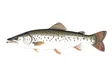
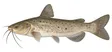
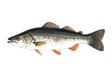
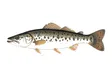
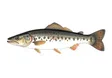
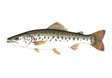
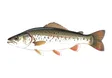
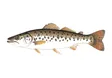
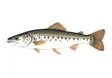
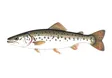
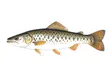
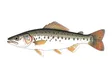
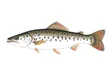
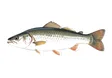
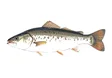
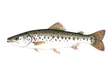
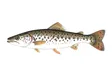
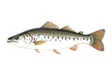
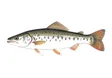
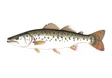
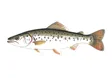
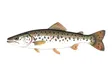
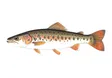
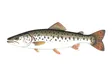
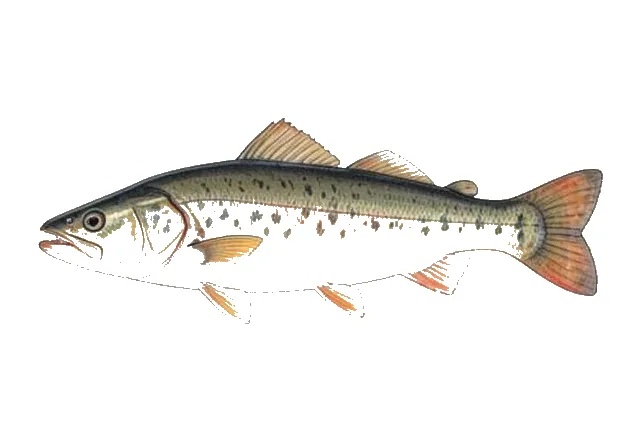
Headwater Catfish field guide illustration

About Headwater Catfish

Ictalurus lupus (the bagre lobo or headwater catfish) is a species of catfish in the family Ictaluridae. It resembles the closely related channel catfish (Ictalurus punctatus), but is smaller, lacks spots, and has a caudal fin with a shallower fork, and grows to a total length of 48 cm (19 in). It is found in Northeastern Mexico and the Southwestern United States.

Additional field notes

Headwater catfish inhabit clear creeks, small rivers, and springs.

Sources: Ictalurus lupus species summary

Separating it from channel catfish

FishBase notes that this species can resemble a small channel catfish. The body lacks spots, the tail is less deeply forked, and the anal-fin base is longer than the head. These characters should be considered together. Its habitat spans sandy and rocky riffles, runs, and pools, so a pool record alone does not capture its full stream habitat.

Sources: Ictalurus lupus species summary

Guide sources

Research reviewed 2026-10-19.

Article text: Wikipedia contributors, Ictalurus lupus (source revision). Licensed under CC BY-SA 4.0. Retrieved 2026-10-11.

Diet and feeding

The FishTraits compilation records these diet categories for this species: detritus or unidentified plant material; invertebrates or larval fish; larger animal prey (a source category covering fish, crayfish, crabs, or frogs). These are broad categories, not a claim that every individual consumes every example in a category.

Reported feeding positions include bottom feeding and surface or water-column feeding. The compilation combines published observations; diets can vary with age, locality, and available food.

Habitat preferences

Reported habitat associations include medium to large rivers, streams and small rivers, creeks.

The source records associations with gravel, cobble, boulders, organic debris, large woody material. An association indicates reported use, rather than an exclusive requirement.

Reproduction and parental care

The compilation reports a representative maturity age of 3 years. Its maturity field summarizes mean, median, or modal estimates, usually for females; male estimates can be used when female data are unavailable. It is not a fixed age at which every fish first breeds.

Batch or serial spawning has been reported somewhere in the species’ range. This does not establish the same spawning pattern for every population.

Recorded spawning months are Jan, Feb, Mar, Apr, May, Jun, Jul, Dec for the source’s reporting region (NM). This is a regional calendar, not a range-wide schedule.

The reproductive-guild classification includes guarding eggs or young at a spawning substrate or nest.

Size and recorded longevity

FishTraits reports a maximum total length of 37 centimetres. Some entries use an estimated asymptotic length; this value should not be treated as a certified record catch.

Recorded longevity in the compilation is 9 years. Wild observations were preferred, but captive records were accepted where wild records were unavailable, and unspecified records were assumed wild. The value is not a guaranteed wild lifespan or an aquarium life expectancy.
Range

Where it lives

Share of 613 GBIF observation records with a state location, across 2 states.
0%
85.2%
Share of 613 GBIF observation records with a state location, across 2 states.

Share of records by state

Habitat

Water and movement

Water
WoRMS records this species in fresh water.
Migration
Not migratory

Classification

Taxonomy

Kingdom
Animalia
Phylum
Chordata
Superclass
Actinopterygii
Class
Teleostei
Order
Siluriformes
Genus
Ictalurus
Species
Ictalurus lupus
ITIS TSN
164001
WoRMS AphiaID
1021349
GBIF key
5202530
Outside the US
ITIS also files it in Mexico.

Common questions about Headwater Catfish

What is the scientific name of Headwater Catfish?
The scientific name is Ictalurus lupus, in the family Ictaluridae. Classification follows ITIS.
Does Headwater Catfish live in fresh water or salt water?
WoRMS records this species in fresh water.
Where has Headwater Catfish been recorded in the United States?
GBIF has observations in 2 states, with the most records in Texas, New Mexico. The map shows observation records, which do not establish the complete natural range.

Closest relatives

Other Ictalurus species

Same family

More Ictaluridae

Black Bullhead46 states
Ameiurus melasIctaluridaeNative and introducedFresh
Black Madtom5 states
Noturus funebrisIctaluridaeNativeFresh
Black River Madtom2 states
Noturus maydeniIctaluridaeNativeFresh
Blue Catfish31 states
Ictalurus furcatusIctaluridaeNative and introducedFreshBrackish
Brindled Madtom16 states
Noturus miurusIctaluridaeNativeFresh
Brown Bullhead44 states
Ameiurus nebulosusIctaluridaeNative and introducedFresh
Brown Madtom6 states
Noturus phaeusIctaluridaeNativeFresh
Caddo Madtom1 states
Noturus tayloriIctaluridaeNativeFresh
Carolina Madtom2 states
Noturus furiosusIctaluridaeNativeFresh
Channel Catfish47 states
Ictalurus punctatusIctaluridaeNative and introducedFresh
Checkered Madtom3 states
Noturus flavaterIctaluridaeNativeFresh
Chucky Madtom1 states
Noturus crypticusIctaluridaeNativeFresh
Elegant Madtom4 states
Noturus elegansIctaluridaeNativeFresh
Flat Bullhead7 states
Ameiurus platycephalusIctaluridaeNative and introducedFresh
Flathead Catfish34 states
Pylodictis olivarisIctaluridaeNative and introducedFresh
Frecklebelly Madtom5 states
Noturus munitusIctaluridaeNativeFresh
Freckled Madtom15 states
Noturus nocturnusIctaluridaeNativeFresh
Least Madtom4 states
Noturus hildebrandiIctaluridaeNativeFresh
Margined Madtom21 states
Noturus insignisIctaluridaeNative and introducedFresh
Mountain Madtom15 states
Noturus eleutherusIctaluridaeNativeFresh
Neosho Madtom3 states
Noturus placidusIctaluridaeNativeFresh
Northern Madtom9 states
Noturus stigmosusIctaluridaeNativeFresh
Orangefin Madtom3 states
Noturus gilbertiIctaluridaeNative and introducedFresh
Ouachita Madtom1 states
Noturus lachneriIctaluridaeNativeFresh

All 42 species in Ictaluridae