Saddled Madtom

Noturus fasciatus

Ictaluridae · freshwater water fish

3 minute read · Species guide

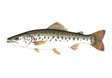
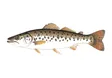
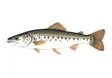
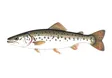
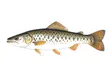
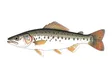
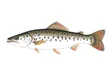
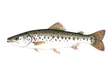
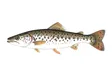
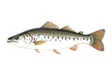
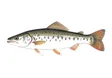
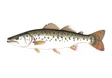
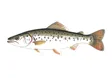
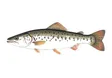
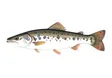
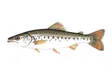
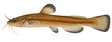
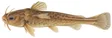
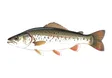
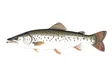
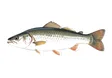
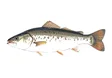
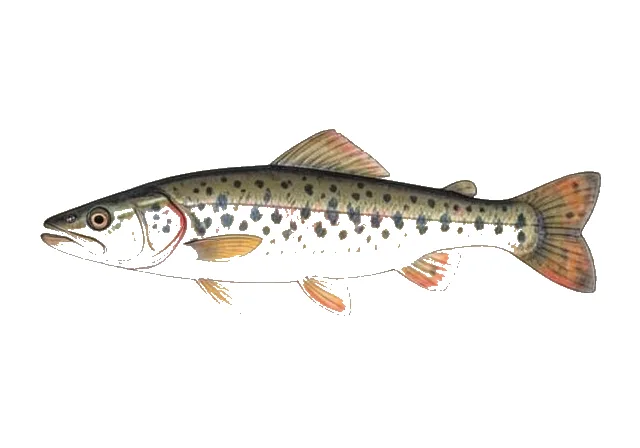
Saddled Madtom field guide illustration

About Saddled Madtom

Noturus fasciatus (saddled madtom) is a rare freshwater fish native to the U.S. state of Tennessee. It was first described as a species separate from Noturus crypticus in 2005. It is restricted to the Duck River system and is also found in two minor tributaries on the lower section of the Tennessee River. This species dwells in small to medium-sized streams where they can be found under gravel, rubble, and slab rock. They feed mostly on insects such as: stone, caddis, and mayfly larvae.

Geographic distribution

The saddled madtom is found in the Duck River system and two minor tributaries of the Tennessee River in the western part of Tennessee and has not yet been found in other streams or states. It is believed that this species can be found in neighboring streams and river systems but until proper research is conducted, it remains a theory.

Ecology

A quantitative diet analysis has not yet been performed on the saddled madtom. However, using diet information of other species that are closely related to, even so closely related that they are known to interbreed with each other, suggest that they are invertivores, feeding mostly on insects, such as caddis, may, and stone fly larva. Feeding on these insects can present competition with other species, such as salamanders and trout species. The saddled madtom is a small species, which allows it to be prey to larger species such as: rock, small mouth, and largemouth bass. Other species that may prey on this species are larger, piscivorous fish, brown trout being a good example. Madtoms in general, have a distinct adaptation that allows them to secrete venom through delivery glands located on the dorsal and pectoral spines. This venom is intended to injure predators and keep them safe from predation. Another strategy that allows for less predation on the saddled madtom is that it lives in riffles under gravel and rubble.

Life history

The saddled madtom has not been researched enough to determine things such as when, where and how often it breeds, how long it takes to reach sexual maturity, or the life span of the species. Using sister species, such as Noturus elegans, crypticus, and baileyi, we can gather a general idea of its life history. Based on the sister species, the saddled madtom breeds between late May and August, breeding on rocks and gravel substrate. The average brood size would be around 50 and the average life span would be two years, reaching sexual maturity after the first year of life. Human impacts on this species include dam construction, which prohibits the species from spreading. Also erosion and run off pollution from agriculture affect the health of this species.

Management

As of 2011, there were no specific management practices in place to protect the saddled madtom. The saddled madtom is currently listed as G2 by NatureServe, which is globally imperiled, and it is also believed to be on the decline in numbers due to pollution, erosion, and siltation problems.

Article text: Wikipedia contributors, Noturus fasciatus (source revision). Licensed under CC BY-SA 4.0. Retrieved 2026-10-11.
Range

Where it lives

Share of 87 GBIF observation records with a state location, across 1 states.
0%
100%
Share of 87 GBIF observation records with a state location, across 1 states.

Share of records by state

Habitat

Water and movement

Water
WoRMS records this species in fresh water.

Classification

Taxonomy

Kingdom
Animalia
Phylum
Chordata
Superclass
Actinopterygii
Class
Teleostei
Order
Siluriformes
Genus
Noturus
Species
Noturus fasciatus
ITIS TSN
1176375
WoRMS AphiaID
1009217
GBIF key
2341012

Common questions about Saddled Madtom

What is the scientific name of Saddled Madtom?
The scientific name is Noturus fasciatus, in the family Ictaluridae. Classification follows ITIS.
Does Saddled Madtom live in fresh water or salt water?
WoRMS records this species in fresh water.
Where has Saddled Madtom been recorded in the United States?
GBIF has observations in 1 states, with the most records in Tennessee. The map shows observation records, which do not establish the complete natural range.

Closest relatives

Other Noturus species

Same family

More Ictaluridae

Black Bullhead46 states
Ameiurus melasIctaluridaeNative and introducedFresh
Black Madtom5 states
Noturus funebrisIctaluridaeNativeFresh
Black River Madtom2 states
Noturus maydeniIctaluridaeNativeFresh
Blue Catfish31 states
Ictalurus furcatusIctaluridaeNative and introducedFreshBrackish
Brindled Madtom16 states
Noturus miurusIctaluridaeNativeFresh
Brown Bullhead44 states
Ameiurus nebulosusIctaluridaeNative and introducedFresh
Brown Madtom6 states
Noturus phaeusIctaluridaeNativeFresh
Caddo Madtom1 states
Noturus tayloriIctaluridaeNativeFresh
Carolina Madtom2 states
Noturus furiosusIctaluridaeNativeFresh
Channel Catfish47 states
Ictalurus punctatusIctaluridaeNative and introducedFresh
Checkered Madtom3 states
Noturus flavaterIctaluridaeNativeFresh
Chucky Madtom1 states
Noturus crypticusIctaluridaeNativeFresh
Elegant Madtom4 states
Noturus elegansIctaluridaeNativeFresh
Flat Bullhead7 states
Ameiurus platycephalusIctaluridaeNative and introducedFresh
Flathead Catfish34 states
Pylodictis olivarisIctaluridaeNative and introducedFresh
Frecklebelly Madtom5 states
Noturus munitusIctaluridaeNativeFresh
Freckled Madtom15 states
Noturus nocturnusIctaluridaeNativeFresh
Headwater Catfish2 states
Ictalurus lupusIctaluridaeNativeFresh
Least Madtom4 states
Noturus hildebrandiIctaluridaeNativeFresh
Margined Madtom21 states
Noturus insignisIctaluridaeNative and introducedFresh
Mountain Madtom15 states
Noturus eleutherusIctaluridaeNativeFresh
Neosho Madtom3 states
Noturus placidusIctaluridaeNativeFresh
Northern Madtom9 states
Noturus stigmosusIctaluridaeNativeFresh
Orangefin Madtom3 states
Noturus gilbertiIctaluridaeNative and introducedFresh

All 42 species in Ictaluridae