Mountain Madtom

Noturus eleutherus

Ictaluridae · freshwater water fish

5 minute read · Species guide

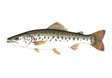
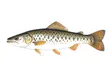
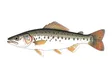
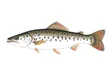
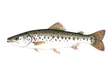
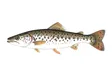
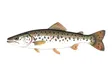
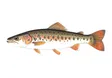
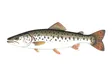
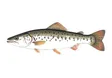
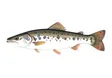
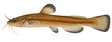
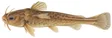
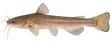
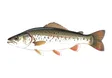
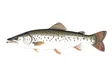
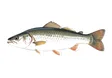
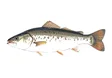
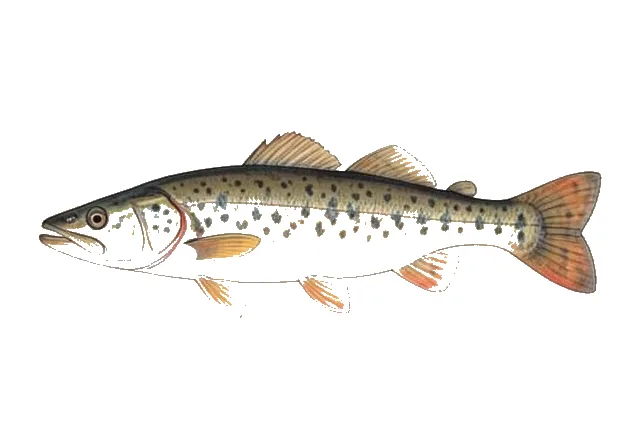
Mountain Madtom field guide illustration

About Mountain Madtom

The mountain madtom (Noturus eleutherus) is a North American species of temperate freshwater fish belonging to the Noturus genus of the family Ictaluridae. The species was first described to the United States National Museum by Professors Jordan and Gilbert in the Big Pigeon River. The mountain madtom has a body that is characterized as being robust, and by the toxic sting that is associated with their pectoral and dorsal spines. Currently, the Pigeon River Recovery Project is working to try to restore the mountain madtom population that was lost in fisheries. Aside from the Pigeon River Recovery Project, there is little management being applied to this species, and it is currently listed on the threatened species list for the state of Tennessee.

Geographic distribution

The mountain madtom has a broad distribution. Its native range includes larger streams of the Mississippi River drainage from the Little River system of southeastern Oklahoma northeastward. East of the Mississippi it appears through the Ohio drainage to western Pennsylvania. In the south-east it occurs in the Cumberland and Tennessee drainages. In the Tennessee, Cumberland, and Green systems it is confined to the Highland Rim. It is also found in the North Fork Holston, Clinch, and Powell rivers. Generally the mountain madtom is restricted to ridge and valley areas. In the Ohio river basin the mountain madtom and the northern madtom occur in very similar environments but usually not together. It is not found on the Cumberland Plateau or the high reaches on the Blue Ridge mountain streams, due to large boulders found in the streams that lack vegetation. It is not generally found in glaciated regions, nor is it found with any other madtom species except the pygmy madtom (Noturus stanauli). It has also been reported to have been seen occasionally with stonecat madtoms (Noturus flavus) in Ohio.

Ecology

The mountain madtom is found in fast-flowing clear riffles that are shallow generally headwater streams. Because the mountain madtom is sensitive to siltation it is not found where there is sandy substrate. Human actions, like farming or logging, that cause siltation in streams degridate local populations. It likes an intermediate sized cobble substrate. In Pennsylvania it has been noted to be found in areas where there is dense vegetation. Mountain madtoms are found in streams with mainly limestone substrate that would affect the pH of the stream. Its diet is mainly mature aquatic insects. Out of 287 stomachs viewed the following contents were found; Plecoptera 1.0, Ephemeroptera 48.9, Trichoptera 10.8, Diptera 37.3, Miscellaneous 2.0. Based on its diet, it competes with Etheostoma blennioides, E. rfilineatum, and Cottus caroline. In all cases the mountain madtom is a nocturnal feeder and hides under large flat rocks during the day time. The entire genus Noturus has pectoral spines, some of which are serrated, some have a venomous sting, and some have both. The mountain madtom has both and these serve as an anti-predatory function, not to catch prey as previously thought. Human actions such as dam building can hurt mountain madtoms because they prefer fast flowing water.

Life history

Juvenile mountain madtoms are 20–30mm in length usually. Adult mountain madtoms range from 75–127 mm in length and the life span averages 4–5 years. It is uncertain what age they reach sexual maturity due to the secrecy of the species. One study located a nest and eggs were collected. In the study the nest was found in a moderately flowing stream, in a clean swept gravel substrate under a rock, 20m above a riffle. A male mountain madtom was seen guarding the nest. The estimated clutch size is 55–115 eggs per female Relative to other fish the mountain madtom has a small clutch size because they do provide a lot of parental care to the young. The breeding season was determined to be June–July, based on the time the nest was found and how developed the eggs were. Human activity that puts silt in the streams can cause the eggs to suffocate which is detrimental to the population. The ideal temperature for the eggs to hatch is 24 C.

Current management

In Tennessee the mountain madtom is listed as threatened. Nationally it is listed as apparently secure. There is currently no specific management in effect for the mountain madtom. There is, however, The Pigeon River Recovery Project. This project has reintroduced many species of darters, mussels, and the mountain madtom to the Pigeon River. At one time there was a mill that pumped waste into the Pigeon River that killed almost all the organisms downstream of the mill. Because of the secrecy of the mountain madtom, the exact causes of its decline are not known. However, since it is very sensitive to silt, poor logging practices at the turn of the century are believed to have been detrimental to the population. The mountain madtom is not a sport fish or pan fish and is not favored by fishermen, except for biologists doing research, so overfishing is not a problem. Nothing has ever been noted to prey on the mountain madtom, due to its venomous sting and spines, so predation is not a problem for it either.

Article text: Wikipedia contributors, Mountain madtom (source revision). Licensed under CC BY-SA 4.0. Retrieved 2026-10-11.
Diet and feeding

The FishTraits compilation records these diet categories for this species: invertebrates or larval fish. These are broad categories, not a claim that every individual consumes every example in a category.

Reported feeding positions include bottom feeding. The compilation combines published observations; diets can vary with age, locality, and available food.

Habitat preferences

Reported habitat associations include medium to large rivers, streams and small rivers.

The source records associations with gravel, cobble, vegetation. An association indicates reported use, rather than an exclusive requirement.

Reproduction and parental care

The compilation reports a representative maturity age of 2.5 years. Its maturity field summarizes mean, median, or modal estimates, usually for females; male estimates can be used when female data are unavailable. It is not a fixed age at which every fish first breeds.

Recorded spawning months are Jun, Jul for the source’s reporting region (NC). This is a regional calendar, not a range-wide schedule.

The reproductive-guild classification includes guarding eggs or young at a spawning substrate or nest.

Size and recorded longevity

FishTraits reports a maximum total length of 13 centimetres. Some entries use an estimated asymptotic length; this value should not be treated as a certified record catch.

Recorded longevity in the compilation is 4.5 years. Wild observations were preferred, but captive records were accepted where wild records were unavailable, and unspecified records were assumed wild. The value is not a guaranteed wild lifespan or an aquarium life expectancy.

Range

Where it lives

Share of 728 GBIF observation records with a state location, across 15 states. The orange dots are USGS stream-survey sites where this species was caught.
0%
23.9%
Share of 728 GBIF observation records with a state location, across 15 states. The orange dots are USGS stream-survey sites where this species was caught.

A blank area on the dot layer usually means nobody sampled there, not that the fish is absent. Turn on “every survey site” to see where the survey looked.

The USGS stream survey caught it at 37 of its sites, in 10 states. That survey and the GBIF records are two different counts of two different things, so the site keeps them apart.

Habitat

Water and movement

Water
WoRMS records this species in fresh water.
Migration
Not migratory

Classification

Taxonomy

Kingdom
Animalia
Phylum
Chordata
Superclass
Actinopterygii
Class
Teleostei
Order
Siluriformes
Genus
Noturus
Species
Noturus eleutherus
ITIS TSN
164009
WoRMS AphiaID
1020184
GBIF key
2341021

Common questions about Mountain Madtom

What is the scientific name of Mountain Madtom?
The scientific name is Noturus eleutherus, in the family Ictaluridae. Classification follows ITIS.
Does Mountain Madtom live in fresh water or salt water?
WoRMS records this species in fresh water.
Where has Mountain Madtom been recorded in the United States?
GBIF has observations in 15 states, with the most records in Tennessee, Ohio, Kentucky. The map shows observation records, which do not establish the complete natural range.

Closest relatives

Other Noturus species

Same family

More Ictaluridae

Black Bullhead46 states
Ameiurus melasIctaluridaeNative and introducedFresh
Black Madtom5 states
Noturus funebrisIctaluridaeNativeFresh
Black River Madtom2 states
Noturus maydeniIctaluridaeNativeFresh
Blue Catfish31 states
Ictalurus furcatusIctaluridaeNative and introducedFreshBrackish
Brindled Madtom16 states
Noturus miurusIctaluridaeNativeFresh
Brown Bullhead44 states
Ameiurus nebulosusIctaluridaeNative and introducedFresh
Brown Madtom6 states
Noturus phaeusIctaluridaeNativeFresh
Caddo Madtom1 states
Noturus tayloriIctaluridaeNativeFresh
Carolina Madtom2 states
Noturus furiosusIctaluridaeNativeFresh
Channel Catfish47 states
Ictalurus punctatusIctaluridaeNative and introducedFresh
Checkered Madtom3 states
Noturus flavaterIctaluridaeNativeFresh
Chucky Madtom1 states
Noturus crypticusIctaluridaeNativeFresh
Elegant Madtom4 states
Noturus elegansIctaluridaeNativeFresh
Flat Bullhead7 states
Ameiurus platycephalusIctaluridaeNative and introducedFresh
Flathead Catfish34 states
Pylodictis olivarisIctaluridaeNative and introducedFresh
Frecklebelly Madtom5 states
Noturus munitusIctaluridaeNativeFresh
Freckled Madtom15 states
Noturus nocturnusIctaluridaeNativeFresh
Headwater Catfish2 states
Ictalurus lupusIctaluridaeNativeFresh
Least Madtom4 states
Noturus hildebrandiIctaluridaeNativeFresh
Margined Madtom21 states
Noturus insignisIctaluridaeNative and introducedFresh
Neosho Madtom3 states
Noturus placidusIctaluridaeNativeFresh
Northern Madtom9 states
Noturus stigmosusIctaluridaeNativeFresh
Orangefin Madtom3 states
Noturus gilbertiIctaluridaeNative and introducedFresh
Ouachita Madtom1 states
Noturus lachneriIctaluridaeNativeFresh

All 42 species in Ictaluridae