Caddo Madtom

Noturus taylori

Ictaluridae · freshwater water fish

5 minute read · Species guide

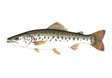
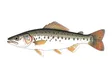
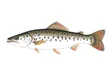
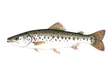
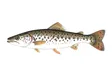
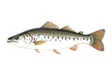
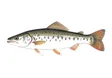
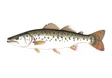
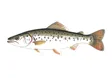
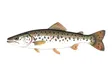
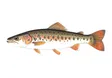
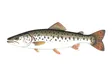
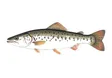
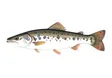
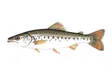
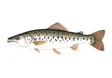
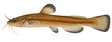
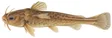
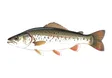
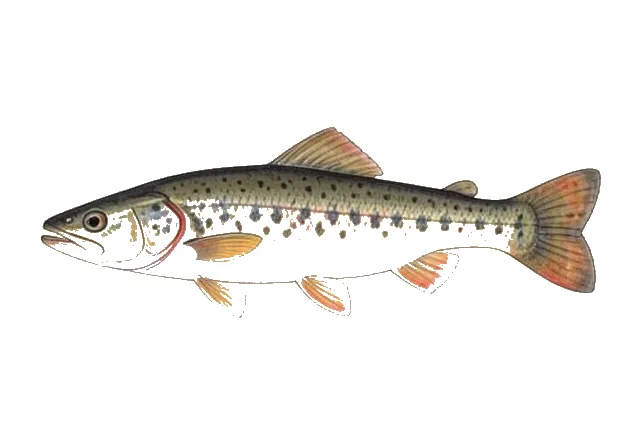
Caddo Madtom field guide illustration

About Caddo Madtom

The Caddo madtom (Noturus taylori) is a species of fish in the family Ictaluridae endemic to the United States. N. taylori was named in honor of William Ralph Taylor, U.S. National Museum, in recognition of his contributions to the knowledge of catfishes. They average 2 to 4 inches (5.1 to 10.2 cm) long and weigh no more than a few ounces. N. taylori has a small to tiny, fragmented range, but is mostly found in the Caddo, Ouachita, and Little Missouri rivers in southwestern Arkansas. Ecological studies indicate that dam and bridge construction poses barriers to dispersal and migration of fish in the Ouachita Highlands. IUCNredlist.org states that better information is needed on the life history, reproductive biology, and ecology of the Caddo madtom. This species is listed as endangered on the IUCN Red List. Limited range makes this species vulnerable to habitat destruction /degradation from impoundment, pollution, and other factors. Robison and Buchanan (1988) stated, "this rare species should be considered threatened due to loss of habitat". Warren et al. (2000) categorized the species as "threatened" (likely to become endangered throughout all or a significant portion of its range).

Geographic distribution

N. taylori was known only from the upper Caddo River, a tributary to the Ouachita River, Arkansas. This small madtom is the second species (the other is Etheostoma pallididorsum) apparently endemic to the upper water of the Caddo River, Ouachita River drainage, which originates in the Ouachita Mountains of southwestern Arkansas. They were found to appear in the upper Caddo River where the water is much clearer than the lower, more turbid reaches below the impounded DeGray Reservoir, which is where their distribution seems to end. They have now been collected from other nearby rivers, the Ouachita and South Fork Ouachita Rivers, connected to the same watershed. The first known collection of this species was obtained from the Caddo River, near Glenwood, Pike County, on February 21, 1970. Since then, N. taylori has been collected from the Caddo River in Montgomery, Pike, and Clark Counties in southwestern Arkansas. In principle, these fish are vulnerable to extinction by catastrophic watershed-scale environmental disturbance, and their distribution seems to have decreased in response to these vulnerabilities. This might be because species that specialize on headwater habitats might be particularly vulnerable to local extirpation because natural recolonization from adjacent rivers is unlikely.

Ecology

The Caddo madtom is a specialist on headwater streams. Food includes snails, isopods, ephemeropterans (mayflies), dragonflies, caddisflies, stoneflies, aquatic lepidopterans (aquatic moths and butterflies), aquatic beetles, and dipterans (true flies), but ephemeropterans and dipterans are the dominant items. Habitat includes shallow, gravel-bottomed pools or shoals near shorelines of clear, small to medium upland rivers, especially well-compacted gravel areas below gravel riffles, where this madtom occurs under rocks, beneath large gravel, or among rubble. It prefers well-compacted gravel areas below gravel riffles where it lives under rocks, beneath large gravel, and in the interstices of rubble. Genetic results have implications for conservation and management of fish species like the Caddo madtom. At the within-drainage scale, fragmentation by natural or human activities (i.e., reservoirs) possibly affects individual movement and recolonization probabilities, resulting in genetic divergence (i.e., South Fork vs. Ouachita mainstem). Causes for decline may include siltation and turbidity in farming areas, and the dewatering of habitats by hydropower operations. Like all madtoms, they are known for their pectoral spines that contain saw-like teeth and a neurotoxin gland. These spines and toxins produce a painful sting when used, and indicate the presence of predators.

Life history

This species spends its "life in the rocks". Spawning occurs from late April to May and it seems to occur only once during this time; however, no nests have been found to date. Ova counts from ripe females range up to 48 mature eggs, but average 16 eggs per female. Age of sexual maturity is yet to be determined and little is known about the Caddo madtom's reproduction. It is the only madtom with heteromorphic sex chromosomes.

Current management

Ecological studies indicate that dam and bridge construction poses barriers to dispersal and migration of fishes in the Ouachita Highlands. Construction is generally destructive to aquatic habitats of any kind, unless designed specifically to help species diversity, and even then it can cause harm. As stated before, limited range makes this species vulnerable to habitat destruction /degradation from impoundment, pollution, and other factors. Robison and Buchanan (1988) stated that "this rare species should be considered threatened due to loss of habitat". Warren et al. (2000) categorized the species as "threatened" (likely to become endangered throughout all or a significant portion of its range). Noturus taylori appears to be vulnerable to local extirpation by small-scale disturbances; aquatic habitats in the region are impacted by local human activities (e.g., development, logging, gravel mining) that can adversely affect stream fishes.

Article text: Wikipedia contributors, Caddo madtom (source revision). Licensed under CC BY-SA 4.0. Retrieved 2026-10-11.
Diet and feeding

The FishTraits compilation records these diet categories for this species: invertebrates or larval fish. These are broad categories, not a claim that every individual consumes every example in a category.

Reported feeding positions include bottom feeding. The compilation combines published observations; diets can vary with age, locality, and available food.

Habitat preferences

Reported habitat associations include creeks.

The source records associations with gravel, cobble. An association indicates reported use, rather than an exclusive requirement.

Reproduction and parental care

The compilation reports a representative maturity age of 1 years. Its maturity field summarizes mean, median, or modal estimates, usually for females; male estimates can be used when female data are unavailable. It is not a fixed age at which every fish first breeds.

Recorded spawning months are Apr, May for the source’s reporting region (AR). This is a regional calendar, not a range-wide schedule.

The reproductive-guild classification includes guarding eggs or young at a spawning substrate or nest.

Size and recorded longevity

FishTraits reports a maximum total length of 7 centimetres. Some entries use an estimated asymptotic length; this value should not be treated as a certified record catch.

Recorded longevity in the compilation is 2 years. Wild observations were preferred, but captive records were accepted where wild records were unavailable, and unspecified records were assumed wild. The value is not a guaranteed wild lifespan or an aquarium life expectancy.

Range

Where it lives

Share of 72 GBIF observation records with a state location, across 1 states.
0%
100%
Share of 72 GBIF observation records with a state location, across 1 states.

Share of records by state

Habitat

Water and movement

Water
WoRMS records this species in fresh water.
Migration
Not migratory

Classification

Taxonomy

Kingdom
Animalia
Phylum
Chordata
Superclass
Actinopterygii
Class
Teleostei
Order
Siluriformes
Genus
Noturus
Species
Noturus taylori
ITIS TSN
164026
WoRMS AphiaID
1013086
GBIF key
2341030

Common questions about Caddo Madtom

What is the scientific name of Caddo Madtom?
The scientific name is Noturus taylori, in the family Ictaluridae. Classification follows ITIS.
Does Caddo Madtom live in fresh water or salt water?
WoRMS records this species in fresh water.
Where has Caddo Madtom been recorded in the United States?
GBIF has observations in 1 states, with the most records in Arkansas. The map shows observation records, which do not establish the complete natural range.

Closest relatives

Other Noturus species

Same family

More Ictaluridae

Black Bullhead46 states
Ameiurus melasIctaluridaeNative and introducedFresh
Black Madtom5 states
Noturus funebrisIctaluridaeNativeFresh
Black River Madtom2 states
Noturus maydeniIctaluridaeNativeFresh
Blue Catfish31 states
Ictalurus furcatusIctaluridaeNative and introducedFreshBrackish
Brindled Madtom16 states
Noturus miurusIctaluridaeNativeFresh
Brown Bullhead44 states
Ameiurus nebulosusIctaluridaeNative and introducedFresh
Brown Madtom6 states
Noturus phaeusIctaluridaeNativeFresh
Carolina Madtom2 states
Noturus furiosusIctaluridaeNativeFresh
Channel Catfish47 states
Ictalurus punctatusIctaluridaeNative and introducedFresh
Checkered Madtom3 states
Noturus flavaterIctaluridaeNativeFresh
Chucky Madtom1 states
Noturus crypticusIctaluridaeNativeFresh
Elegant Madtom4 states
Noturus elegansIctaluridaeNativeFresh
Flat Bullhead7 states
Ameiurus platycephalusIctaluridaeNative and introducedFresh
Flathead Catfish34 states
Pylodictis olivarisIctaluridaeNative and introducedFresh
Frecklebelly Madtom5 states
Noturus munitusIctaluridaeNativeFresh
Freckled Madtom15 states
Noturus nocturnusIctaluridaeNativeFresh
Headwater Catfish2 states
Ictalurus lupusIctaluridaeNativeFresh
Least Madtom4 states
Noturus hildebrandiIctaluridaeNativeFresh
Margined Madtom21 states
Noturus insignisIctaluridaeNative and introducedFresh
Mountain Madtom15 states
Noturus eleutherusIctaluridaeNativeFresh
Neosho Madtom3 states
Noturus placidusIctaluridaeNativeFresh
Northern Madtom9 states
Noturus stigmosusIctaluridaeNativeFresh
Orangefin Madtom3 states
Noturus gilbertiIctaluridaeNative and introducedFresh
Ouachita Madtom1 states
Noturus lachneriIctaluridaeNativeFresh

All 42 species in Ictaluridae