Least Madtom

Noturus hildebrandi

Ictaluridae · freshwater water fish

3 minute read · Species guide

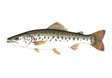
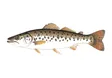
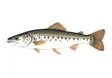
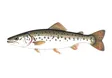
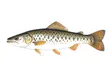
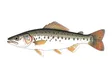
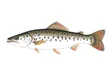
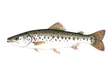
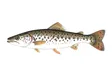
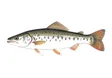
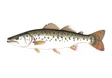
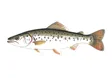
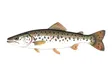
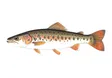
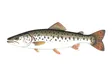
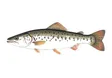
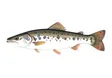
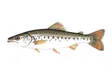
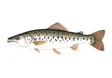
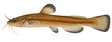
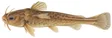
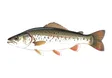
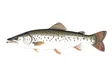
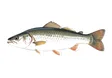
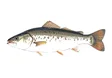
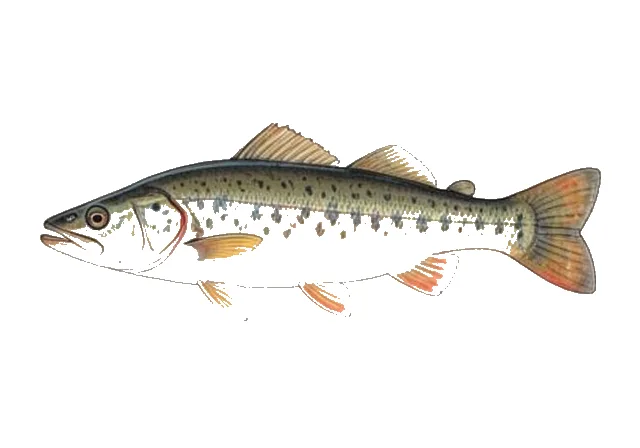
Least Madtom field guide illustration

About Least Madtom

Noturus hildebrandi, also known as the least madtom, is a species of catfish. Its native range stretches from the Obion River in Kentucky to the Homochitto River in Mississippi.

Description

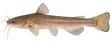
The least madtom is a small slender-bodied fish with a flat head. It measures up to 6.9 centimetres (2.7 in) in length. The adipose fin is either clear or white; however, populations in Mississippi sometimes have a dark patch on the adipose fin. Body coloration varies by geography. There are two known subspecies, Noturus h. hildebrandi and Noturus h. lautus. N. h. hildebrandi, which inhabits the Homochitto River and Bayou Pierre, has a long head and a mottled coloration. N.h. lautus lives in the Obion and surrounding rivers; this subspecies has a shorter head and four light-colored oval areas on a red-brown to black back. Males and females are identical in appearance. Most live about 12 to 15 months, dying shortly after reproducing.

Habitat

The least madtom inhabits sandy riffles, mixed rock riffles, creeks, pools, and small rivers. It is commonly found in shallow areas containing submerged logs, sticks, leaves, and other debris.

Reproduction

The least madtom's spawning season lasts from June through August. During this time the males increase in size. The females spawn during their second summer. To prepare for spawning, adults take shelter, either singly or in pairs, under stones, shells, or in debris. An average of 19 orange oocytes are laid in these areas. Both parents guard the nest as the eggs develop. Eggs hatch within 8 to 9 days. Yolk resorption takes about 9 to 10 days after hatching.

Diet

The least madtom's diet consists of 16 different invertebrate taxa. Midges make up the majority of their diet, followed by caddisfly larva. Crustaceans are consumed only in late winter and early spring. The size of prey is proportional to body size.

Article text: Wikipedia contributors, Noturus hildebrandi (source revision). Licensed under CC BY-SA 4.0. Retrieved 2026-10-11.
Diet and feeding

The FishTraits compilation records these diet categories for this species: invertebrates or larval fish. These are broad categories, not a claim that every individual consumes every example in a category.

Habitat preferences

Reported habitat associations include streams and small rivers, creeks.

The source records associations with sand, gravel, cobble, organic debris. An association indicates reported use, rather than an exclusive requirement.

Reproduction and parental care

The compilation reports a representative maturity age of 1 years. Its maturity field summarizes mean, median, or modal estimates, usually for females; male estimates can be used when female data are unavailable. It is not a fixed age at which every fish first breeds.

Recorded spawning months are Jun, Jul for the source’s reporting region (TN). This is a regional calendar, not a range-wide schedule.

Size and recorded longevity

FishTraits reports a maximum total length of 6.4 centimetres. Some entries use an estimated asymptotic length; this value should not be treated as a certified record catch.

Recorded longevity in the compilation is 2 years. Wild observations were preferred, but captive records were accepted where wild records were unavailable, and unspecified records were assumed wild. The value is not a guaranteed wild lifespan or an aquarium life expectancy.

Range

Where it lives

Share of 390 GBIF observation records with a state location, across 4 states. The orange dots are USGS stream-survey sites where this species was caught.
0%
49.7%
Share of 390 GBIF observation records with a state location, across 4 states. The orange dots are USGS stream-survey sites where this species was caught.

A blank area on the dot layer usually means nobody sampled there, not that the fish is absent. Turn on “every survey site” to see where the survey looked.

The USGS stream survey caught it at 24 of its sites, in 2 states. That survey and the GBIF records are two different counts of two different things, so the site keeps them apart.

Habitat

Water and movement

Water
WoRMS records this species in fresh water.
Migration
Not migratory

Classification

Taxonomy

Kingdom
Animalia
Phylum
Chordata
Superclass
Actinopterygii
Class
Teleostei
Order
Siluriformes
Genus
Noturus
Species
Noturus hildebrandi
ITIS TSN
164017
WoRMS AphiaID
1524992
GBIF key
4286751

Common questions about Least Madtom

What is the scientific name of Least Madtom?
The scientific name is Noturus hildebrandi, in the family Ictaluridae. Classification follows ITIS.
Does Least Madtom live in fresh water or salt water?
WoRMS records this species in fresh water.
Where has Least Madtom been recorded in the United States?
GBIF has observations in 4 states, with the most records in Mississippi, Tennessee, Kentucky. The map shows observation records, which do not establish the complete natural range.

Closest relatives

Other Noturus species

Same family

More Ictaluridae

Black Bullhead46 states
Ameiurus melasIctaluridaeNative and introducedFresh
Black Madtom5 states
Noturus funebrisIctaluridaeNativeFresh
Black River Madtom2 states
Noturus maydeniIctaluridaeNativeFresh
Blue Catfish31 states
Ictalurus furcatusIctaluridaeNative and introducedFreshBrackish
Brindled Madtom16 states
Noturus miurusIctaluridaeNativeFresh
Brown Bullhead44 states
Ameiurus nebulosusIctaluridaeNative and introducedFresh
Brown Madtom6 states
Noturus phaeusIctaluridaeNativeFresh
Caddo Madtom1 states
Noturus tayloriIctaluridaeNativeFresh
Carolina Madtom2 states
Noturus furiosusIctaluridaeNativeFresh
Channel Catfish47 states
Ictalurus punctatusIctaluridaeNative and introducedFresh
Checkered Madtom3 states
Noturus flavaterIctaluridaeNativeFresh
Chucky Madtom1 states
Noturus crypticusIctaluridaeNativeFresh
Elegant Madtom4 states
Noturus elegansIctaluridaeNativeFresh
Flat Bullhead7 states
Ameiurus platycephalusIctaluridaeNative and introducedFresh
Flathead Catfish34 states
Pylodictis olivarisIctaluridaeNative and introducedFresh
Frecklebelly Madtom5 states
Noturus munitusIctaluridaeNativeFresh
Freckled Madtom15 states
Noturus nocturnusIctaluridaeNativeFresh
Headwater Catfish2 states
Ictalurus lupusIctaluridaeNativeFresh
Margined Madtom21 states
Noturus insignisIctaluridaeNative and introducedFresh
Mountain Madtom15 states
Noturus eleutherusIctaluridaeNativeFresh
Neosho Madtom3 states
Noturus placidusIctaluridaeNativeFresh
Northern Madtom9 states
Noturus stigmosusIctaluridaeNativeFresh
Orangefin Madtom3 states
Noturus gilbertiIctaluridaeNative and introducedFresh
Ouachita Madtom1 states
Noturus lachneriIctaluridaeNativeFresh

All 42 species in Ictaluridae