Pygmy Madtom

Noturus stanauli

Ictaluridae · freshwater water fish

5 minute read · Species guide

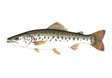
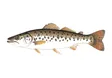
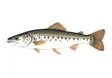
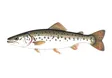
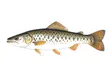
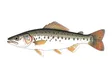
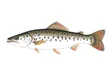
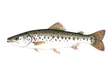
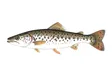
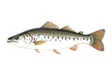
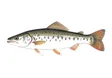
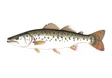
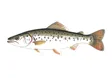
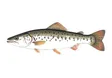
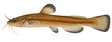
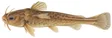
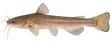
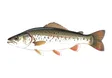
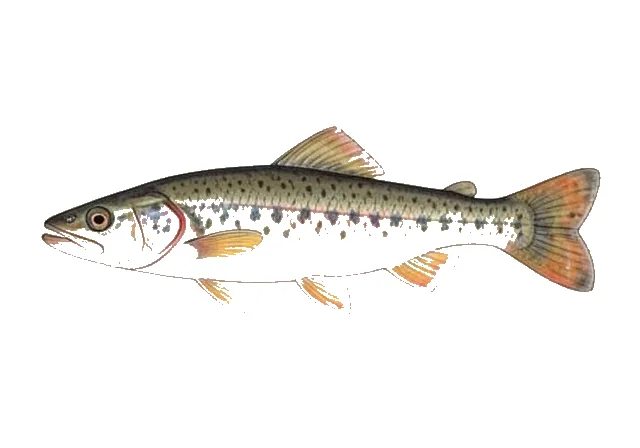
Pygmy Madtom field guide illustration

About Pygmy Madtom

The pygmy madtom (Noturus stanauli) is a species of fish in the family Ictaluridae endemic to the United States, in only two known regions of Tennessee. Madtoms are the smallest members of the Ictalurid catfish family. Members of the genus Noturus can be distinguished by their small size, unusually long adipose fin, and rounded caudal fin. Most specimens have been collected over shallow, fine gravel shoals with moderate to swift flow, usually near the stream bank.

Distribution

The pygmy madtom has an extremely limited distribution, appearing only in samples taken from the Duck River, in Humphreys and Hickman Counties, Tennessee; and from the Clinch River, Hancock County, Tennessee. These two locations are separated by about 600 river miles, though no current evidence indicates the entire historical range of the species.

Ecology

The pygmy madtom is the smallest of madtoms, reaching only about 50 mm in length at adulthood. It is dark brown dorsally and nearly white ventrally, and is similar to the least madtom, but is distinguished by its white snout and large teeth on the front edge of the pectoral spine. The caudal fin has a dark band or dusky blotches in the middle. The anal fin has 14–17 rays.

N. stanauli has currently been observed and collected in moderate to swift gravel runs of clear medium-sized rivers in pea-sized gravel of fine sand substrates. Although no observations of seasonal habitat shifts have been made, the closely related smoky madtom is known to switch from riffles to overwinter in shallow pools. Two closely related species, N. baileyi (smoky madtom) and N. flavipinnis (yellowfin madtom), are found in the flowing portions of pools during the reproductive season.

Many specific biological traits of this madtom have not been gathered to date, mainly stemming from a lack of observable specimens in their natural environment. A total of 10 individuals have been found from both locations since the species was listed as endangered in 1993. Conservation Fisheries, Inc. of Knoxville, Tennessee, was able to propagate young on several instances and reported adult activity was limited only to the early evening hours. Because of this observation, the adults are believed to be crepuscular.

Madtoms almost exclusively prey on aquatic insect larvae. They are primarily opportunistic feeders and take prey items in proportion to their abundance.

Related madtoms nest in cavities beneath slab rocks and at times use other cover objects, such as cans and bottles. As native mussels are abundant in pygmy madtom habitat, this species might use empty mussel shells for nesting cover. Reproduction likely occurs from spring to early summer.

Management

The pygmy madtom was listed as federally endangered throughout its entire range in 1993, so a management plan was drafted in 1994 by the United States Fish and Wildlife Service outlining description of actions to be taken, time frame, responsible parties, labor type and various other activities relating to species repopulation.

The two known populations are isolated from each other by impoundments, making recolonization of any extirpated population impossible without human intervention. The absence of natural gene flow among the limited populations of these fishes leaves the long-term genetic viability of these isolated populations in question.

Additionally, several madtom species have, for unexplained reasons, been extirpated from sections of their naturally occurring range. One hypothesis states, "...in addition to visible habitat degradation be related to their being unable to cope with olfactory 'noise' being added to riverine ecosystems in the form of a wide variety of complex organic chemicals that may occur only in trace amounts." Many species that once existed throughout major portions of the Tennessee River now exist only as isolated remnant populations, and extirpations and extinctions are predicted.

Threats affecting the pygmy madtom are increased urbanization, coal mining, toxic chemical spills, siltation, improper pesticide use, and stream bank erosion. Additional threats include gravel dredging, water withdrawals, and agricultural practices. None of the threats has been eliminated since the fish was listed; consequently, both the Duck and Clinch River populations remain vulnerable to extirpation. Existing federal and state laws and regulations are applied to actions conducted within the range of pygmy madtom to protect the fish and its habitats. However, due to difficulty in finding the fish in surveys, the extent of its habitat is unknown.

Monitoring of the species is difficult due to its scarcity in both abundance and distribution. Given the current state of the population, monitoring techniques must minimize impact to the existing individuals.

Article text: Wikipedia contributors, Pygmy madtom (source revision). Licensed under CC BY-SA 4.0. Retrieved 2026-10-11.
Diet and feeding

The FishTraits compilation records these diet categories for this species: invertebrates or larval fish. These are broad categories, not a claim that every individual consumes every example in a category.

Reported feeding positions include bottom feeding. The compilation combines published observations; diets can vary with age, locality, and available food.

Habitat preferences

Reported habitat associations include medium to large rivers.

The source records associations with sand, gravel, vegetation. An association indicates reported use, rather than an exclusive requirement.

Reproduction and parental care

The compilation reports a representative maturity age of 1 years. Its maturity field summarizes mean, median, or modal estimates, usually for females; male estimates can be used when female data are unavailable. It is not a fixed age at which every fish first breeds.

Recorded spawning months are May, Jun, Jul for the source’s reporting region (TN). This is a regional calendar, not a range-wide schedule.

The reproductive-guild classification includes guarding eggs or young at a spawning substrate or nest.

Size and recorded longevity

FishTraits reports a maximum total length of 4.4 centimetres. Some entries use an estimated asymptotic length; this value should not be treated as a certified record catch.

Recorded longevity in the compilation is 2 years. Wild observations were preferred, but captive records were accepted where wild records were unavailable, and unspecified records were assumed wild. The value is not a guaranteed wild lifespan or an aquarium life expectancy.

Range

Where it lives

Share of 15 GBIF observation records with a state location, across 1 states.
0%
100%
Share of 15 GBIF observation records with a state location, across 1 states.

Share of records by state

Habitat

Water and movement

Water
WoRMS records this species in fresh water.
Migration
Not migratory

Classification

Taxonomy

Kingdom
Animalia
Phylum
Chordata
Superclass
Actinopterygii
Class
Teleostei
Order
Siluriformes
Genus
Noturus
Species
Noturus stanauli
ITIS TSN
164024
WoRMS AphiaID
1012441
GBIF key
2341018

Common questions about Pygmy Madtom

What is the scientific name of Pygmy Madtom?
The scientific name is Noturus stanauli, in the family Ictaluridae. Classification follows ITIS.
Does Pygmy Madtom live in fresh water or salt water?
WoRMS records this species in fresh water.
Where has Pygmy Madtom been recorded in the United States?
GBIF has observations in 1 states, with the most records in Tennessee. The map shows observation records, which do not establish the complete natural range.

Closest relatives

Other Noturus species

Same family

More Ictaluridae

Black Bullhead46 states
Ameiurus melasIctaluridaeNative and introducedFresh
Black Madtom5 states
Noturus funebrisIctaluridaeNativeFresh
Black River Madtom2 states
Noturus maydeniIctaluridaeNativeFresh
Blue Catfish31 states
Ictalurus furcatusIctaluridaeNative and introducedFreshBrackish
Brindled Madtom16 states
Noturus miurusIctaluridaeNativeFresh
Brown Bullhead44 states
Ameiurus nebulosusIctaluridaeNative and introducedFresh
Brown Madtom6 states
Noturus phaeusIctaluridaeNativeFresh
Caddo Madtom1 states
Noturus tayloriIctaluridaeNativeFresh
Carolina Madtom2 states
Noturus furiosusIctaluridaeNativeFresh
Channel Catfish47 states
Ictalurus punctatusIctaluridaeNative and introducedFresh
Checkered Madtom3 states
Noturus flavaterIctaluridaeNativeFresh
Chucky Madtom1 states
Noturus crypticusIctaluridaeNativeFresh
Elegant Madtom4 states
Noturus elegansIctaluridaeNativeFresh
Flat Bullhead7 states
Ameiurus platycephalusIctaluridaeNative and introducedFresh
Flathead Catfish34 states
Pylodictis olivarisIctaluridaeNative and introducedFresh
Frecklebelly Madtom5 states
Noturus munitusIctaluridaeNativeFresh
Freckled Madtom15 states
Noturus nocturnusIctaluridaeNativeFresh
Headwater Catfish2 states
Ictalurus lupusIctaluridaeNativeFresh
Least Madtom4 states
Noturus hildebrandiIctaluridaeNativeFresh
Margined Madtom21 states
Noturus insignisIctaluridaeNative and introducedFresh
Mountain Madtom15 states
Noturus eleutherusIctaluridaeNativeFresh
Neosho Madtom3 states
Noturus placidusIctaluridaeNativeFresh
Northern Madtom9 states
Noturus stigmosusIctaluridaeNativeFresh
Orangefin Madtom3 states
Noturus gilbertiIctaluridaeNative and introducedFresh

All 42 species in Ictaluridae