Speckled Madtom

Noturus leptacanthus

Ictaluridae · freshwater water fish

4 minute read · Species guide

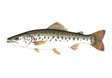
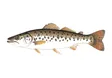
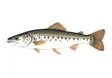
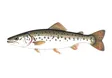
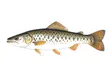
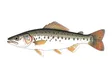
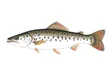
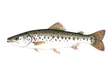
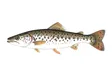
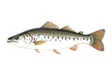
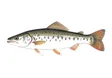
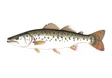
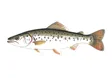
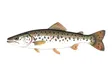
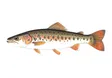
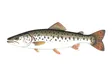
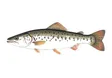
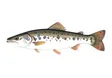
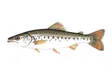
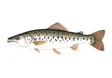
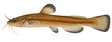
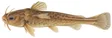
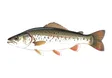
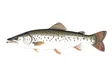
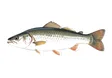
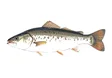
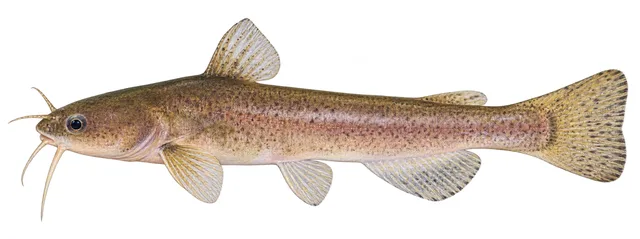
Speckled Madtom field guide illustration

About Speckled Madtom

The speckled madtom (Noturus leptacanthus) is a small freshwater fish found in the southeastern United States that belongs to the genus Noturus of the family Ictaluridae.

Description

The speckled madtom is a dark reddish-brown color and has a dusky or mottled caudal fin with a pale border. The species' average length is between 39 and 50 millimetres (1.5 and 2.0 in); however, the longest ever recorded specimen was 110 millimetres (4.3 in).

Distribution

The speckled madtom has a wide range throughout the southeastern United States. The species is found in abundance throughout Louisiana, Mississippi, Alabama, Georgia, Florida, South Carolina, and Tennessee. In Tennessee it is found only in the Conasauga River system, where it is abundant. It is also found in Atlantic and Gulf slope drainages from the Edisto River in South Carolina to the Amite - Comite River system of Louisiana. The St. Johns River system in the Florida peninsula makes up the southernmost area of their range.

Ecology

The speckled madtom inhabits small to moderate-sized streams. They often inhabit very shallow riffles with sand, rock or gravel bottoms. During the day speckled madtoms will rest in areas with aquatic vegetation such as pondweed or burweed. However, due to their nocturnal feeding patterns, they will leave these areas at night to go feed. Feeding begins at dusk and the amount of food in their stomach will increase until dawn when the feeding stops. Their diet is mostly insect larvae, especially midge larvae. They detect their food with their sensory barbels, and their vision plays little part in their feeding behavior. Major competition for the speckled madtom comes from other species from the genus Noturus. The only known predators of the speckled madtom are the rock bass (Ambloplites rupestris) and larger Noturus species. In order to protect themselves from predation, all Noturus species have developed a venomous sting from their pectoral spines; however, the speckled madtom has a relatively low level of toxicity.

Life history

The spawning period for the speckled madtom is from May through August with water temperatures ranging from 20 to 24 °C (68 to 75 °F). The speckled madtom is one of the least fecund species of freshwater North American fishes. They normally spawn two clutches per year with each clutch consisting of 14-45 eggs. Their eggs are very large relative to their body size, with the average size being 5.5 millimetres (0.22 in) in diameter. It is believed that the large egg size compensates for the extremely small clutch size. The large egg size allows for the larvae to be very large and well developed upon hatching. The average size of a one-year-old is 39 millimetres (1.5 in), and the average size of a 2-year-old is 50 millimetres (2.0 in). They reach sexual maturity by their second summer and have a maximum lifespan of 2.5–3 years. The speckled madtom is known to nest inside of discarded cans and bottles that are cleared of debris and silt by the male. The male then guards the eggs without feeding for around 2.5 weeks.

Conservation

The population of this species is steady throughout its range and shows no signs of major decline. No widespread threats to the species are known. One study showed that the speckled madtom is more abundant in areas with agricultural land use, though agriculture has been known to hurt many species because of runoff. No agencies or non-governmental groups are actively protecting this species.

Article text: Wikipedia contributors, Speckled madtom (source revision). Licensed under CC BY-SA 4.0. Retrieved 2026-10-11.
Diet and feeding

The FishTraits compilation records these diet categories for this species: invertebrates or larval fish. These are broad categories, not a claim that every individual consumes every example in a category.

Reported feeding positions include bottom feeding. The compilation combines published observations; diets can vary with age, locality, and available food.

Habitat preferences

Reported habitat associations include streams and small rivers, creeks.

The source records associations with sand, gravel, vegetation, large woody material. An association indicates reported use, rather than an exclusive requirement.

Reproduction and parental care

The compilation reports a representative maturity age of 1 years. Its maturity field summarizes mean, median, or modal estimates, usually for females; male estimates can be used when female data are unavailable. It is not a fixed age at which every fish first breeds.

Recorded spawning months are May, Jun, Jul, Aug for the source’s reporting region (MS). This is a regional calendar, not a range-wide schedule.

The reproductive-guild classification includes guarding eggs or young at a spawning substrate or nest.

Size and recorded longevity

FishTraits reports a maximum total length of 9.4 centimetres. Some entries use an estimated asymptotic length; this value should not be treated as a certified record catch.

Recorded longevity in the compilation is 2.5 years. Wild observations were preferred, but captive records were accepted where wild records were unavailable, and unspecified records were assumed wild. The value is not a guaranteed wild lifespan or an aquarium life expectancy.

Range

Where it lives

Share of 5,493 GBIF observation records with a state location, across 10 states. The orange dots are USGS stream-survey sites where this species was caught.
0%
38.8%
Share of 5,493 GBIF observation records with a state location, across 10 states. The orange dots are USGS stream-survey sites where this species was caught.

A blank area on the dot layer usually means nobody sampled there, not that the fish is absent. Turn on “every survey site” to see where the survey looked.

The USGS stream survey caught it at 305 of its sites, in 7 states. That survey and the GBIF records are two different counts of two different things, so the site keeps them apart.

Habitat

Water and movement

Water
WoRMS records this species in fresh water.
Migration
Not migratory

Classification

Taxonomy

Kingdom
Animalia
Phylum
Chordata
Superclass
Actinopterygii
Class
Teleostei
Order
Siluriformes
Genus
Noturus
Species
Noturus leptacanthus
ITIS TSN
164019
WoRMS AphiaID
1020185
GBIF key
2341035

Common questions about Speckled Madtom

What is the scientific name of Speckled Madtom?
The scientific name is Noturus leptacanthus, in the family Ictaluridae. Classification follows ITIS.
Does Speckled Madtom live in fresh water or salt water?
WoRMS records this species in fresh water.
Where has Speckled Madtom been recorded in the United States?
GBIF has observations in 10 states, with the most records in Alabama, Florida, Mississippi. The map shows observation records, which do not establish the complete natural range.

Closest relatives

Other Noturus species

Same family

More Ictaluridae

Black Bullhead46 states
Ameiurus melasIctaluridaeNative and introducedFresh
Black Madtom5 states
Noturus funebrisIctaluridaeNativeFresh
Black River Madtom2 states
Noturus maydeniIctaluridaeNativeFresh
Blue Catfish31 states
Ictalurus furcatusIctaluridaeNative and introducedFreshBrackish
Brindled Madtom16 states
Noturus miurusIctaluridaeNativeFresh
Brown Bullhead44 states
Ameiurus nebulosusIctaluridaeNative and introducedFresh
Brown Madtom6 states
Noturus phaeusIctaluridaeNativeFresh
Caddo Madtom1 states
Noturus tayloriIctaluridaeNativeFresh
Carolina Madtom2 states
Noturus furiosusIctaluridaeNativeFresh
Channel Catfish47 states
Ictalurus punctatusIctaluridaeNative and introducedFresh
Checkered Madtom3 states
Noturus flavaterIctaluridaeNativeFresh
Chucky Madtom1 states
Noturus crypticusIctaluridaeNativeFresh
Elegant Madtom4 states
Noturus elegansIctaluridaeNativeFresh
Flat Bullhead7 states
Ameiurus platycephalusIctaluridaeNative and introducedFresh
Flathead Catfish34 states
Pylodictis olivarisIctaluridaeNative and introducedFresh
Frecklebelly Madtom5 states
Noturus munitusIctaluridaeNativeFresh
Freckled Madtom15 states
Noturus nocturnusIctaluridaeNativeFresh
Headwater Catfish2 states
Ictalurus lupusIctaluridaeNativeFresh
Least Madtom4 states
Noturus hildebrandiIctaluridaeNativeFresh
Margined Madtom21 states
Noturus insignisIctaluridaeNative and introducedFresh
Mountain Madtom15 states
Noturus eleutherusIctaluridaeNativeFresh
Neosho Madtom3 states
Noturus placidusIctaluridaeNativeFresh
Northern Madtom9 states
Noturus stigmosusIctaluridaeNativeFresh
Orangefin Madtom3 states
Noturus gilbertiIctaluridaeNative and introducedFresh

All 42 species in Ictaluridae