Brown Bullhead

Ameiurus nebulosus

Ictaluridae · freshwater water fish

10 minute read · Species guide

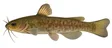
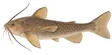
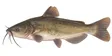
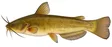
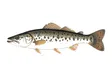
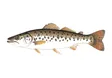
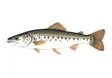
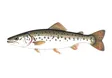
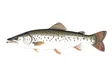
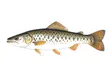
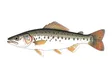
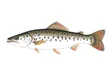
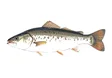
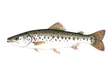
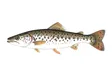
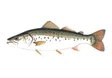
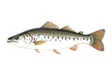
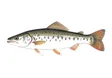
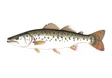
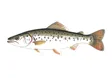
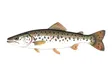
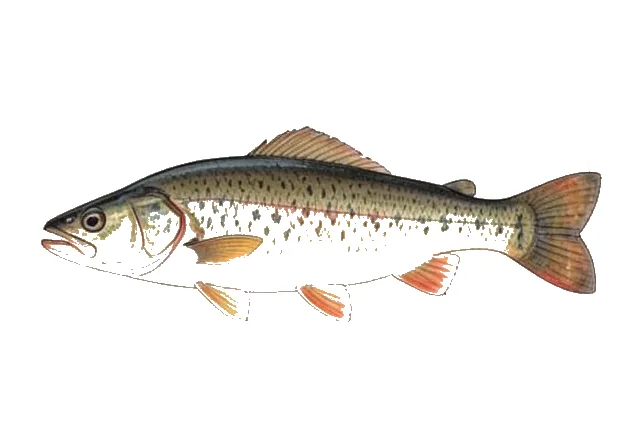
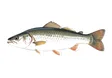
Brown Bullhead field guide illustration

About Brown Bullhead

The brown bullhead (Ameiurus nebulosus) is a fish of the family Ictaluridae that is widely distributed in North America. It is a species of bullhead catfish and is similar to the black bullhead (Ameiurus melas) and yellow bullhead (Ameiurus natalis). It was originally described as Pimelodus nebulosus by Charles Alexandre Lesueur in 1819, and is also referred to as Ictalurus nebulosus.

The brown bullhead is also widely known as the "mud pout", "horned pout", "hornpout", or simply "mud cat", a name also used with the other bullhead species.

The brown bullhead is important as a clan symbol of the Ojibwe people. In their tradition, the bullhead or wawaazisii is one of six beings that came out of the sea to form the original clans.

Appearance

The brown bullhead grows to be approximately 21 inches (53 cm) in length and is a darker brown-green dorsally, growing lighter green and yellow towards the ventral surface. The belly is off-white or cream, and the fish has no scales. Additionally, there are darker, brown-black speckles along the entire surface of the fish. The brown bullhead has a dorsal fin that bears a spine, a single adipose fin posterior to the dorsal fin, abdominal pelvic fins, and an anal fin with 21 to 24 rays. The tail is only slightly notched, with the dorsal and ventral lobes angling inward. The pectoral fins have spines that bear five to eight serrated teeth on their posterior edge. The fish has eight barbels around its mouth. The barbels on the chin are black to yellowish brown. Juvenile brown bullheads are similar in appearance, but are more likely to be of a single solid color.

The brown bullhead's mouth is terminal or slightly subterminal, with the upper jaw projecting slightly past the lower jaw. This position enables bottom feeding. The brown bullhead may be distinguished from flathead catfish (Pylodictis olivaris) by the absence of lateral posterior extensions on the tooth patch of the brown bullhead's upper jaw. Adult brown bullheads range in size from 200 to 500 mm (7.9 to 19.7 in) and weigh between 0.5 kg (1.1 lb) and 3.6 kg (7.9 lb) (in extreme cases). Brown bullheads are ectothermic, heterothermic, and bilaterally symmetrical. Brown bullheads can be distinguished from black and yellow bullheads by their yellow-black chin barbels, the absence of a hypopigmented bar at the base of the tail (which is present in black bullheads), and their 21–24 anal fin rays.

Distribution

The native range of the brown bullhead is in the Atlantic and Gulf Slope drainages. More specifically, it is found from Nova Scotia and New Brunswick to Mobile Bay, Alabama, and in the Great Lakes, Hudson Bay, and Mississippi River basins (from Quebec to Saskatchewan, south to Louisiana, and west to Texas). However, there is evidence that the brown bullhead was historically absent from the Gulf Coast west of the Apalachicola River and east of the Mississippi River. The species is also abundant in many regions as a result of stocking for food or sport. These locations include Georgia, Alabama, Arizona, Arkansas, California, Colorado, Hawaii, Idaho, Kansas, Kentucky, Louisiana, Maine, Missouri, Nebraska, Nevada, New Hampshire, New Mexico, Ohio, Oklahoma, Oregon, Virginia, and Washington. Brown bullheads are a social non-migratory species that are known to form schools.

Habitat

The brown bullhead thrives in a variety of habitats, including lakes, ponds, and slow-moving streams with low oxygen or muddy conditions. In many areas of the United States, brown bullheads are opportunistic bottom feeders. The species has few natural predators and is not popular with anglers in most areas (albeit very popular in some such as the Oneida Lake area of Upstate New York, where it is featured each spring by local restaurants), so it has thrived. Catfish are found in a variety of habitats, from lakes or murky ponds to drainage ditches. They are scarce during the day, but come out at night to feed, searching the bottom of a lake or river for food. They eat insects, leeches, snails, fish, clams, and many plants. They are also known to eat corn, which can be used as bait. Similarly to other catfish, they spawn only after the temperature of the water has reached 80 °F (27 °C) in June and July. However, cooler temperatures are required before brown bullheads will spawn in the northern US.

Brown bullheads can withstand a wide range of water temperatures and low oxygen levels. Brown bullheads can survive waters with heavy pollution and dissolved oxygen values as low as 0.2 ppm. Because of bullheads' tolerance of low oxygen levels, they are less threatened by winterkill and are capable of surviving in relatively extreme environments.

Fishing

This catfish is easily caught with natural bait such as worms and chicken livers. They have a scrappy but not unusually strong fight. Anglers often catch them by fishing off the bottom. When caught in very clear water when the flesh is firm and reddish to pinkish, the hornpout is quite edible and delicious. Nevertheless, its genial cousins such as the channel catfish and the blue catfish are better known for their use as food. In most areas, they will not exceed two pounds in weight, with a current International Game Fish Association world record of 7 pounds 6 ounces (3.3 kg).

Life cycle and reproduction

Brown bullheads typically live between six and eight years, but have been recorded as old as fifteen in captivity. The species spawns between April and June. For the duration of each breeding season, females will be monogamous. There are no consistent behaviors of mate attraction. The females lay eggs in dark locations such as under rocks and inside logs, where they are externally fertilized by the male. The fish face opposite one another during the fertilization process. Nests are primarily created by females, but the eggs are protected by both sexes. An egg cluster in a nest may contain between 50 and 10,000 eggs. The eggs usually take six days to hatch, but may take up to 13 days. Both parents generally care for their offspring for an additional five days after the eggs hatch. The young are kept in a school by a parent for up to one month. They will remain in schools as juveniles.

Brown bullheads, both male and female, will reach sexual maturity around age three. Brown bullheads have occasionally been recorded eating their own eggs.

As an invasive species

The fish has been introduced into many European countries, such as Poland, Germany, Sweden, Norway, Finland, Romania, Estonia, Hungary, Serbia, and Croatia. Brown bullheads have also been introduced to western North America, Chile, Puerto Rico and New Zealand.

Countries who have reported adverse effects from the introduction of the brown bullhead species include Iran and Turkey.

Diet

Brown bullheads are omnivorous benthic bottom feeders. Their diet consists of algae, leeches, worms, mollusks, crustaceans, insects, crayfish, other smaller fish species and fish eggs. Brown bullheads are typically nocturnal feeders, but have been reported to feed diurnally. Bullheads have poor eyesight and are heavily reliant on their sensitive barbels to locate their food. The fish are omnivorous and will reportedly eat almost anything that fits in their mouth.

Predation

Brown bullheads are the most susceptible to predators in their developmental stages, primarily as eggs. They are prey to the following species: northern pike, muskellunge, largemouth bass, walleye, snapping turtles, water snakes, green herons, yellow perch, and sunfish. Additionally, brown bullheads are used for small-scale commercial fishing, recreational fishing, and more specifically for consumption and research. Predation by other fish and coexisting species is only a realistic threat to bullheads under four inches (10 cm), while the biggest threat to adult bullheads is humans. Brown bullheads have protective coloration to avoid predation. As a mode of physical defense against predators, bullhead species have a sharp spine on the leading edge of their dorsal and pectoral fins. To use this adaptation as a defense mechanism, bullheads will stiffen the spine while being attacked, impeding the predator's ability to swallow while simultaneously releasing a venom to sting and burn the predator.

Conservation

Brown bullheads hold no special status on the International Union for Conservation of Nature and Natural Resources, the United States Endangered Species Program, or under the CITES appendix. Brown bullheads can tolerate very low dissolved oxygen levels that result from industrial and domestic pollution, aiding in their overall high rate of survivorship. Brown bullheads are the most abundant species in many lakes and streams across the continent.

In Missouri, the brown bullhead is listed as a Species of Conservation Concern and is threatened by habitat destruction, particularly the drainage of swamps in the Missouri Bootheel for conversion into farmland.

Transmissible cancer

In 2026, a clonally transmissible form of melanoma was identified among brown bullheads in Lake Memphramagog.

Article text: Wikipedia contributors, Brown bullhead (source revision). Licensed under CC BY-SA 4.0. Retrieved 2026-10-11.
Diet and feeding

The FishTraits compilation records these diet categories for this species: algae or phytoplankton; aquatic or other vascular plants; detritus or unidentified plant material; invertebrates or larval fish; larger animal prey (a source category covering fish, crayfish, crabs, or frogs); fish or frog eggs. These are broad categories, not a claim that every individual consumes every example in a category.

Reported feeding positions include bottom feeding. The compilation combines published observations; diets can vary with age, locality, and available food.

Habitat preferences

Reported habitat associations include medium to large rivers, streams and small rivers, creeks, still-water habitats.

The source records associations with muck, clay or silt, sand, gravel, vegetation. An association indicates reported use, rather than an exclusive requirement.

Reproduction and parental care

The compilation reports a representative maturity age of 2.5 years. Its maturity field summarizes mean, median, or modal estimates, usually for females; male estimates can be used when female data are unavailable. It is not a fixed age at which every fish first breeds.

Batch or serial spawning has been reported somewhere in the species’ range. This does not establish the same spawning pattern for every population.

Recorded spawning months are Apr, May for the source’s reporting region (NC). This is a regional calendar, not a range-wide schedule.

The reproductive-guild classification includes guarding eggs or young at a spawning substrate or nest.

Size and recorded longevity

FishTraits reports a maximum total length of 55 centimetres. Some entries use an estimated asymptotic length; this value should not be treated as a certified record catch.

Recorded longevity in the compilation is 11 years. Wild observations were preferred, but captive records were accepted where wild records were unavailable, and unspecified records were assumed wild. The value is not a guaranteed wild lifespan or an aquarium life expectancy.

Identification and appearance

Brown Bullhead is superficially similar to both Yellow Bullhead (A. natalis) and Black Bullhead (A. melas). Brown Bullhead can be distinguished from Yellow Bullhead by the presence of dark colored chin barbels (vs. white or yellow barbels), a slightly notched caudal fin margin (vs. straight caudal fin margin), and a rounded, short anal fin with 22-23 fin rays (vs. mostly straight anal fin with 24-27 rays). Brown Bullhead can be distinguished from Black Bullhead by the presence of 5-8 large saw-like teeth on the rear of the pectoral spine (vs. teeth absent), strong brown/black mottling or spotting present (vs. a uniform color with no mottling on body), barbel at the corner of the mouth reaching past the base of the pectoral fin (vs. not reaching to pectoral fin base).

Native range

Atlantic and Gulf Slope drainages from Nova Scotia and New Brunswick to Mobile Bay, Alabama, and St. Lawrence-Great Lakes, Hudson Bay, and Mississippi River basins from Quebec west to southeastern Saskatchewan, and south to Louisiana (Page and Burr 1991). This species may have been originally absent from all or part of the Gulf Coast west of the Apalachicola and east of the Mississippi River (Gilbert, personal communication). This speculation is based on the very spotted distribution of the species both in panhandle Florida and Alabama and the fact that it appears to be largely confined to reservoirs in Alabama. In its native range in peninsular Florida it is found primarily in larger bodies of water; whereas, on the Atlantic Slope in Florida, this species is found in both streams and sloughs (Gilbert, personal communication).

Introduction history

Intentionally stocked for food and sport. Pflieger (1997) suspected that Brown Bullheads observed in Truman Reservoir, Missouri, may have spread from populations introduced into upstream sites in Kansas.

Ecological impacts

Nonnative predators, including Brown Bullhead, have been shown to reduce the abundance and diversity of native prey species in several Pacific Northwest rivers (Hughes and Herlihy 2012).

Record fish

State records in 6 states

  • Florida7.02 lb

    Lake Iola · Pasco County · 2/12/2014 · Richard A. Clinton

  • Georgia5 lb, 8 oz

    O.F. Veal Pond · May 22, 1978 · James W. Andrews

  • Alabama4 lbs 3 oz

    Private Pond, Lee. Co. · 5/7/2019 · Collin Burney, Auburn

  • Wisconsin4 lbs. 2 oz.

    Little Green Lake · Green Lake · 07/07/2006

  • Arkansas3 lbs., 9 oz.

    Lower White Oak Lake · 02/09/2024 · Angela Dixon, Chidester, AR · rod and reel

  • Minnesota3 lb 9 oz

    North Long Lake · Crow Wing · 2/20/2026 · Jonathon Johnson

Each figure is the state agency’s own certified record. The site holds record tables for 11 states so far, so a state missing here has not been read yet. It is not a state where this fish holds no record.

Range

Where it lives

Share of 36,147 GBIF observation records with a state location, across 44 states. The orange dots are USGS stream-survey sites where this species was caught.
0%
47.1%
Share of 36,147 GBIF observation records with a state location, across 44 states. The orange dots are USGS stream-survey sites where this species was caught.

A blank area on the dot layer usually means nobody sampled there, not that the fish is absent. Turn on “every survey site” to see where the survey looked.

The USGS stream survey caught it at 1,500 of its sites, in 35 states. That survey and the GBIF records are two different counts of two different things, so the site keeps them apart.

Habitat

Water and movement

Water
WoRMS records this species in fresh water.
USGS NAS habitat
Freshwater
US status
Native transplant — native to part of the United States, moved to other waters inside it.
Migration
Undetermined
Pattern
Disagreement
4 published references do not agree on the pattern: Non-migratory, Potamodromous. The site shows every assignment rather than picking one.

Classification

Taxonomy

Kingdom
Animalia
Phylum
Chordata
Superclass
Actinopterygii
Class
Teleostei
Order
Siluriformes
Genus
Ameiurus
Species
Ameiurus nebulosus
ITIS TSN
164043
WoRMS AphiaID
154370
GBIF key
2340989
Outside the US
ITIS also files it in Canada, Caribbean Territories.

Common questions about Brown Bullhead

What is the scientific name of Brown Bullhead?
The scientific name is Ameiurus nebulosus, in the family Ictaluridae. Classification follows ITIS.
Does Brown Bullhead live in fresh water or salt water?
WoRMS records this species in fresh water.
Where has Brown Bullhead been recorded in the United States?
GBIF has observations in 44 states, with the most records in Pennsylvania, Minnesota, New York. The map shows observation records, which do not establish the complete natural range.

Closest relatives

Other Ameiurus species

Same family

More Ictaluridae

Black Bullhead46 states
Ameiurus melasIctaluridaeNative and introducedFresh
Black Madtom5 states
Noturus funebrisIctaluridaeNativeFresh
Black River Madtom2 states
Noturus maydeniIctaluridaeNativeFresh
Blue Catfish31 states
Ictalurus furcatusIctaluridaeNative and introducedFreshBrackish
Brindled Madtom16 states
Noturus miurusIctaluridaeNativeFresh
Brown Madtom6 states
Noturus phaeusIctaluridaeNativeFresh
Caddo Madtom1 states
Noturus tayloriIctaluridaeNativeFresh
Carolina Madtom2 states
Noturus furiosusIctaluridaeNativeFresh
Channel Catfish47 states
Ictalurus punctatusIctaluridaeNative and introducedFresh
Checkered Madtom3 states
Noturus flavaterIctaluridaeNativeFresh
Chucky Madtom1 states
Noturus crypticusIctaluridaeNativeFresh
Elegant Madtom4 states
Noturus elegansIctaluridaeNativeFresh
Flat Bullhead7 states
Ameiurus platycephalusIctaluridaeNative and introducedFresh
Flathead Catfish34 states
Pylodictis olivarisIctaluridaeNative and introducedFresh
Frecklebelly Madtom5 states
Noturus munitusIctaluridaeNativeFresh
Freckled Madtom15 states
Noturus nocturnusIctaluridaeNativeFresh
Headwater Catfish2 states
Ictalurus lupusIctaluridaeNativeFresh
Least Madtom4 states
Noturus hildebrandiIctaluridaeNativeFresh
Margined Madtom21 states
Noturus insignisIctaluridaeNative and introducedFresh
Mountain Madtom15 states
Noturus eleutherusIctaluridaeNativeFresh
Neosho Madtom3 states
Noturus placidusIctaluridaeNativeFresh
Northern Madtom9 states
Noturus stigmosusIctaluridaeNativeFresh
Orangefin Madtom3 states
Noturus gilbertiIctaluridaeNative and introducedFresh
Ouachita Madtom1 states
Noturus lachneriIctaluridaeNativeFresh

All 42 species in Ictaluridae