Black Bullhead

Ameiurus melas

Ictaluridae · freshwater water fish

10 minute read · Species guide

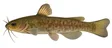
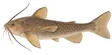
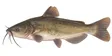
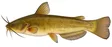
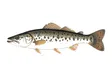
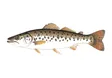
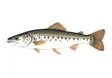
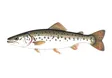
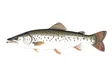
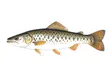
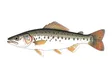
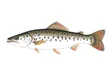
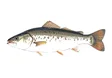
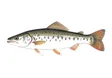
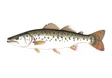
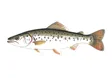
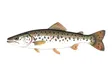
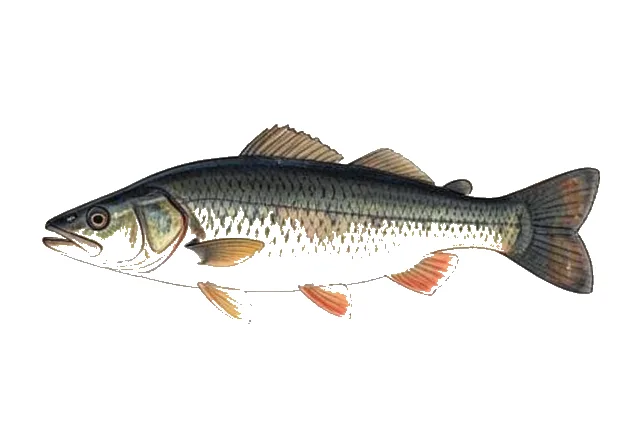
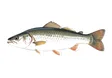
Black Bullhead field guide illustration

About Black Bullhead

The black bullhead or black bullhead catfish (Ameiurus melas) is a species of bullhead catfish. Like other bullhead catfish, it has the ability to thrive in waters that are low in oxygen, brackish, turbid, and/or very warm. It also has barbels located near its mouth, a broad head, spiny fins, and no scales. It can be identified from other bullheads as the barbels are black, and it has a tan crescent around the tail. Its caudal fin is truncated (squared off at the corners). Like virtually all catfish, it is nocturnal, preferring to feed at night, although young feed during the day. It generally does not get as large as the channel or blue catfish, with average adult weights are in the 1-to-2-pound (0.45 to 0.91 kg) range, and almost never as large as 4 pounds (1.8 kg). It has a typical length of 6–14 inches (15–36 cm), with the largest specimen being 24 inches (61 cm), making it the largest of the bullheads. It is typically black or dark brown on the dorsal side of its body and yellow or white on the ventral side.

Description

Like most of the bullheads and flathead catfish, the black bullhead has a squared tail fin, in contrast to the forked tail of channel and blue catfish. It is a bottom-rover fish, meaning it is well-adapted for bottom living. It is typically dorsoventrally flattened, and has a slightly humped back. Its color depends on the area where it is taken, but it generally is darker than brown or yellow bullheads (A. nebulosus and A. natalis, respectively). It can be distinguished from the flathead catfish (Pylodictis olivaris) by the fact that the black bullhead's lower lip does not protrude past the upper lip. Distinguishing it from the brown bullhead is a bit more difficult, depending on the area where it is caught, but a distinguishing detail between the two includes weak serration on the pectoral spine of the black bullhead, while the brown's corresponding spine is more strongly barbed. The anal fin of the black bullhead also has a gray base, and its caudal fin often has a pale bar at its base. The brown bullhead is also typically mottled brown and gray-green dorsally, instead of the darker black. Both the black and brown bullheads can easily be distinguished from the yellow bullhead by the color of the barbels on their chin: the yellow bullhead has white barbels under its mouth. Black bullhead are typically 165–229 millimetres (6.5–9.0 in) long.

At the base of their pectoral and dorsal fins are spines, which they can use as spurs to cut predators.

Habitat and distribution

Black bullheads are native to the Mississippi and Ohio river basins and are widespread throughout the central and southern United States. They are largely absent from the Atlantic coastal drainages of the eastern US. They typically inhabit stagnant or slow-moving waters with soft bottoms, such as lakes, ponds, oxbows, and low-gradient streams. They have been known to congregate in confined spaces, such as lake outlets or under dams.

They are very tolerant fish, and are able to live in muddy water, with warmer temperatures and in water with lower levels of oxygen, which reduce competition from other fish. They are consistently more tolerant of high water silting, water pollution, and warm water temperatures than other bullhead species.

Introduced range

Black bullheads occur as an invasive species in large parts of Europe. Due to the significant negative impacts of its introduction to the ecosystem, the European Union has included it in the list of invasive alien species of Union concern and hence cannot be imported, bred, transported, commercialized, or intentionally released into the environment in any of its member states.

In the United Kingdom, the species has been eradicated by use of rotenone biocide. It was only found in one place, Lake Meadows, Billericay, Essex, and they grew to a maximum weight of 1.19 pounds (.539 kg).

Ecology

Black bullhead are gregarious fish and typically forage and move in schools. They remain inactive within beds of vegetation by day, and forage mainly at night.

Diet

Black bullheads are omnivorous, so they eat almost anything, from grains and other plant matter to insects, dead or living fish, and crustaceans. Midge larvae and other young insects are the primary diet for adult bullheads. Black bullheads have been known to eat small fish and fish eggs as well. They have short, pointed, conical teeth, formed in multiple rows called cardiform teeth. Black bullheads have no scales; instead, they have about 100,000 taste receptors placed all over their bodies. Many of these are located on the barbels near their mouths. The receptors help the fish to identify food in their dark habitats. During the winter, black bullheads decrease food intake, and may stop eating altogether. Instead, they bury themselves around the shore line of the lake in debris, with only their gills exposed. This "hibernation" allows them to survive conditions of low oxygen and low temperature.

Reproduction

Black bullheads start to spawn in April and continue through June. In Wisconsin and similar latitudes, spawning has been recorded as late as early August.

During mating, the females scoop out a small hole or depression in mud or sand, typically at a depth between 0.6–1.2 metres (2.0–3.9 ft) under the surface and beneath shelter such as vegetation, woody debris, or overhanging banks. They may also be made within muskrat burrows. Eggs are laid in a gelatinous mass and guarded by both parents, which periodically fan and stir the spawn with their tails and fins. Incubation time is dependent on the water temperature, and typically takes place over five to ten days.

After hatching, young bullhead retain external yolk sacs and remain within the nest. After the fry have fully absorbed their yolk sacs and rise from the substrate, they remain in a compact cloud-like school. The parents continue to follow them at first, and circle around the school to keep it compact. The parents abandon their offspring when they reach around 25 millimetres (0.98 in) of length, at which point the fry typically move into shallower water. As juveniles, the diet of black bullheads consists primarily of very small aquatic invertebrates, such as cladocerans and midge larvae.

Angling

Considered rough fish, black bullheads are not as popular for sport fishing as their larger relatives, channel catfish, blue catfish, and flat head catfish. However, they have pale flesh and make excellent table fare when water quality is good despite their small size. As with channel catfish, the flesh around the bellies and gills of larger individuals can be strong tasting due to yellow fat, but these flavors can be avoided by removing the fatty portions of a large specimen when cleaning. They are the largest of the bullheads and are one of several catfish informally referred to as mud catfish.

They have been introduced in many areas of the US because of their ability to survive (and even thrive) in less than ideal conditions, but they are seldom used in active stocking programs due to their relatively low desirability. Fisheries experts tend to not recommend them because they compete with bluegill and channel catfish for food and do not grow as fast or get as big as channel catfish. For that reason, finding them commercially for pond stocking is difficult. That said, in clean water, meat quality is very good, and unlike channel catfish, black bullheads reproduce and indefinitely maintain healthy populations without restocking in ponds populated with bass and crappie. In fact, as with bluegill, a pond with black bullhead in it needs a predator species such as bass to keep the bullhead population under control. Due to their ability to reproduce in a pond with bass, bullheads are the best catfish for mixed-species ponds that are not fished out and restocked regularly.

Black bullheads can be caught using similar techniques as for channel or blue catfish, although their small size may require smaller bait and hooks. They respond well to earthworms and tend to feed higher up in the water column than channel catfish. Like most catfish, they are most active at night, and tend to be less active during the day, bedding under piers or in shady shore areas.

In some areas of little to no fishing pressure, black bullheads have been found to be more aggressive and have been caught while casting and retrieving metal spoon lures.

Article text: Wikipedia contributors, Black bullhead (source revision). Licensed under CC BY-SA 4.0. Retrieved 2026-10-11.
Diet and feeding

The FishTraits compilation records these diet categories for this species: algae or phytoplankton; aquatic or other vascular plants; detritus or unidentified plant material; invertebrates or larval fish; larger animal prey (a source category covering fish, crayfish, crabs, or frogs). These are broad categories, not a claim that every individual consumes every example in a category.

Reported feeding positions include bottom feeding and surface or water-column feeding. The compilation combines published observations; diets can vary with age, locality, and available food.

Habitat preferences

Reported habitat associations include medium to large rivers, streams and small rivers, creeks, still-water habitats.

The source records associations with muck, vegetation, organic debris, large woody material. An association indicates reported use, rather than an exclusive requirement.

Reproduction and parental care

The compilation reports a representative maturity age of 2.5 years. Its maturity field summarizes mean, median, or modal estimates, usually for females; male estimates can be used when female data are unavailable. It is not a fixed age at which every fish first breeds.

Recorded spawning months are Apr, May, Jun for the source’s reporting region (NC). This is a regional calendar, not a range-wide schedule.

The reproductive-guild classification includes guarding eggs or young at a spawning substrate or nest.

Size and recorded longevity

FishTraits reports a maximum total length of 66 centimetres. Some entries use an estimated asymptotic length; this value should not be treated as a certified record catch.

Recorded longevity in the compilation is 5.5 years. Wild observations were preferred, but captive records were accepted where wild records were unavailable, and unspecified records were assumed wild. The value is not a guaranteed wild lifespan or an aquarium life expectancy.

Identification and appearance

Black Bullhead is superficially similar to both Yellow Bullhead (A. natalis) and Brown Bullhead (A. nebulosus). Black Bullhead can be distinguished from Yellow Bullhead by the presence of dark colored chin barbels (vs. white or yellow barbels), a slightly notched caudal fin margin (vs. straight caudal fin margin), and a rounded, short anal fin with 19-23 fin rays (vs. mostly straight anal fin with 24-27 rays). Black Bullhead can be distinguished from Brown Bullhead by the lack of large saw-like teeth on the rear of the pectoral spine (vs. 5-8 teeth present), uniform color with no mottling on body (vs. brown/black mottling or spotting present), barbel at the corner of the mouth does not reach the pectoral fin (vs. reaching past pectoral fin base), and black fin membranes with contrasting pale fin rays in the anal and caudal fins (vs. low/no contrast between fin rays and membrane).

Native range

Great Lakes, Hudson Bay, and Mississippi River basins from New York to southern Saskatchewan and Montana, south to Gulf; Gulf Slope drainages from Mobile Bay, Georgia and Alabama, to northern Mexico. Apparently not native to Atlantic Slope (Page and Burr 1991).

Introduction history

Intentionally stocked for sport and as a food fish. In Idaho, it was probably accidentally stocked with brown bullhead A. nebulosus or with channel catfish Ictalurus punctatus (Linder 1963).

Ecological impacts

Introduced Black Bullhead eat endangered humpback chubs Gila cypha in the Little Colorado River, and may exert a major negative effect on the population there (Marsh and Douglas 1997). Minckley (1973) reported that this species is generally considered a pest in Arizona as it forms large stunted populations that compete with more desirable fishes for space and food. Black Bullheads are voracious predators of newly hatched gamefish (Whitmore 1997). Introduced predatory fishes, including the Black Bullhead, are likely at least partially responsible for the decline of the Chiricahua leopard frog Rana chiricahuensis in southeastern Arizona (Rosen et al. 1995), and have been shown to reduce the abundance and diversity of native prey species in several Pacific Northwest rivers (Hughes and Herlihy 2012).

Record fish

State records in 6 states

  • Oklahoma6 lbs 13.00 ozs

    Jackson Co. Pond · 05/24/1984 · Gary Cole · rod and line

  • Wisconsin5 lbs. 8 oz.

    Big Falls Flowage · Rusk · 09/02/1989

  • Arkansas4 lbs., 12 oz.

    Point Remove Creek · 04/11/1986 · Janet Story, Morrilton, AR · rod and reel

  • Minnesota3 lb 13 oz

    Reno Lake · Pope · 6/8/1997

  • Utah3 lbs. 4 oz.

    Cutler Reservoir · 1999 · Jack Gilgen

  • Montana2.60 lbs.

    Smiley Slough · 6/2/09 · Birrell

Each figure is the state agency’s own certified record. The site holds record tables for 11 states so far, so a state missing here has not been read yet. It is not a state where this fish holds no record.

Range

Where it lives

Share of 22,933 GBIF observation records with a state location, across 46 states. The orange dots are USGS stream-survey sites where this species was caught.
0%
41.9%
Share of 22,933 GBIF observation records with a state location, across 46 states. The orange dots are USGS stream-survey sites where this species was caught.

A blank area on the dot layer usually means nobody sampled there, not that the fish is absent. Turn on “every survey site” to see where the survey looked.

The USGS stream survey caught it at 2,411 of its sites, in 39 states. That survey and the GBIF records are two different counts of two different things, so the site keeps them apart.

Habitat

Water and movement

Water
WoRMS records this species in fresh water.
USGS NAS habitat
Freshwater
US status
Native transplant — native to part of the United States, moved to other waters inside it.
Migration
Migratory
Pattern
Disagreement
2 published references do not agree on the pattern: Amphidromous, Potamodromous. The site shows every assignment rather than picking one.

Classification

Taxonomy

Kingdom
Animalia
Phylum
Chordata
Superclass
Actinopterygii
Class
Teleostei
Order
Siluriformes
Genus
Ameiurus
Species
Ameiurus melas
ITIS TSN
164039
WoRMS AphiaID
154205
GBIF key
2340977
Outside the US
ITIS also files it in Canada, Caribbean Territories, Mexico.

Common questions about Black Bullhead

What is the scientific name of Black Bullhead?
The scientific name is Ameiurus melas, in the family Ictaluridae. Classification follows ITIS.
Does Black Bullhead live in fresh water or salt water?
WoRMS records this species in fresh water.
Where has Black Bullhead been recorded in the United States?
GBIF has observations in 46 states, with the most records in Minnesota, Texas, Oklahoma. The map shows observation records, which do not establish the complete natural range.

Closest relatives

Other Ameiurus species

Same family

More Ictaluridae

Black Madtom5 states
Noturus funebrisIctaluridaeNativeFresh
Black River Madtom2 states
Noturus maydeniIctaluridaeNativeFresh
Blue Catfish31 states
Ictalurus furcatusIctaluridaeNative and introducedFreshBrackish
Brindled Madtom16 states
Noturus miurusIctaluridaeNativeFresh
Brown Bullhead44 states
Ameiurus nebulosusIctaluridaeNative and introducedFresh
Brown Madtom6 states
Noturus phaeusIctaluridaeNativeFresh
Caddo Madtom1 states
Noturus tayloriIctaluridaeNativeFresh
Carolina Madtom2 states
Noturus furiosusIctaluridaeNativeFresh
Channel Catfish47 states
Ictalurus punctatusIctaluridaeNative and introducedFresh
Checkered Madtom3 states
Noturus flavaterIctaluridaeNativeFresh
Chucky Madtom1 states
Noturus crypticusIctaluridaeNativeFresh
Elegant Madtom4 states
Noturus elegansIctaluridaeNativeFresh
Flat Bullhead7 states
Ameiurus platycephalusIctaluridaeNative and introducedFresh
Flathead Catfish34 states
Pylodictis olivarisIctaluridaeNative and introducedFresh
Frecklebelly Madtom5 states
Noturus munitusIctaluridaeNativeFresh
Freckled Madtom15 states
Noturus nocturnusIctaluridaeNativeFresh
Headwater Catfish2 states
Ictalurus lupusIctaluridaeNativeFresh
Least Madtom4 states
Noturus hildebrandiIctaluridaeNativeFresh
Margined Madtom21 states
Noturus insignisIctaluridaeNative and introducedFresh
Mountain Madtom15 states
Noturus eleutherusIctaluridaeNativeFresh
Neosho Madtom3 states
Noturus placidusIctaluridaeNativeFresh
Northern Madtom9 states
Noturus stigmosusIctaluridaeNativeFresh
Orangefin Madtom3 states
Noturus gilbertiIctaluridaeNative and introducedFresh
Ouachita Madtom1 states
Noturus lachneriIctaluridaeNativeFresh

All 42 species in Ictaluridae