Elegant Madtom

Noturus elegans

Ictaluridae · freshwater water fish

5 minute read · Species guide

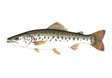
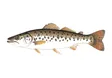
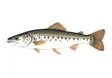
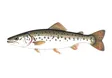
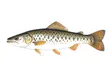
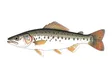
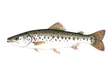
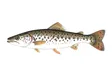
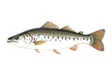
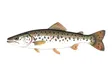
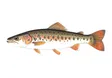
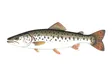
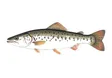
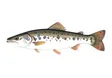
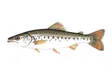
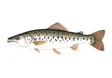
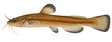
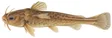
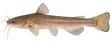
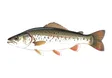
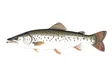
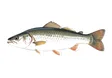
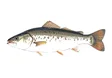
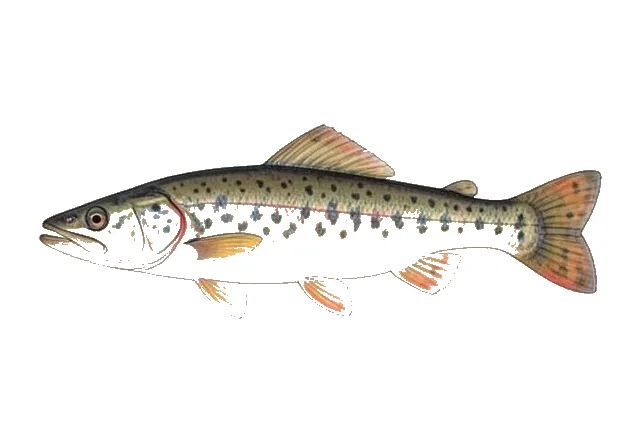
Elegant Madtom field guide illustration

About Elegant Madtom

The elegant madtom (Noturus elegans) is a fish native to Tennessee, Alabama, and Kentucky, and is one of twenty-nine species of madtom. It prefers to live in small rivers and gravel-bottomed creeks. The average lifespan of the elegant madtom is two years.

The elegant madtom is not listed on any federal or state conservation lists. However, scientists who have done surveys on the fish have recommended that it should be listed as threatened.

Classification

Until the 1990s and early 2000, Noturus crypticus and Noturus fasciatus were thought to be the same species as Noturus elegans. However, they are now considered distinct species. The chucky madtom, N. crypticus, is the only one of the three currently listed as severely threatened.

Geographic distribution

The elegant madtom is found primarily in Tennessee and northern Alabama, in the upper and lower portions of the Tennessee River, and also in the Roaring River, the Green River drainage, Dunn Creek, Tennessee, and in Piney Creek, Paint Rock River, and Flint River, Alabama. It can be found in lower north-central Tennessee rivers, such as at Little Chucky Creek in Greene County. The elegant madtom was also found in central Kentucky, in the Green River drainage. Its status in Alabama is unknown. N. exilis was misidentified in 1996 at Bear Creek, Alabama, as N. elegans. This mis-identification could be a reason for a small decrease in the overall population size. According to surveys there are very low numbers of the elegant madtom in the middle and upper Tennessee River drainage. The survey reports that these low populations could be due to the lack of available nesting sites, as it prefers habitats with riffles and rocks to nest under. However, the elegant madtom is common in the Green River and lower rivers in Tennessee that are close to Alabama.

Ecology

The elegant madtom from immaturity to adulthood is an invertivore, which means it feeds on invertebrates. It is only common in a few places, and faces predation from larger fish such as the largemouth bass and catfish. However, the elegant madtom does have a defense in its venom delivery system, a venom delivery gland in its pectoral and dorsal spines to deter potential predators or competitors. Competitors for invertebrate food sources include salamanders, lizards, and some snakes.

The elegant madtom prefers to live in small rivers and gravel-bottomed creeks, with only minor ripples in the stream, and can be found most commonly underneath large rocks. There is little known about what abiotic factors influence where the elegant madtom will decide to nest. From investigation of a sister species in the same genus, Noturus baileyi, which lives in a similar habitat, it has been posited that the elegant madtom will prefer a pH of 6.2 to 7, and a temperature of 14.0 to 22.0 °C (57.2 to 71.6 °F). Dams, uplands habitats and waterfalls cause barriers for the elegant madtom. Human activity in flooding a river or changing its structure can ruin the habitat of the elegant madtom, which prefers shallow slow-moving freshwater. Dams can also affect the distribution of the species, isolating them and limiting their ability to change habitats or mate. The release of toxic chemicals or invasive fish into the stream can destroy small populations.

Reproductive cycle

Approximately a year after emerging from its egg, the elegant madtom will reach sexual maturity. Then, after this year of growth, a member of Noturus elegans will find a mate and make a nest beneath a rock in a river or stream. Rocks are very important for the elegant madtom, because without this substrate to lay their eggs under, they will not have the ability to make an effective nest that they can protect. The average brood size for the elegant madtom is 50 eggs. Not much is known about when or how often the elegant madtom mates. It has been estimated, again from data on sister species Noturus baileyi, that mating takes place once a year in the months of May to August. The average lifespan for the elegant madtom is two years.

Current management

The elegant madtom is not listed on the endangered or threatened federal or state lists. Scientists who have done surveys on the fish have recommended that it should be listed as threatened.

Article text: Wikipedia contributors, Elegant madtom (source revision). Licensed under CC BY-SA 4.0. Retrieved 2026-10-11.
Diet and feeding

The FishTraits compilation records these diet categories for this species: invertebrates or larval fish. These are broad categories, not a claim that every individual consumes every example in a category.

Reported feeding positions include bottom feeding. The compilation combines published observations; diets can vary with age, locality, and available food.

Habitat preferences

Reported habitat associations include streams and small rivers, creeks.

The source records associations with sand, gravel, cobble, bedrock. An association indicates reported use, rather than an exclusive requirement.

Reproduction and parental care

The compilation reports a representative maturity age of 1 years. Its maturity field summarizes mean, median, or modal estimates, usually for females; male estimates can be used when female data are unavailable. It is not a fixed age at which every fish first breeds.

Batch or serial spawning has been reported somewhere in the species’ range. This does not establish the same spawning pattern for every population.

Recorded spawning months are Jun, Jul for the source’s reporting region (TN). This is a regional calendar, not a range-wide schedule.

The reproductive-guild classification includes guarding eggs or young at a spawning substrate or nest.

Size and recorded longevity

FishTraits reports a maximum total length of 8.9 centimetres. Some entries use an estimated asymptotic length; this value should not be treated as a certified record catch.

Recorded longevity in the compilation is 2 years. Wild observations were preferred, but captive records were accepted where wild records were unavailable, and unspecified records were assumed wild. The value is not a guaranteed wild lifespan or an aquarium life expectancy.

Range

Where it lives

Share of 291 GBIF observation records with a state location, across 4 states. The orange dots are USGS stream-survey sites where this species was caught.
0%
72.5%
Share of 291 GBIF observation records with a state location, across 4 states. The orange dots are USGS stream-survey sites where this species was caught.

A blank area on the dot layer usually means nobody sampled there, not that the fish is absent. Turn on “every survey site” to see where the survey looked.

The USGS stream survey caught it at 27 of its sites, in 2 states. That survey and the GBIF records are two different counts of two different things, so the site keeps them apart.

Habitat

Water and movement

Water
WoRMS records this species in fresh water.
Migration
Not migratory

Classification

Taxonomy

Kingdom
Animalia
Phylum
Chordata
Superclass
Actinopterygii
Class
Teleostei
Order
Siluriformes
Genus
Noturus
Species
Noturus elegans
ITIS TSN
164008
WoRMS AphiaID
1013244
GBIF key
2341031

Common questions about Elegant Madtom

What is the scientific name of Elegant Madtom?
The scientific name is Noturus elegans, in the family Ictaluridae. Classification follows ITIS.
Does Elegant Madtom live in fresh water or salt water?
WoRMS records this species in fresh water.
Where has Elegant Madtom been recorded in the United States?
GBIF has observations in 4 states, with the most records in Kentucky, Tennessee, Alabama. The map shows observation records, which do not establish the complete natural range.

Closest relatives

Other Noturus species

Same family

More Ictaluridae

Black Bullhead46 states
Ameiurus melasIctaluridaeNative and introducedFresh
Black Madtom5 states
Noturus funebrisIctaluridaeNativeFresh
Black River Madtom2 states
Noturus maydeniIctaluridaeNativeFresh
Blue Catfish31 states
Ictalurus furcatusIctaluridaeNative and introducedFreshBrackish
Brindled Madtom16 states
Noturus miurusIctaluridaeNativeFresh
Brown Bullhead44 states
Ameiurus nebulosusIctaluridaeNative and introducedFresh
Brown Madtom6 states
Noturus phaeusIctaluridaeNativeFresh
Caddo Madtom1 states
Noturus tayloriIctaluridaeNativeFresh
Carolina Madtom2 states
Noturus furiosusIctaluridaeNativeFresh
Channel Catfish47 states
Ictalurus punctatusIctaluridaeNative and introducedFresh
Checkered Madtom3 states
Noturus flavaterIctaluridaeNativeFresh
Chucky Madtom1 states
Noturus crypticusIctaluridaeNativeFresh
Flat Bullhead7 states
Ameiurus platycephalusIctaluridaeNative and introducedFresh
Flathead Catfish34 states
Pylodictis olivarisIctaluridaeNative and introducedFresh
Frecklebelly Madtom5 states
Noturus munitusIctaluridaeNativeFresh
Freckled Madtom15 states
Noturus nocturnusIctaluridaeNativeFresh
Headwater Catfish2 states
Ictalurus lupusIctaluridaeNativeFresh
Least Madtom4 states
Noturus hildebrandiIctaluridaeNativeFresh
Margined Madtom21 states
Noturus insignisIctaluridaeNative and introducedFresh
Mountain Madtom15 states
Noturus eleutherusIctaluridaeNativeFresh
Neosho Madtom3 states
Noturus placidusIctaluridaeNativeFresh
Northern Madtom9 states
Noturus stigmosusIctaluridaeNativeFresh
Orangefin Madtom3 states
Noturus gilbertiIctaluridaeNative and introducedFresh
Ouachita Madtom1 states
Noturus lachneriIctaluridaeNativeFresh

All 42 species in Ictaluridae