Warmouth

Lepomis gulosus

Centrarchidae · freshwater water fish

6 minute read · Species guide

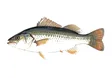
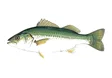
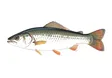
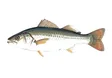
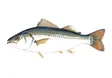
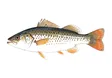
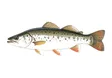
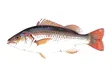
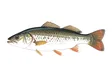
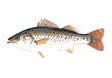
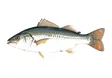
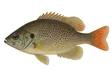
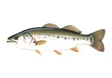
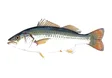
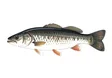
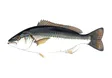
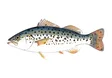
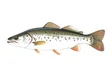
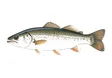
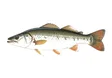
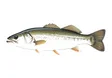
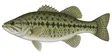
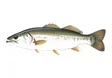
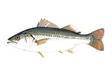
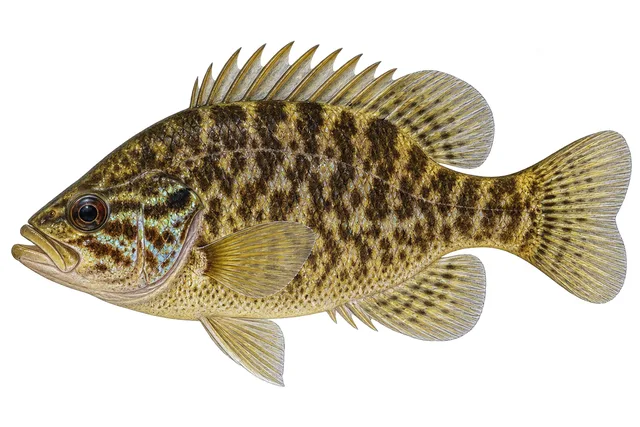
Warmouth field guide illustration

About Warmouth

The warmouth (Lepomis gulosus) is a freshwater fish of the sunfish family (Centrarchidae) that is found throughout the eastern United States. Other local names include molly, redeye, goggle-eye, red-eyed bream, and strawberry perch.

Description

Adult warmouth appear dusky, with a mottled brown, somewhat purplish coloration. The ventral surfaces are yellow, and the breeding male has a bright-orange spot at the base of the dorsal fin. Three to five reddish-brown streaks extend from the eyes, whose irises are reddish, a feature most pronounced in breeding males, with a red dot present on the otherwise black opercular flaps, outlined in yellow. It most commonly has three spines in the anal fin and 6 to 13 spines in the dorsal fin, with small teeth present on the tongue and palatine bones. These fish are typically 4 to 10 inches (10 to 25 centimetres) long, but can grow to over one foot (30 cm) in length, and reach 2.25 pounds (1.02 kg). The warmouth is occasionally confused with the rock bass (Ambloplites rupestris) or green sunfish (Lepomis cyanellus), both of which share its relatively large mouth and heavy body. However, the green sunfish generally has a greenish-blue vermiculate pattern on its cheeks, a black spot near the base of the dorsal and anal fins, fins that are bordered in yellowish-white and no teeth on the tongue. The rock bass has five or six spines in its anal fin as opposed to the three in the warmouth.

Distribution

Warmouth are found throughout much of the south in the Mississippi River drainage, from the Gulf and Atlantic coasts and northward to the Chesapeake Bay, and westward throughout Texas to the Rio Grande, and northward into the Great Lakes Basin area. The warmouth is a highly aggressive and hardy fish, and they can live in ponds, lakes, rivers, and backwater streams and can often survive in streams with low oxygen levels where other species of sunfish cannot. The species exists with breeding populations in southern portions of Canada, and likely has existed there for many years prior to being detected.

Ecology

The primary diet of the warmouth consists of insects, crayfish, and other fish. They are sight feeders, and can survive in polluted, low-oxygenated waters where other sunfish cannot, like rock bass. The largest factor affecting warmouth density and biomass in Florida's lakes is the availability of aquatic macrophytes, which allows the fish to ambush prey and use as areas to spawn. The primary diet of young warmouth is microcrustaceans and aquatic insect larvae, whereas larger specimens tend to mainly consume crayfish, freshwater shrimp, isopods, and other small fish. Their predators include larger fish, snakes, turtles, alligators, and birds. The primary habitats the warmouth occupies are areas with ample vegetation as cover with slower-moving water, often around stumps, brush piles, and other dense entanglements that allow the warmouth the ability to ambush prey, yet escape larger predators that may threaten them.

Life history

Spawning for the warmouth begins usually begins when water temperatures reach 21.1 °C (70.0 °F). Their spawning often begins in May and lasts until July. Nests are primarily constructed on rock or gravel substrates, usually located in or near to some type of structure in the water column. Unlike most other Lepomis species, the warmouth does not nest in a colony unless ideal nesting habitat is limited. When in breeding condition, the males' eyes turn red. After the female lays her eggs, the male fertilizes the eggs and aggressively defends the nest, eggs and fry from any intruder-including other females. Males are most commonly found defending the nest for up to five days later until the fry have hatched. Young warmouth spend most of their time hiding under benthic substrate available to avoid predators. Most are considered sexually mature after one year, but often the size of a fish indicates its maturity rather than time. Males usually grow faster than females. Different habitat conditions also reflect the lifespan of the warmouth, which varies from three to eight years.

The warmouth is an extremely adaptable species that can survive in many different conditions, in many river systems east of the Rocky Mountains. Often, the warmouth prefers habitats where there is slower-moving water. The most common cause of concern for the warmouth is hybridization with other Lepomis spp. that often inhabit the same areas as the warmouth. The species known to hybridize with it are the green sunfish (L. cyanellus) and the bluegill (L. macrochirus), as well as the largemouth bass (Micropterus salmoides) and the black crappie (Pomoxis nigromaculatus). This does not seem to affect the overall health or longevity of the species.

Since warmouths are not migratory fish, their populations should be relatively easily monitored throughout much of their existing ranges. According to Warren, there is no threat or current concern for the warmouth.

IGFA records

The International Game Fish Association (IGFA) all tackle world record for the species stands at 1.10 kg (2 lb 7 oz) caught in Holt, Florida, in 1985.

Article text: Wikipedia contributors, Warmouth (source revision). Licensed under CC BY-SA 4.0. Retrieved 2026-10-11.
Diet and feeding

The FishTraits compilation records these diet categories for this species: invertebrates or larval fish; larger animal prey (a source category covering fish, crayfish, crabs, or frogs). These are broad categories, not a claim that every individual consumes every example in a category.

Reported feeding positions include bottom feeding and surface or water-column feeding. The compilation combines published observations; diets can vary with age, locality, and available food.

Habitat preferences

Reported habitat associations include medium to large rivers, streams and small rivers, creeks, still-water habitats.

The source records associations with muck, clay or silt, vegetation, organic debris, large woody material. An association indicates reported use, rather than an exclusive requirement.

Reproduction and parental care

The compilation reports a representative maturity age of 1.5 years. Its maturity field summarizes mean, median, or modal estimates, usually for females; male estimates can be used when female data are unavailable. It is not a fixed age at which every fish first breeds.

Recorded spawning months are May, Jun, Jul, Aug for the source’s reporting region (NC). This is a regional calendar, not a range-wide schedule.

The reproductive-guild classification includes guarding eggs or young at a spawning substrate or nest.

Size and recorded longevity

FishTraits reports a maximum total length of 31 centimetres. Some entries use an estimated asymptotic length; this value should not be treated as a certified record catch.

Recorded longevity in the compilation is 8 years. Wild observations were preferred, but captive records were accepted where wild records were unavailable, and unspecified records were assumed wild. The value is not a guaranteed wild lifespan or an aquarium life expectancy.

Native range

Great Lakes and Mississippi River basins from western Pennsylvania to Minnesota, and south to the Gulf; Atlantic and Gulf slope drainages from Rappahannock River, Virginia, to the Rio Grande, Texas and New Mexico (Page and Burr 1991).

Introduction history

Intentional stocking for sportfishing in most locations. Presumably accidentally stocked in Arizona with either bluegills L. macrochirus or bass Micropterus sp. (Minckley 1973). Likely gained access to the Wolf and Fox systems in Wisconsin via the artificial Fox-Wisconsin Canal at Portage which connects the Mississippi and Great Lakes basins (Becker 1983). Introductions into eastern Wisconsin were probably from fish rescue operations in the 1870s to 1930s that transplanted stranded fish from the Mississippi River to other locations (Becker 1983).

Ecological impacts

Warmouth hybridize with other Lepomis species (Moyle 1976). Minckley (1973) described this fish as "pugnacious". Warmouth compete directly with other Lepomis species for macroinvertebrates (Madsen et al. 1994). Introduced predatory centrarchids are likely responsible for the decline of native ranid frogs in California and for the decline of California tiger salamander Ambystoma californiense populations (Hayes and Jennings 1986; Dill and Cordone 1997).

Record fish

State records in 6 states

  • Florida2.44 lb

    Yellow River · Okaloosa County · 10/19/1985 · Tony Dempsey

  • Private pond · May 4, 1974 · Carlton Robbins

  • Alabama1 lb 12 oz

    Farm Pond · 4/25/1986 · Jimmy A. Barfield, Dothan

  • Arkansas1 lb., 8 oz.

    Black Dog Bayou · 05/28/1998 · Michael Curtis, Pine Bluff, AR · rod and reel

  • Wisconsin1 lb. 1 oz.

    Eagle Lake · Racine · 05/26/2001

  • Idaho0.6 lb

    Snake River · 06/23/1988 · Marvin Stevens

Each figure is the state agency’s own certified record. The site holds record tables for 11 states so far, so a state missing here has not been read yet. It is not a state where this fish holds no record.

Range

Where it lives

Share of 25,692 GBIF observation records with a state location, across 34 states. The orange dots are USGS stream-survey sites where this species was caught.
0%
26.2%
Share of 25,692 GBIF observation records with a state location, across 34 states. The orange dots are USGS stream-survey sites where this species was caught.

A blank area on the dot layer usually means nobody sampled there, not that the fish is absent. Turn on “every survey site” to see where the survey looked.

The USGS stream survey caught it at 2,101 of its sites, in 26 states. That survey and the GBIF records are two different counts of two different things, so the site keeps them apart.

Habitat

Water and movement

Water
WoRMS records this species in fresh water.
USGS NAS habitat
Freshwater
US status
Native transplant — native to part of the United States, moved to other waters inside it.
Migration
Not migratory

Classification

Taxonomy

Kingdom
Animalia
Phylum
Chordata
Superclass
Actinopterygii
Class
Teleostei
Order
Perciformes
Genus
Lepomis
Species
Lepomis gulosus
ITIS TSN
168138
WoRMS AphiaID
1044805
GBIF key
2394507
Outside the US
ITIS also files it in Canada, Caribbean Territories, Mexico.

Common questions about Warmouth

What is the scientific name of Warmouth?
The scientific name is Lepomis gulosus, in the family Centrarchidae. Classification follows ITIS.
Does Warmouth live in fresh water or salt water?
WoRMS records this species in fresh water.
Where has Warmouth been recorded in the United States?
GBIF has observations in 34 states, with the most records in Florida, Texas, Georgia. The map shows observation records, which do not establish the complete natural range.

Closest relatives

Other Lepomis species

Same family

More Centrarchidae

Alabama Bass11 states
Micropterus henshalliCentrarchidaeNative and introducedFresh
Banded Sunfish15 states
Enneacanthus obesusCentrarchidaeNativeFresh
Bantam Sunfish12 states
Lepomis symmetricusCentrarchidaeNativeFresh
Black Crappie49 states
Pomoxis nigromaculatusCentrarchidaeNative and introducedFresh
Blackbanded Sunfish8 states
Enneacanthus chaetodonCentrarchidaeNativeFresh
Bluegill49 states
Lepomis macrochirusCentrarchidaeNative and introducedFresh
Bluespotted Sunfish14 states
Enneacanthus gloriosusCentrarchidaeNative and introducedFresh
Cahaba Bass1 states
Micropterus cahabaeCentrarchidaeNativeFresh
Chattahoochee Bass2 states
Micropterus chattahoochaeCentrarchidaeNativeFresh
Dollar Sunfish18 states
Lepomis marginatusCentrarchidaeNativeFresh
Flier18 states
Centrarchus macropterusCentrarchidaeNativeFresh
Florida Largemouth Bass9 states
Micropterus floridanusCentrarchidaeNative and introducedFresh
Green Sunfish46 states
Lepomis cyanellusCentrarchidaeNative and introducedFresh
Guadalupe Bass2 states
Micropterus treculiiCentrarchidaeNative and introducedFresh
Largemouth Bass48 states
Micropterus salmoidesCentrarchidaeNative and introducedFresh
Lepomis solis7 states
CentrarchidaeNative
Longear Sunfish31 states
Lepomis megalotisCentrarchidaeNative and introducedFresh
Mud Sunfish11 states
Acantharchus pomotisCentrarchidaeNativeFresh
Northern Sunfish8 states
Lepomis peltastesCentrarchidaeNativeFresh
Orangespotted Sunfish27 states
Lepomis humilisCentrarchidaeNative and introducedFresh
Ozark Bass3 states
Ambloplites constellatusCentrarchidaeNativeFresh
Pumpkinseed46 states
Lepomis gibbosusCentrarchidaeNative and introducedFreshBrackish
Redbreast Sunfish29 states
Lepomis auritusCentrarchidaeNative and introducedFresh
Redear Sunfish37 states
Lepomis microlophusCentrarchidaeNative and introducedFresh

All 40 species in Centrarchidae