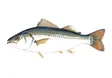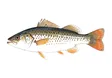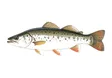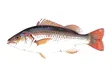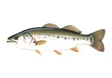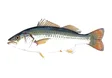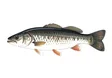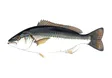
Redspotted Sunfish

Lepomis miniatus

Centrarchidae · freshwater water fish

6 minute read · Species guide

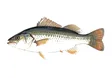
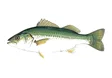
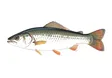
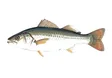
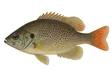
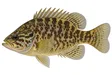
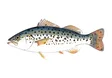
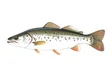
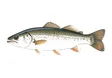
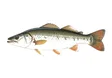
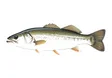
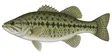
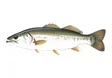
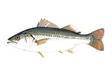
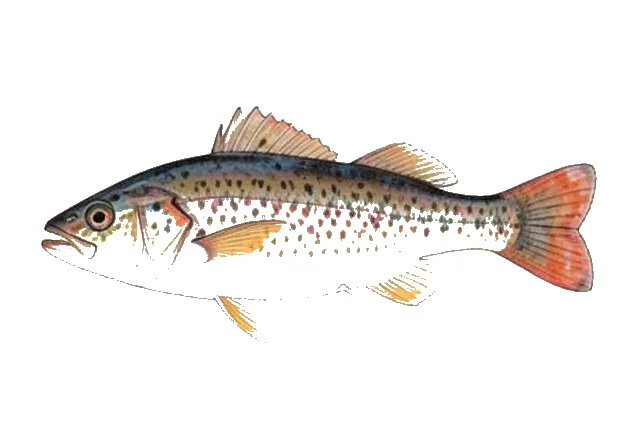
Redspotted Sunfish field guide illustration

About Redspotted Sunfish

The redspotted sunfish (Lepomis miniatus), also known as a stumpknocker, is a species of freshwater ray-finned fish, a sunfish from the family Centrarchidae which is native to the United States. The redspotted sunfish was previously considered to be a western subspecies of spotted sunfish (Lepomis punctatus) but was distinguished as a separate species by Warren in 1992.

Geographic distribution

The redspotted sunfish is a freshwater fish that can be found throughout the Mississippi River Valley. The distribution spreads north into Illinois and to the Ohio River, west into Texas and to Oklahoma's Red River, and east to the Chattahoochee River in Georgia. Currently the populations of Lepomis miniatus found in the southern United States seem to be stable. However, the species's numbers have diminished significantly in the state of Illinois which lies at the northernmost point of the fish's historic range. Once, the redspotted sunfish was found in bodies of water throughout the state but the species's range, as of 2004, had diminished to just a few counties in the central and southern portions of Illinois. Surveys conducted in the mid-2000s suggested that just two populations existed in the entire state at the time, one in a tributary of the Illinois River and the other in a tributary of the Ohio River. There could be a number of causes for the decrease in the Lepomis miniatus in Illinois. A popular theory is that the redspotted sunfish has struggled due to a loss of wetlands, which make up the sunfish's natural habitat. The population may also be declining due to increasingly poor water conditions or from competition with invasive species.

Description

The redspotted sunfish grows to a maximum standard length of 160 millimetres (6.3 in). An iridescent crescent is visible within its eye underneath the red or dark-colored iris. There is no dark spot at the rear of the dorsal fin, unlike that of the green sunfish, which also has a larger mouth than the redspotted sunfish does. Breeding redspotted males will develop red-orange coloration starting from their belly and extending upward as pigmented, horizontal rows of scales to within one or two rows below the lateral line, a feature that distinguishes them from paler-colored breeding males of the spotted sunfish Lepomis punctatus. Additionally, the redspotted sunfish does not have dark spots at the base of its scales, unlike spotted sunfish, in which these spots form irregular horizontal rows along the body. The redspotted sunfish has narrow bands of white or cream color at the tips of its dorsal, anal and caudal fins. It also has a dark opercular flap. In its zone of introgression with the spotted sunfish Lepomis punctatus, which includes areas of the Florida panhandle and western Georgia within its portion of the Tennessee River watershed and in tributaries of the Coosa River, part of the Mobile basin, L. miniatus may not be distinguishable from its sister species.

Ecology

Lepomis miniatus feeds primarily on benthic species. Zooplankton make up between 33.3% to 74.6% of the diet of small sunfishes, about 50% of the diet of medium-sized sunfishes as they introduce larger prey into their diet. At larger sizes the redspotted sunfish shifts primarily to benthic macrofauna. Many larger carnivorous fish feed on the redspotted sunfish, primarily bass. Lepomis miniatus is commonly found in shallow and highly vegetated water. The species seems to prefer areas of slow moving water, 0.4 cm/s. The redspotted sunfish is salt tolerant and can be found in the lower reaches of estuaries, such as bayous, along the Gulf Coast west of Florida. While the redspotted sunfish has been shown to compete with other sunfish and some invasive species, like the Rio Grande cichlid in Louisiana, this competition is thought to have little effect in most cases due to the generalist diet of Lepomis miniatus. A more direct danger could be invasive species that force Lepomis miniatus out of its preferred habitat, increasing the risk of predation.

Life history

The breeding time of the redspotted sunfish varies across the range of the species but usually occurs in late spring or early summer. The fish breeds in shallow, shaded, areas close to the shore in nests constructed by the males. The redspotted sunfish has an average clutch size of around 2000. Lepomis miniatus reaches sexual maturity at lengths greater than 50–55 mm TL, which occurs sometime between the ages of one and two. The average lifespan of the Lepomis miniatus is about five to six years, six being the maximum age the species tends to reach. The effect of human-induced changes on this life history is unknown at this time.

Conservation and management

Reduction in the redspotted sunfish's native distribution area is probably the result of drainage of swamps and bottomland lakes and the general deterioration of the water quality. Oil pollution has been cited as a possible factor contributing to population decline in the lower Wabash River in Illinois. There is also some concern that the release of the invasive Nile tilapia into waters inhabited by the redspotted sunfish could be detrimental to the species.

The redspotted sunfish was listed as endangered by the State of Illinois in 2008. Fortunately a number of organizations have been working to help the species recover, and thanks to their efforts, the redspotted sunfish's conservation status in Illinois returned to "threatened" in 2020. The main groups who are working to rehabilitate Lepomis miniatus in Illinois are the Nature Conservancy in conjunction with the Illinois Natural History Survey and the Illinois Department of Natural Resources. These conservation efforts have involved transplanting a portion of the redspotted sunfish population into two protected, suitable, bodies of water. The first being a preserve lake in Emiquon National Wildlife Refuge near Havana, Illinois and the second being a refuge pond in Allerton Park in the Sangamon River basin. These populations have spawned enough fish to stock five more suitable bodies of water.

Article text: Wikipedia contributors, Redspotted sunfish (source revision). Licensed under CC BY-SA 4.0. Retrieved 2026-10-11.
Diet and feeding

The FishTraits compilation records these diet categories for this species: invertebrates or larval fish; larger animal prey (a source category covering fish, crayfish, crabs, or frogs). These are broad categories, not a claim that every individual consumes every example in a category.

Reported feeding positions include bottom feeding and surface or water-column feeding. The compilation combines published observations; diets can vary with age, locality, and available food.

Habitat preferences

Reported habitat associations include streams and small rivers.

The source records associations with muck, clay or silt, sand, vegetation. An association indicates reported use, rather than an exclusive requirement.

Reproduction and parental care

The compilation reports a representative maturity age of 2 years. Its maturity field summarizes mean, median, or modal estimates, usually for females; male estimates can be used when female data are unavailable. It is not a fixed age at which every fish first breeds.

Batch or serial spawning has been reported somewhere in the species’ range. This does not establish the same spawning pattern for every population.

Recorded spawning months are May, Jun, Jul, Aug for the source’s reporting region (MS). This is a regional calendar, not a range-wide schedule.

The reproductive-guild classification includes guarding eggs or young at a spawning substrate or nest.

Size and recorded longevity

FishTraits reports a maximum total length of 18 centimetres. Some entries use an estimated asymptotic length; this value should not be treated as a certified record catch.

Recorded longevity in the compilation is 5 years. Wild observations were preferred, but captive records were accepted where wild records were unavailable, and unspecified records were assumed wild. The value is not a guaranteed wild lifespan or an aquarium life expectancy.

Native range

Western spotted sunfish are native to the Illinois River in Illinois, ranging south through the Mississippi River and along the Gulf Coast from Alabama to Texas (Warren 1992).

Introduction history

Unknown; possibly stock contamination.

Range

Where it lives

Share of 5,261 GBIF observation records with a state location, across 16 states. The orange dots are USGS stream-survey sites where this species was caught.
0%
51.4%
Share of 5,261 GBIF observation records with a state location, across 16 states. The orange dots are USGS stream-survey sites where this species was caught.

A blank area on the dot layer usually means nobody sampled there, not that the fish is absent. Turn on “every survey site” to see where the survey looked.

The USGS stream survey caught it at 317 of its sites, in 12 states. That survey and the GBIF records are two different counts of two different things, so the site keeps them apart.

Habitat

Water and movement

Water
WoRMS records this species in fresh water.
USGS NAS habitat
Freshwater
US status
Native transplant — native to part of the United States, moved to other waters inside it.
Migration
Undetermined

Classification

Taxonomy

Kingdom
Animalia
Phylum
Chordata
Superclass
Actinopterygii
Class
Teleostei
Order
Perciformes
Genus
Lepomis
Species
Lepomis miniatus
ITIS TSN
168157
WoRMS AphiaID
1422592
GBIF key
2394505

Common questions about Redspotted Sunfish

What is the scientific name of Redspotted Sunfish?
The scientific name is Lepomis miniatus, in the family Centrarchidae. Classification follows ITIS.
Does Redspotted Sunfish live in fresh water or salt water?
WoRMS records this species in fresh water.
Where has Redspotted Sunfish been recorded in the United States?
GBIF has observations in 16 states, with the most records in Texas, Alabama, Louisiana. The map shows observation records, which do not establish the complete natural range.

Closest relatives

Other Lepomis species

Same family

More Centrarchidae

Alabama Bass11 states
Micropterus henshalliCentrarchidaeNative and introducedFresh
Banded Sunfish15 states
Enneacanthus obesusCentrarchidaeNativeFresh
Bantam Sunfish12 states
Lepomis symmetricusCentrarchidaeNativeFresh
Black Crappie49 states
Pomoxis nigromaculatusCentrarchidaeNative and introducedFresh
Blackbanded Sunfish8 states
Enneacanthus chaetodonCentrarchidaeNativeFresh
Bluegill49 states
Lepomis macrochirusCentrarchidaeNative and introducedFresh
Bluespotted Sunfish14 states
Enneacanthus gloriosusCentrarchidaeNative and introducedFresh
Cahaba Bass1 states
Micropterus cahabaeCentrarchidaeNativeFresh
Chattahoochee Bass2 states
Micropterus chattahoochaeCentrarchidaeNativeFresh
Dollar Sunfish18 states
Lepomis marginatusCentrarchidaeNativeFresh
Flier18 states
Centrarchus macropterusCentrarchidaeNativeFresh
Florida Largemouth Bass9 states
Micropterus floridanusCentrarchidaeNative and introducedFresh
Green Sunfish46 states
Lepomis cyanellusCentrarchidaeNative and introducedFresh
Guadalupe Bass2 states
Micropterus treculiiCentrarchidaeNative and introducedFresh
Largemouth Bass48 states
Micropterus salmoidesCentrarchidaeNative and introducedFresh
Lepomis solis7 states
CentrarchidaeNative
Longear Sunfish31 states
Lepomis megalotisCentrarchidaeNative and introducedFresh
Mud Sunfish11 states
Acantharchus pomotisCentrarchidaeNativeFresh
Northern Sunfish8 states
Lepomis peltastesCentrarchidaeNativeFresh
Orangespotted Sunfish27 states
Lepomis humilisCentrarchidaeNative and introducedFresh
Ozark Bass3 states
Ambloplites constellatusCentrarchidaeNativeFresh
Pumpkinseed46 states
Lepomis gibbosusCentrarchidaeNative and introducedFreshBrackish
Redbreast Sunfish29 states
Lepomis auritusCentrarchidaeNative and introducedFresh
Redear Sunfish37 states
Lepomis microlophusCentrarchidaeNative and introducedFresh

All 40 species in Centrarchidae