White Bullhead

Ameiurus catus

Ictaluridae · freshwater and brackish water fish

5 minute read · Species guide

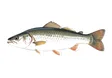
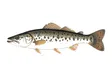
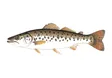
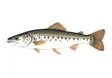
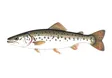
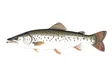
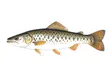
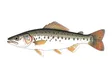
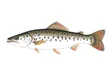
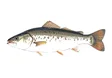
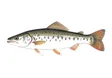
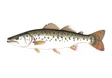
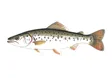
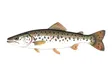
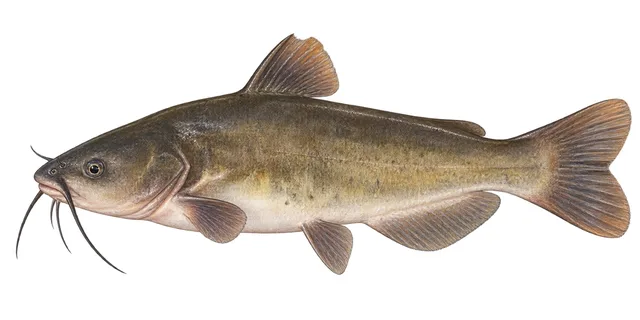
White Bullhead field guide illustration

About White Bullhead

The white bullhead (Ameiurus catus), also known as the white catfish, is a member of the family Ictaluridae of the order Siluriformes.

Distribution

The white bullhead is native to river systems of the Eastern United States from the Hudson River in New York to the Peace River in Florida and west to the Apalachicola River, Florida. White bullheads may have migrated naturally into Connecticut rivers as a result of the white bullhead's salt tolerance. Elsewhere, the white bullhead has been widely introduced as a food and game fish, notably into California waters as a result of intentional stocking near Stockton in 1874. It has additionally become established in the Columbia River basin and in Puerto Rico as an introduced species. It was reportedly introduced to the Philippines but did not become established there. Escapees from fee-fishing ponds and stocked lakes have led to the establishment of white bullhead in Missouri.

Description

Ameiurus catus has a head with eight barbels, two nasal, two maxillary and four chin. It is scaleless. It has a spine on the anterior edge of its dorsal and pectoral fins. It usually has six dorsal soft rays. It does not have palatine teeth. It typically weighs between 0.5 and 2.0 pounds (0.23 and 0.91 kg), however, it can attain weights upwards of 10 pounds (4.5 kg).

Like the yellow bullhead (Ameiurus natalis), white catfish have light-colored chin barbels. In A. catus the tail is forked, while it is rounded or truncate in A. natalis. In comparison to channel catfish (Ictalurus punctatus), A. catus typically has a larger head relative to its body width at maturity and a shorter anal fin relative to its body length bearing 22 to 24 rays.

Habitat

Ameiurus catus prefers sluggish, mud-bottom pools and backwaters of rivers and streams, and does well in lakes and large impoundments.

Feeding

White catfish feed mostly on the bottom, where they eat other fish and aquatic insects. They feed most actively at dusk and through the night mostly on bottom-dwelling insects, worms, amphipods, and other small invertebrates.

Reproduction

Reproduction occurs from April to July when the water temperature ranges between 65 and 75 °F (18 and 24 °C). A gelatinous mass of eggs is deposited in a cavity created by hollow logs or undercut banks. The male guards the nest and incubates the eggs by continually fanning fresh water over them.

Ecology

Predation by introduced white bullheads contributed to the extirpation of Sacramento perch (Archoplites interruptus) from Thurston Lake by 1970. The white bullhead commercial fishery in California was closed in 1953 due to concern of overfishing, and it is not currently considered to be an invasive species by the state.

Article text: Wikipedia contributors, White bullhead (source revision). Licensed under CC BY-SA 4.0. Retrieved 2026-10-11.
Diet and feeding

The FishTraits compilation records these diet categories for this species: aquatic or other vascular plants; detritus or unidentified plant material; invertebrates or larval fish; larger animal prey (a source category covering fish, crayfish, crabs, or frogs). These are broad categories, not a claim that every individual consumes every example in a category.

Reported feeding positions include bottom feeding and surface or water-column feeding. The compilation combines published observations; diets can vary with age, locality, and available food.

Habitat preferences

Reported habitat associations include medium to large rivers, streams and small rivers, still-water habitats.

The source records associations with clay or silt, sand, gravel, cobble. An association indicates reported use, rather than an exclusive requirement.

The species is classified as tolerant of a broad range of salinities. This flag does not specify a salinity range for aquarium care.

Reproduction and parental care

The compilation reports a representative maturity age of 3.5 years. Its maturity field summarizes mean, median, or modal estimates, usually for females; male estimates can be used when female data are unavailable. It is not a fixed age at which every fish first breeds.

Recorded spawning months are May, Jun for the source’s reporting region (NC). This is a regional calendar, not a range-wide schedule.

The reproductive-guild classification includes guarding eggs or young at a spawning substrate or nest.

Size and recorded longevity

FishTraits reports a maximum total length of 95 centimetres. Some entries use an estimated asymptotic length; this value should not be treated as a certified record catch.

Recorded longevity in the compilation is 11 years. Wild observations were preferred, but captive records were accepted where wild records were unavailable, and unspecified records were assumed wild. The value is not a guaranteed wild lifespan or an aquarium life expectancy.

Identification and appearance

Page and Burr (1991); Jenkins and Burkhead (1994); Mettee et al. (1996). Generally similar to Blue Catfish (Ictalurus furcatus) and Channel Catfish (I. punctatus), but can be distinguished by the presence of a dusky or black adipose fin, shorter anal fin base, and lower degree of forking in the caudal fin.

Native range

Atlantic and Gulf Slope drainages from lower Hudson River, New York, to Apalachicola basin in Florida, Georgia, and Alabama; south in peninsular Florida to Peace River drainage (modified from Page and Burr 1991).

Introduction history

Intentional stocking for sport and food. Whitworth (1996) points out that because of this species' high tolerance for salinity, the original movement to large rivers in Connecticut could have been a natural range extension. Primary source of stocked fish in Kentucky is the James River, Virginia (Clay 1975). Stock planted in Indiana is from southeastern Virginia (Nelson and Gerking 1968). It is frequently stocked in fee-fishing lakes and other private waters. Pflieger (1997) indicated that specimens recorded from natural waters in Missouri may represent escapes from such situations.

Ecological impacts

White Catfish were apparently responsible for the disappearance of Sacramento perch Archoplites interruptus in Thurston Lake, California (McCarraher and Gregory 1970).

Record fish

State records in 3 states

  • Florida18.88 lb

    Withlacoochee River · Marion County · 9/21/1991 · Jim Miller

  • Alabama10 lbs 5 oz

    Chambers Co. Public Lake · 4/3/1981 · Roy T. Britton, Opelika

  • Georgia8 lb, 10 oz

    Savannah River · June 10, 1996 · James D. Sanders

Each figure is the state agency’s own certified record. The site holds record tables for 11 states so far, so a state missing here has not been read yet. It is not a state where this fish holds no record.

Range

Where it lives

Share of 4,396 GBIF observation records with a state location, across 32 states. The orange dots are USGS stream-survey sites where this species was caught.
0%
37.6%
Share of 4,396 GBIF observation records with a state location, across 32 states. The orange dots are USGS stream-survey sites where this species was caught.

A blank area on the dot layer usually means nobody sampled there, not that the fish is absent. Turn on “every survey site” to see where the survey looked.

The USGS stream survey caught it at 120 of its sites, in 13 states. That survey and the GBIF records are two different counts of two different things, so the site keeps them apart.

Habitat

Water and movement

Water
WoRMS records this species in fresh water and brackish water.
USGS NAS habitat
Freshwater
US status
Native transplant — native to part of the United States, moved to other waters inside it.
Migration
Undetermined
Pattern

Classification

Taxonomy

Kingdom
Animalia
Phylum
Chordata
Superclass
Actinopterygii
Class
Teleostei
Order
Siluriformes
Genus
Ameiurus
Species
Ameiurus catus
ITIS TSN
164037
WoRMS AphiaID
1023048
GBIF key
2340972
Outside the US
ITIS also files it in Caribbean Territories.

Common questions about White Bullhead

What is the scientific name of White Bullhead?
The scientific name is Ameiurus catus, in the family Ictaluridae. Classification follows ITIS.
Does White Bullhead live in fresh water or salt water?
WoRMS records this species in fresh water and brackish water.
Where has White Bullhead been recorded in the United States?
GBIF has observations in 32 states, with the most records in Georgia, Florida, North Carolina. The map shows observation records, which do not establish the complete natural range.

Closest relatives

Other Ameiurus species

Same family

More Ictaluridae

Black Bullhead46 states
Ameiurus melasIctaluridaeNative and introducedFresh
Black Madtom5 states
Noturus funebrisIctaluridaeNativeFresh
Black River Madtom2 states
Noturus maydeniIctaluridaeNativeFresh
Blue Catfish31 states
Ictalurus furcatusIctaluridaeNative and introducedFreshBrackish
Brindled Madtom16 states
Noturus miurusIctaluridaeNativeFresh
Brown Bullhead44 states
Ameiurus nebulosusIctaluridaeNative and introducedFresh
Brown Madtom6 states
Noturus phaeusIctaluridaeNativeFresh
Caddo Madtom1 states
Noturus tayloriIctaluridaeNativeFresh
Carolina Madtom2 states
Noturus furiosusIctaluridaeNativeFresh
Channel Catfish47 states
Ictalurus punctatusIctaluridaeNative and introducedFresh
Checkered Madtom3 states
Noturus flavaterIctaluridaeNativeFresh
Chucky Madtom1 states
Noturus crypticusIctaluridaeNativeFresh
Elegant Madtom4 states
Noturus elegansIctaluridaeNativeFresh
Flat Bullhead7 states
Ameiurus platycephalusIctaluridaeNative and introducedFresh
Flathead Catfish34 states
Pylodictis olivarisIctaluridaeNative and introducedFresh
Frecklebelly Madtom5 states
Noturus munitusIctaluridaeNativeFresh
Freckled Madtom15 states
Noturus nocturnusIctaluridaeNativeFresh
Headwater Catfish2 states
Ictalurus lupusIctaluridaeNativeFresh
Least Madtom4 states
Noturus hildebrandiIctaluridaeNativeFresh
Margined Madtom21 states
Noturus insignisIctaluridaeNative and introducedFresh
Mountain Madtom15 states
Noturus eleutherusIctaluridaeNativeFresh
Neosho Madtom3 states
Noturus placidusIctaluridaeNativeFresh
Northern Madtom9 states
Noturus stigmosusIctaluridaeNativeFresh
Orangefin Madtom3 states
Noturus gilbertiIctaluridaeNative and introducedFresh

All 42 species in Ictaluridae