Snail Bullhead

Ameiurus brunneus

Ictaluridae · freshwater water fish

6 minute read · Species guide

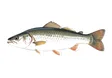
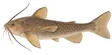
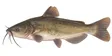
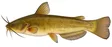
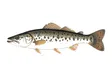
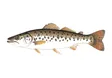
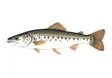
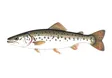
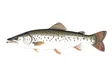
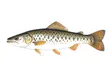
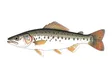
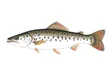
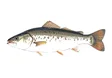
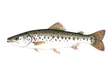
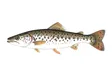
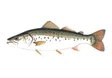
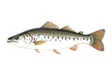
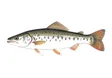
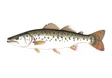
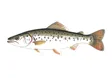
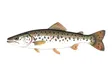
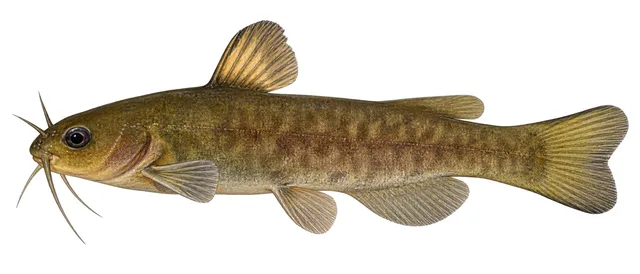
Snail Bullhead field guide illustration

About Snail Bullhead

The snail bullhead (Ameiurus brunneus) is a bony fish in the family Ictaluridae distributed widely in the southeastern United States. Among its bullhead catfish congeners, it has many North American relatives, like the brown bullhead (Ameiurus nebulosus) and black bullhead (Ameirurus melas). The species was described in 1877 by David Starr Jordan in the Ocmulgee River in Georgia.

Little is known about this species of fish and it is not a particularly prized fish due to its small size. The only known alias is the general vernacular term for all catfish in the United States, "mudcat".

Description

The snail bullhead grows to an adult size of approximately 11.4 inches (29 cm) in fluvial habitat and up to 17.6 inches (45 cm) in disturbed habitats, such as reservoirs and impounded rivers. The fish has a has a flat head, typical of North American ictalurids, eight mouth barbels, a rounded anal fin, an emarginate tail, two pectoral fins, an adipose fin and a body lacking scales. The anal fin of A. brunneus typically has 17 to 20 fin rays, fewer than that of a related species, the flat bullhead (A. platycephalus), although some individuals may have as many as 22 rays. They also have three spines, one on the dorsal and two on the pectoral fins, which are coated with a toxic irritant that inflicts local pain and swelling as a defense against predation. The pectoral spines have fine serrations, but lack coarse teeth, which helps to distinguish snail bullheads from spotted bullheads (A. serracanthus). A. brunneus can vary greatly in color but the most commonly observed morphs have brown to yellow-green backs with mottled sides and a white belly. There is a dark spot or bar that colors the base of the dorsal fin. It should also be noted that these fish are ectothermic, bilaterally symmetrical and nocturnal.

Distribution

The snail bullhead has a native range in the Southeast. They primarily occur from Virginia to Florida through Alabama. The uppermost portion of their range is along the Dan River in Virginia along the Atlantic slope, down to the Altamaha River system in Georgia and ends at the St. John's River drainage in Florida. They also occur in the Gulf drainage such as Apalachicola River Drainage. Their range in Georgia includes Tennessee, Coosa, Chattahoochee, Flint, Satilla, Ocmulgee, Oconee, Altamaha, Ogeechee, and Savannah River basins.

The fish is relatively common in its home range. In South Carolina, they are most abundant in smaller streams in the upper Santee drainage but are more rare in coastal streams. The largest abundance is in the Broad River Basin due to absence of introduced species.

Habitat

The snail bullhead is a generalist with its habitat. It has been found in shallow, slow water and, preferred, deep, fast water. They are found in riffles, runs and pools and streams, rivers and lakes. As a nocturnal species, they prefer cover under rock and wood structures during the day and forage in the open at riffles at night. They prefer fast flowing water in high gradient streams due to the purity and clarity of the water but will also live in stagnant water.

Diet

Little is known about to diet of snail bullheads with only a few studies ever being conducted. They are known omnivorous benthic bottom feeders that use their barbels for taste, touch and reading electric currents due to their poor sight. They are predators of invertebrates, like snails, crayfish and caddisflies, as well as other fish, mainly cyprinids. Additionally, they are believed to forage on filamentous algae and other plants, although these may be sourced indirectly from the ingestion of caddisfly larval cases. It has also been observed that the diet of snail bullheads has similar composition across the lifespan.

Conservation

The snail bullhead may currently be a species of "least concern", but that doesn't mean it is safe. Their home range is decreasing due to a myriad of factors. The primary concern for the snail bullhead is the introduction of invasive species, in particular the flathead catfish (Pylodictis olivaris). The flathead has been known to prey upon the snail bullhead and greatly reduce populations in rivers. Flathead catfish also have a displacing effect on the snail bullhead by running them out of large rivers and confining them to smaller streams. Flathead catfish are common because people intentionally stock them into rivers and streams as a sportfish, with unforeseen effects on native fauna. Along with invasive predators, snail bullheads are threatened by sedimentation, hydrologic modification, impoundments, non-point source pollution and development.

An analysis of the population of snail bullheads and other ictalurids in the Cape Fear River basin, published in 2021, supported previous recommendations that the harvest of snail bullheads, along with their native bullhead relatives, be restricted in North Carolina.

Article text: Wikipedia contributors, Snail bullhead (source revision). Licensed under CC BY-SA 4.0. Retrieved 2026-10-11.
Diet and feeding

The FishTraits compilation records these diet categories for this species: algae or phytoplankton; aquatic or other vascular plants; invertebrates or larval fish; larger animal prey (a source category covering fish, crayfish, crabs, or frogs). These are broad categories, not a claim that every individual consumes every example in a category.

Reported feeding positions include bottom feeding. The compilation combines published observations; diets can vary with age, locality, and available food.

Habitat preferences

Reported habitat associations include medium to large rivers, streams and small rivers.

The source records associations with muck, clay or silt, sand, gravel, cobble, boulders, organic debris. An association indicates reported use, rather than an exclusive requirement.

Reproduction and parental care

The compilation reports a representative maturity age of 3 years. Its maturity field summarizes mean, median, or modal estimates, usually for females; male estimates can be used when female data are unavailable. It is not a fixed age at which every fish first breeds.

Batch or serial spawning has been reported somewhere in the species’ range. This does not establish the same spawning pattern for every population.

Recorded spawning months are Mar, Apr, May, Jun for the source’s reporting region (NC). This is a regional calendar, not a range-wide schedule.

The reproductive-guild classification includes guarding eggs or young at a spawning substrate or nest.

Size and recorded longevity

FishTraits reports a maximum total length of 29 centimetres. Some entries use an estimated asymptotic length; this value should not be treated as a certified record catch.

Recorded longevity in the compilation is 6 years. Wild observations were preferred, but captive records were accepted where wild records were unavailable, and unspecified records were assumed wild. The value is not a guaranteed wild lifespan or an aquarium life expectancy.

Identification and appearance

Page and Burr (1991); Jenkins and Burkhead (1994); Mettee et al. (1996). Another commonly used name is Ictalurus brunneus.

Native range

Atlantic Slope from the Pee Dee River drainage, southern Virginia, south to Altamaha River drainage, Georgia, and middle St. Johns River drainage, Florida; Gulf Slope in Apalachicola River basin, Georgia, Alabama, and Florida (Page and Burr 1991).

Introduction history

Introduction of Snail Bullheads may have resulted from stock contamination of black bullheads (Ameiurus melas) that were stocked in Belews Lake, North Carolina, on the upper Dan River (Burkhead et al. 1980). Unknown means in Georgia.

Range

Where it lives

Share of 1,692 GBIF observation records with a state location, across 6 states. The orange dots are USGS stream-survey sites where this species was caught.
0%
52.5%
Share of 1,692 GBIF observation records with a state location, across 6 states. The orange dots are USGS stream-survey sites where this species was caught.

A blank area on the dot layer usually means nobody sampled there, not that the fish is absent. Turn on “every survey site” to see where the survey looked.

The USGS stream survey caught it at 141 of its sites, in 6 states. That survey and the GBIF records are two different counts of two different things, so the site keeps them apart.

Habitat

Water and movement

Water
WoRMS records this species in fresh water.
USGS NAS habitat
Freshwater
US status
Native transplant — native to part of the United States, moved to other waters inside it.
Migration
Not migratory

Classification

Taxonomy

Kingdom
Animalia
Phylum
Chordata
Superclass
Actinopterygii
Class
Teleostei
Order
Siluriformes
Genus
Ameiurus
Species
Ameiurus brunneus
ITIS TSN
164035
WoRMS AphiaID
1020249
GBIF key
2340984

Common questions about Snail Bullhead

What is the scientific name of Snail Bullhead?
The scientific name is Ameiurus brunneus, in the family Ictaluridae. Classification follows ITIS.
Does Snail Bullhead live in fresh water or salt water?
WoRMS records this species in fresh water.
Where has Snail Bullhead been recorded in the United States?
GBIF has observations in 6 states, with the most records in Georgia, North Carolina, Alabama. The map shows observation records, which do not establish the complete natural range.

Closest relatives

Other Ameiurus species

Same family

More Ictaluridae

Black Bullhead46 states
Ameiurus melasIctaluridaeNative and introducedFresh
Black Madtom5 states
Noturus funebrisIctaluridaeNativeFresh
Black River Madtom2 states
Noturus maydeniIctaluridaeNativeFresh
Blue Catfish31 states
Ictalurus furcatusIctaluridaeNative and introducedFreshBrackish
Brindled Madtom16 states
Noturus miurusIctaluridaeNativeFresh
Brown Bullhead44 states
Ameiurus nebulosusIctaluridaeNative and introducedFresh
Brown Madtom6 states
Noturus phaeusIctaluridaeNativeFresh
Caddo Madtom1 states
Noturus tayloriIctaluridaeNativeFresh
Carolina Madtom2 states
Noturus furiosusIctaluridaeNativeFresh
Channel Catfish47 states
Ictalurus punctatusIctaluridaeNative and introducedFresh
Checkered Madtom3 states
Noturus flavaterIctaluridaeNativeFresh
Chucky Madtom1 states
Noturus crypticusIctaluridaeNativeFresh
Elegant Madtom4 states
Noturus elegansIctaluridaeNativeFresh
Flat Bullhead7 states
Ameiurus platycephalusIctaluridaeNative and introducedFresh
Flathead Catfish34 states
Pylodictis olivarisIctaluridaeNative and introducedFresh
Frecklebelly Madtom5 states
Noturus munitusIctaluridaeNativeFresh
Freckled Madtom15 states
Noturus nocturnusIctaluridaeNativeFresh
Headwater Catfish2 states
Ictalurus lupusIctaluridaeNativeFresh
Least Madtom4 states
Noturus hildebrandiIctaluridaeNativeFresh
Margined Madtom21 states
Noturus insignisIctaluridaeNative and introducedFresh
Mountain Madtom15 states
Noturus eleutherusIctaluridaeNativeFresh
Neosho Madtom3 states
Noturus placidusIctaluridaeNativeFresh
Northern Madtom9 states
Noturus stigmosusIctaluridaeNativeFresh
Orangefin Madtom3 states
Noturus gilbertiIctaluridaeNative and introducedFresh

All 42 species in Ictaluridae