Utah Sucker

Catostomus ardens

Catostomidae · freshwater water fish

4 minute read · Species guide

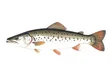
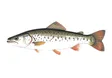
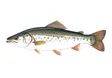
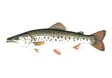
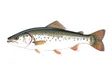
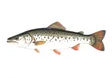
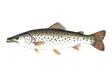
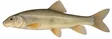
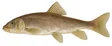
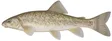
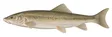
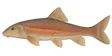
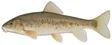
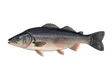
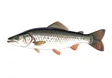
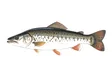
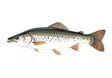
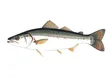
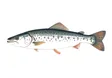
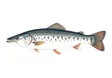
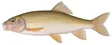
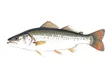
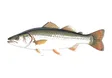
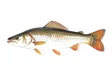
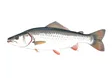
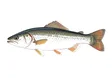
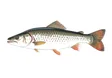
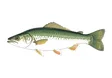
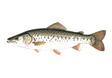
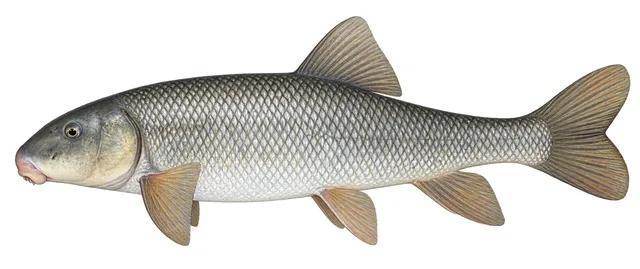
Utah Sucker field guide illustration

About Utah Sucker

The Utah sucker (Catostomus ardens) is a species of freshwater fish in the family Catostomidae found in the upper Snake River and the Lake Bonneville areas of western North America where it lives in a wide range of habitats. It is a large sucker growing up to 25 in (64 cm) long. It is generally blackish above, vaguely streaked and blotched, with a white belly. A narrow rosy lateral band extends backwards from the head. The mouth has thick lips and is on the underside of the head. Some populations are in decline because of anthropogenic factors but overall this fish is not threatened.

Description

This is a large fish that can grow up to 25.5 in (65 cm) in length. Relatively elongate for a sucker, the back area between the head and dorsal fin is somewhat elevated. The mouth is entirely under the snout, with thick lips, of which the upper lip has eight rows of coarse papillae, the second and third rows from the inside being significantly larger. Color is generally blackish above, with a faint pattern of blotches or spots, a narrow rosy band on the anterior part of each side, while the underside is white. The long anal fin is placed well back, the tip reaching as far back as the base of the caudal fin. The anal fin has seven rays, while the dorsal has 13 rays. Recent genetic studies have revealed deep, but morphologically cryptic, population subdivision (about 4.5% sequence divergence) between drainages of the ancient Snake River and the Bonneville Basin.

Distribution

The Utah sucker is native to the upper Snake River and the Lake Bonneville areas of western North America. It lives in a variety of habitats in its range, being found in lakes, rivers, and streams, in warm or cold water, and over substrates of silt, sand, gravel, or rocks, preferably in the vicinity of vegetation.

Status

Some populations are in decline due to anthropogenic factors, including habitat destruction, water-flow diversion, migration barriers, chemical pollutants, and competition with exotic species.

In 1881, David Starr Jordan and Charles Henry Gilbert observed that this sucker "occurs in Utah Lake in numbers which are simply enormous"; the population seems to have boomed and crashed several times since then.

Taxonomic nomenclature for this species is disputable, with Catostomus ardens in Utah Lake being confused with the June sucker, Chasmistes liorus, and the name Catostomus fecundus being used for a time.

Article text: Wikipedia contributors, Utah sucker (source revision). Licensed under CC BY-SA 4.0. Retrieved 2026-10-11.
Diet and feeding

The FishTraits compilation records these diet categories for this species: algae or phytoplankton; invertebrates or larval fish. These are broad categories, not a claim that every individual consumes every example in a category.

Reported feeding positions include bottom feeding. The compilation combines published observations; diets can vary with age, locality, and available food.

Habitat preferences

Reported habitat associations include medium to large rivers, streams and small rivers, creeks, still-water habitats.

The source records associations with clay or silt, sand, gravel, cobble, vegetation. An association indicates reported use, rather than an exclusive requirement.

Reproduction and parental care

The compilation reports a representative maturity age of 2.5 years. Its maturity field summarizes mean, median, or modal estimates, usually for females; male estimates can be used when female data are unavailable. It is not a fixed age at which every fish first breeds.

Recorded spawning months are Jun, Jul for the source’s reporting region (UT). This is a regional calendar, not a range-wide schedule.

The reproductive-guild classification includes spawning on open substrates without guarding the brood.

Size and recorded longevity

FishTraits reports a maximum total length of 65 centimetres. Some entries use an estimated asymptotic length; this value should not be treated as a certified record catch.

Recorded longevity in the compilation is 11 years. Wild observations were preferred, but captive records were accepted where wild records were unavailable, and unspecified records were assumed wild. The value is not a guaranteed wild lifespan or an aquarium life expectancy.

Spawning movements

The compilation records significant spawning-related movement. Its combined migration flag covers movements within fresh water as well as between rivers and the sea; this flag alone does not establish which migration pattern applies.

Native range

Lake Bonneville basin in Utah, Idaho, Wyoming and Nevada and the Snake River above Shoshone Falls (Sigler and Sigler 1987, 1996).

Habitat and ecology

Utah Suckers are found in a variety of habitat types and thermal regimes throughout their range, including shallow, seasonally warm streams and deep, cold reservoirs and lakes. They are benthic grazers, primarily consuming algae. Spawing occurs in spring over shallow gravel or sandy areas of small streams or lakeshores (Sigler and Sigler 1996).

Introduction history

Probably introduced to the Colorado River drainage via bait bucket (Sigler and Sigler 1996). Means of introduction in Montana unknown.

Ecological impacts

The primary cause of declines of flannelmouth suckers in Wyoming is the risk of genetic introgression with widely distributed non-native suckers (Bezzerides and Bestgen 2002; McDonald et al. 2008). Hybridization between native flannelmouth and bluehead sucker, and non-native white sucker Catostomus commersoni, longnose sucker C. catostomus, and Utah Sucker C. ardens is occurring. Some combinations are fertile and will lead to introgression (Wyoming Game and Fish Department 2010).

Record fish

State records in 2 states

  • Idaho7.86 lb

    South Fork Snake River · 08/20/2011 · Rick Thompson

  • Utah6 lbs. 6 oz.

    Weber River · 2003 · Jamin C. Buttars

  • Idaho5.95 lb

    McTucker Creek · 05/09/2026 · Zachary Liljenquist

Each figure is the state agency’s own certified record. The site holds record tables for 11 states so far, so a state missing here has not been read yet. It is not a state where this fish holds no record.

Range

Where it lives

Share of 892 GBIF observation records with a state location, across 8 states. The orange dots are USGS stream-survey sites where this species was caught.
0%
68.9%
Share of 892 GBIF observation records with a state location, across 8 states. The orange dots are USGS stream-survey sites where this species was caught.

A blank area on the dot layer usually means nobody sampled there, not that the fish is absent. Turn on “every survey site” to see where the survey looked.

The USGS stream survey caught it at 46 of its sites, in 3 states. That survey and the GBIF records are two different counts of two different things, so the site keeps them apart.

Habitat

Water and movement

Water
WoRMS records this species in fresh water.
USGS NAS habitat
Freshwater
US status
Native transplant — native to part of the United States, moved to other waters inside it.
Migration
Undetermined
Pattern

Classification

Taxonomy

Kingdom
Animalia
Phylum
Chordata
Superclass
Actinopterygii
Class
Teleostei
Order
Cypriniformes
Genus
Catostomus
Species
Catostomus ardens
ITIS TSN
163899
WoRMS AphiaID
1006872
GBIF key
2359038

Common questions about Utah Sucker

What is the scientific name of Utah Sucker?
The scientific name is Catostomus ardens, in the family Catostomidae. Classification follows ITIS.
Does Utah Sucker live in fresh water or salt water?
WoRMS records this species in fresh water.
Where has Utah Sucker been recorded in the United States?
GBIF has observations in 8 states, with the most records in Wyoming, Idaho, Utah. The map shows observation records, which do not establish the complete natural range.

Closest relatives

Other Catostomus species

Same family

More Catostomidae

Alabama Hog Sucker6 states
Hypentelium etowanumCatostomidaeNative and introducedFresh
Bigeye Jumprock3 states
Moxostoma ariommumCatostomidaeNativeFresh
Bigmouth Buffalo26 states
Ictiobus cyprinellusCatostomidaeNative and introducedFresh
Black Buffalo26 states
Ictiobus nigerCatostomidaeNative and introducedFresh
Black Redhorse
Moxostoma duquesneiCatostomidaeNativeFresh
Blackfin Sucker2 states
Thoburnia atripinnisCatostomidaeNativeFresh
Blacktail Redhorse9 states
Moxostoma poecilurumCatostomidaeNativeFresh
Blacktip Jumprock7 states
Moxostoma cervinumCatostomidaeNative and introducedFresh
Blue Sucker22 states
Cycleptus elongatusCatostomidaeNativeFresh
Bluehead Sucker7 states
Pantosteus discobolusCatostomidaeNativeFresh
Bridgelip Sucker5 states
Catostomus columbianusCatostomidaeNativeFresh
Creek Chubsucker31 states
Erimyzon oblongusCatostomidaeNativeFresh
Cui-ui2 states
Chasmistes cujusCatostomidaeNativeFresh
Desert Sucker9 states
Pantosteus clarkiiCatostomidaeNativeFresh
Flannelmouth Sucker8 states
Catostomus latipinnisCatostomidaeNativeFresh
Golden Redhorse29 states
Moxostoma erythrurumCatostomidaeNative and introducedFresh
Gray Redhorse2 states
Moxostoma congestumCatostomidaeNative and introducedFresh
Greater Jumprock4 states
Moxostoma lachneriCatostomidaeNative and introducedFresh
Greater Redhorse11 states
Moxostoma valenciennesiCatostomidaeNativeFresh
Green Sucker4 states
Pantosteus virescensCatostomidaeNativeFresh
Highfin Carpsucker23 states
Carpiodes veliferCatostomidaeNative and introducedFresh
June Sucker1 states
Chasmistes liorusCatostomidaeNativeFresh
Klamath Largescale Sucker2 states
Catostomus snyderiCatostomidaeNativeFresh
Klamath Smallscale Sucker2 states
Catostomus rimiculusCatostomidaeNativeFresh

All 67 species in Catostomidae