Black Redhorse

Moxostoma duquesnei

Catostomidae · freshwater water fish

4 minute read · Species guide

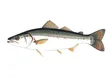
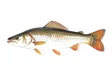
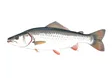
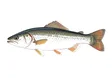
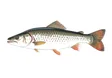
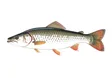
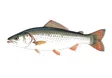
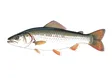
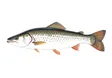
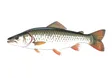
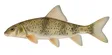
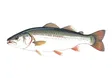
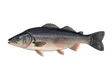
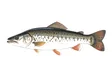
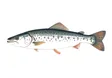
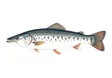
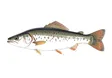
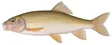
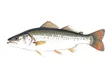
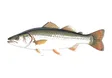
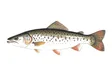
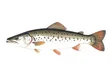
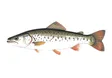
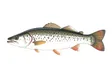
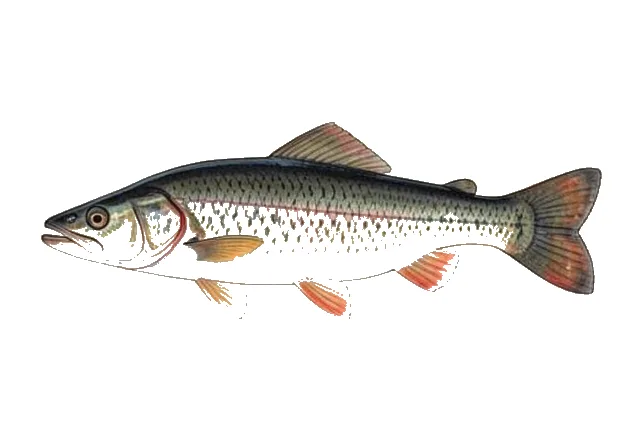
Black Redhorse field guide illustration

About Black Redhorse

The black redhorse (Moxostoma duquesnei, also duquesnii, duquesni) is a species of freshwater fish endemic to Ontario and the eastern half of the United States, where it lives in streams and small to medium rivers.

NativeFresh

A bottom-feeder, it feeds on micro crustaceans, aquatic insects, detritus, and algae. The black redhorse spawns in the spring.

This species has been identified as Threatened by the Committee on the Status of Endangered Wildlife in Canada (COSEWIC). It is currently being considered for listing under the federal Species at Risk Act (SARA).

Description

The black redhorse is a species of the sucker family, Catostomidae. It is laterally compressed and has a shallow body shape with little arching to the back. Nearly half of the head is a long, rounded snout. The mouth is on the underside of the snout and has a thick lower lip. The body is silvery-blue with a gray or brownish dorsal surface and silver or white belly. Some of the scales have dark edges. During the breeding season males have dark stripes and orange or pink coloration along the flanks, and develop nuptial tubercles on the tail fins.

The black redhorse can be distinguished from similar species by the lack of red on the tail and the lack of grooving on the lips.

Distribution

The black redhorse has a wide, but disjunct, distribution in eastern North America. It is found from Alabama and Mississippi in the south to Ontario and Michigan in the north, and from New York in the east to Oklahoma and Minnesota in the west. In Canada, it is limited to southwestern Ontario where it occurs in only six watersheds. In the Lake Huron drainage, it is found in the Bayfield River, Maitland River and Ausable River watersheds. In the Lake Erie drainage, it is known from the Catfish Creek (extirpated) and Grand River watersheds. It is also present in the Thames River watershed in the Lake St. Clair drainage.

Habitat and life history

The black redhorse usually lives in moderately sized rivers and streams, 25 to 130 m (82 to 427 ft) wide, up to 1.8 m (5 ft 11 in) in depth, and with generally moderate to fast currents. It is rarely found associated with aquatic vegetation. Substrates include rubble, gravel, sand, boulders and silt. In summer, they generally prefer pools and overwinter in deeper pools. In the spring, black redhorse migrate to spawning habitats. Spring spawning has been observed in riffle habitats at water temperatures between 15 and 21 °C (59 and 70 °F), and over a variety of substrates from fine gravel to large cobble. Eggs are nonadhesive and range in size from 2.6 to 2.9 mm (3 ⁄ 32 to 1 ⁄ 8 in). The age at maturity is between two and six years. Lifespan increases with latitude and some individuals reach 16 years of age.

Diet

Adult black redhorse are bottom feeders and eat crustaceans and insects. The younger fish (less than 65 mm (2.6 in)) are thought to prefer plankton.

Relationship with humans

Habitat may be altered or impaired through urbanization and agricultural activities that increase siltation, turbidity, and change flow regimes. The availability of suitable habitat limits the distribution of the black redhorse in Canada, rendering its distribution highly fragmented. Its restricted spawning habitat preferences make recruitment vulnerable to changes in flow regime. Dams and impoundment of riverine habitats also restrict movements of fish. Incidental catches of black redhorse by sport fishers have been reported and may impact populations. The IGFA world record for the species stands at 1.02 kg (2 lb 4 oz) caught from Franklin Creek in Franklin, Pennsylvania in 1998.

Article text: Wikipedia contributors, Black redhorse (source revision). Licensed under CC BY-SA 4.0. Retrieved 2026-10-11.
Diet and feeding

The FishTraits compilation records these diet categories for this species: algae or phytoplankton; detritus or unidentified plant material; invertebrates or larval fish. These are broad categories, not a claim that every individual consumes every example in a category.

Reported feeding positions include bottom feeding and surface or water-column feeding. The compilation combines published observations; diets can vary with age, locality, and available food.

Habitat preferences

Reported habitat associations include medium to large rivers, streams and small rivers, creeks.

The source records associations with gravel, cobble, boulders, bedrock. An association indicates reported use, rather than an exclusive requirement.

Reproduction and parental care

The compilation reports a representative maturity age of 3.5 years. Its maturity field summarizes mean, median, or modal estimates, usually for females; male estimates can be used when female data are unavailable. It is not a fixed age at which every fish first breeds.

Recorded spawning months are Apr, May for the source’s reporting region (NC). This is a regional calendar, not a range-wide schedule.

The reproductive-guild classification includes spawning on open substrates without guarding the brood.

Size and recorded longevity

FishTraits reports a maximum total length of 51 centimetres. Some entries use an estimated asymptotic length; this value should not be treated as a certified record catch.

Recorded longevity in the compilation is 9.5 years. Wild observations were preferred, but captive records were accepted where wild records were unavailable, and unspecified records were assumed wild. The value is not a guaranteed wild lifespan or an aquarium life expectancy.

Range

Where it lives

GBIF holds no US occurrence record for this species under this name. That is a gap in the record, not evidence that the fish is absent: ITIS files it as a US species.

Habitat

Water and movement

Water
WoRMS records this species in fresh water.

Classification

Taxonomy

Kingdom
Animalia
Phylum
Chordata
Superclass
Actinopterygii
Class
Teleostei
Order
Cypriniformes
Genus
Moxostoma
Species
Moxostoma duquesnei
ITIS TSN
163938
WoRMS AphiaID
1022878
Outside the US
ITIS also files it in Canada.

Common questions about Black Redhorse

What is the scientific name of Black Redhorse?
The scientific name is Moxostoma duquesnei, in the family Catostomidae. Classification follows ITIS.
Does Black Redhorse live in fresh water or salt water?
WoRMS records this species in fresh water.

Closest relatives

Other Moxostoma species

Same family

More Catostomidae

Alabama Hog Sucker6 states
Hypentelium etowanumCatostomidaeNative and introducedFresh
Bigeye Jumprock3 states
Moxostoma ariommumCatostomidaeNativeFresh
Bigmouth Buffalo26 states
Ictiobus cyprinellusCatostomidaeNative and introducedFresh
Black Buffalo26 states
Ictiobus nigerCatostomidaeNative and introducedFresh
Blackfin Sucker2 states
Thoburnia atripinnisCatostomidaeNativeFresh
Blacktail Redhorse9 states
Moxostoma poecilurumCatostomidaeNativeFresh
Blacktip Jumprock7 states
Moxostoma cervinumCatostomidaeNative and introducedFresh
Blue Sucker22 states
Cycleptus elongatusCatostomidaeNativeFresh
Bluehead Sucker7 states
Pantosteus discobolusCatostomidaeNativeFresh
Bridgelip Sucker5 states
Catostomus columbianusCatostomidaeNativeFresh
Creek Chubsucker31 states
Erimyzon oblongusCatostomidaeNativeFresh
Cui-ui2 states
Chasmistes cujusCatostomidaeNativeFresh
Desert Sucker9 states
Pantosteus clarkiiCatostomidaeNativeFresh
Flannelmouth Sucker8 states
Catostomus latipinnisCatostomidaeNativeFresh
Golden Redhorse29 states
Moxostoma erythrurumCatostomidaeNative and introducedFresh
Gray Redhorse2 states
Moxostoma congestumCatostomidaeNative and introducedFresh
Greater Jumprock4 states
Moxostoma lachneriCatostomidaeNative and introducedFresh
Greater Redhorse11 states
Moxostoma valenciennesiCatostomidaeNativeFresh
Green Sucker4 states
Pantosteus virescensCatostomidaeNativeFresh
Highfin Carpsucker23 states
Carpiodes veliferCatostomidaeNative and introducedFresh
June Sucker1 states
Chasmistes liorusCatostomidaeNativeFresh
Klamath Largescale Sucker2 states
Catostomus snyderiCatostomidaeNativeFresh
Klamath Smallscale Sucker2 states
Catostomus rimiculusCatostomidaeNativeFresh
Lake Chubsucker26 states
Erimyzon sucettaCatostomidaeNative and introducedFresh

All 67 species in Catostomidae